
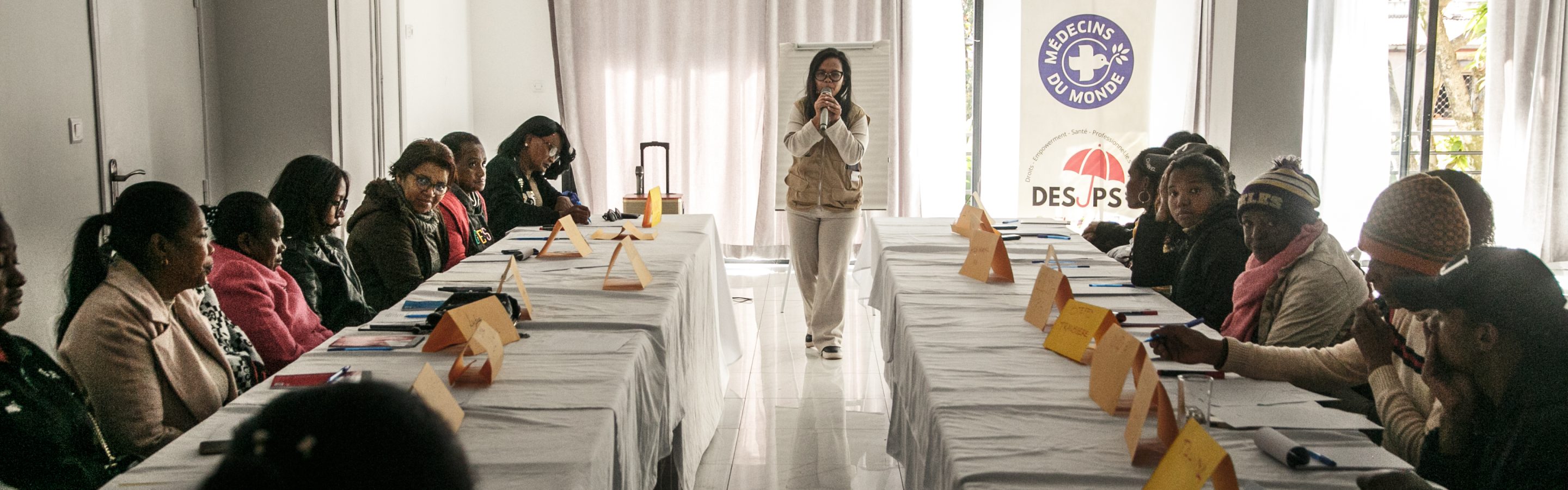
DESPS: a community innovation for the health and rights of sex workers
In Madagascar, the DESPS project (Rights, Empowerment and Health for Sex Workers), run by Médecins du Monde with the support of L’Initiative, strengthens sex workers’ access to healthcare and rights along the Antananarivo–Tamatave corridor through a harm-reduction approach, strong community anchoring and advocacy for inclusive public policies. Rova Ralaindimby, programme manager, reviews the actions, results and ambitions for sex workers’ health.
Why is DESPS considered innovative in supporting sex workers in Madagascar?
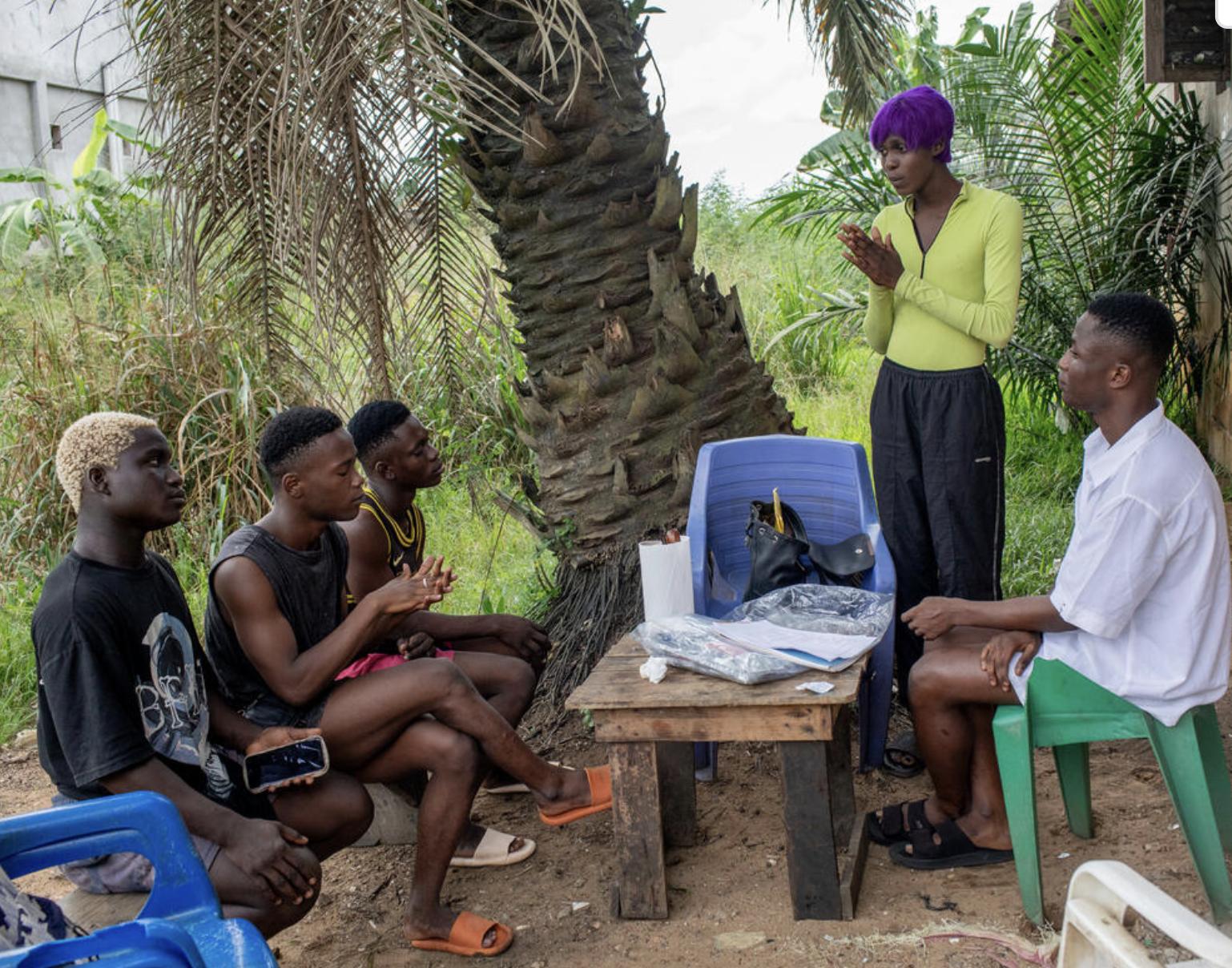
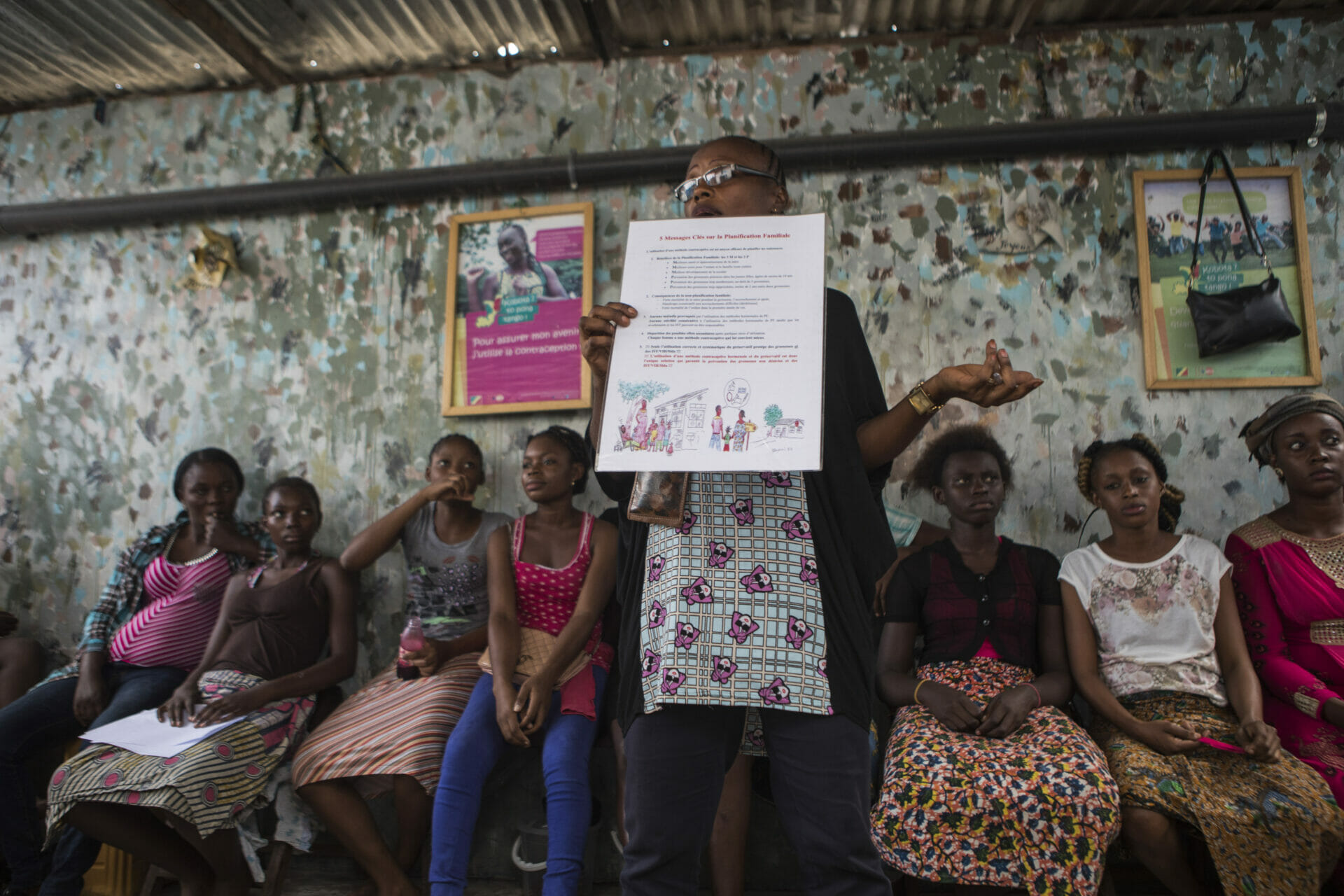
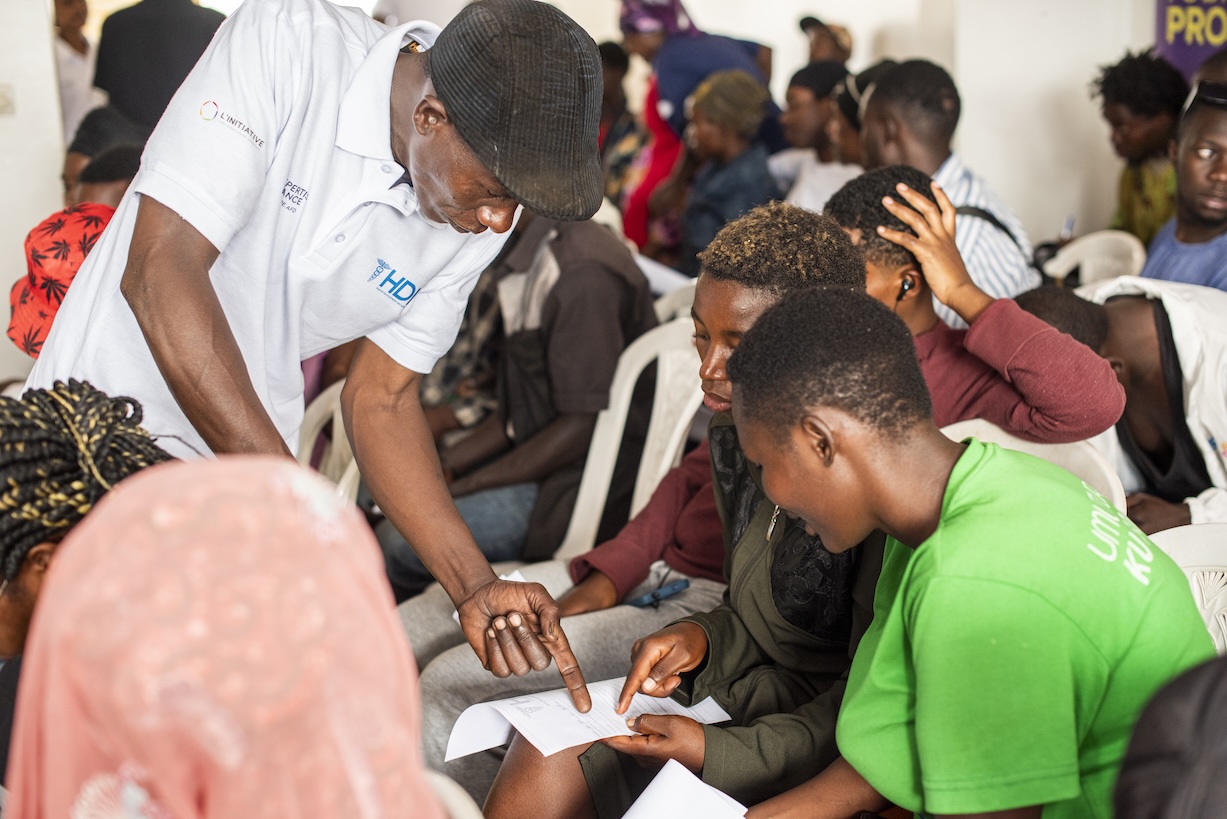
Rova Ralaindimby: DESPS is not just a medically oriented programme: it is a community innovation. We have organised a network of four civil-society organisations (AFSA, FIVEMIMAD, SISAL, Réseau LGBT) to reach hundreds of sex workers every day through the voices of peer educators (PE). These peers, trained on sexual and reproductive health issues, gender-based violence, HIV, sexually transmitted infections and human rights, become the primary field-level relays. Beyond distributing condoms and running decentralised testing, DESPS places sex workers’ empowerment at the heart of the action: beneficiaries were consulted from the project’s design phase, take part in discussion groups and evaluate the activities themselves.
How does the peer approach change the game?
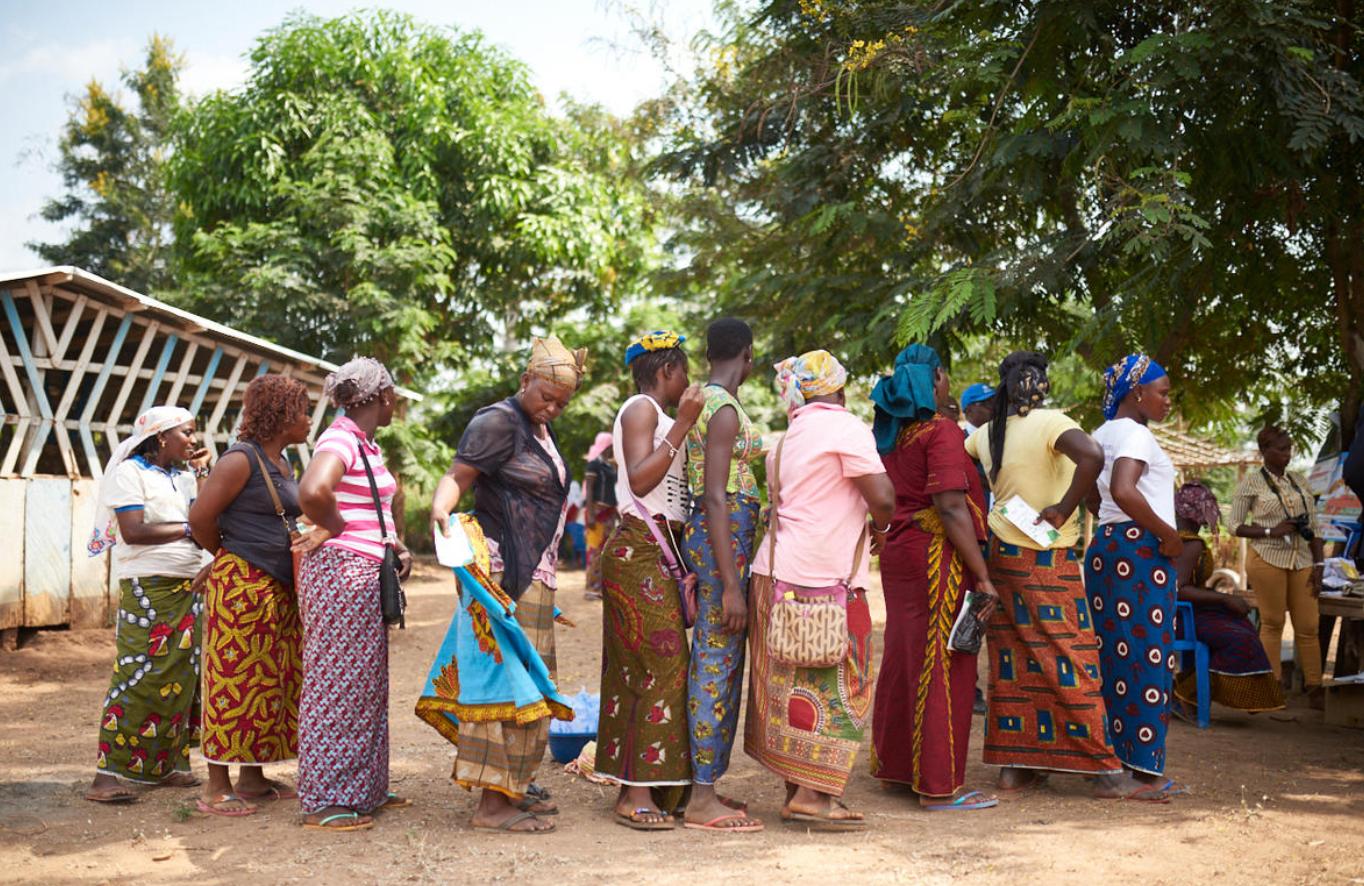
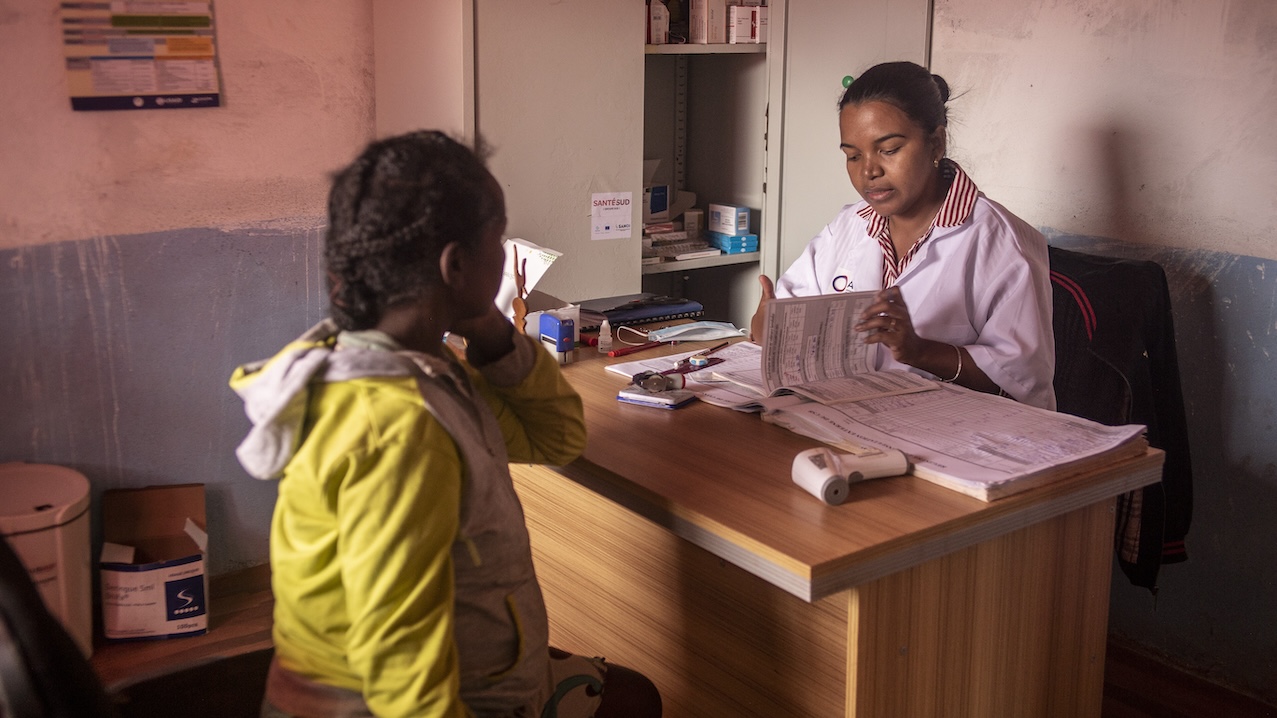
Rova Ralaindimby: Peer educators embody trust: they share the same background, the same fears, and know how to break down the barrier of stigma. Along the Antananarivo–Tamatave axis, they run weekly outreach rounds, distribute prevention kits, facilitate discussion groups and accompany each sex worker to the nearest health centre. The results are already visible. We have observed increased attendance at primary healthcare centres by sex workers, better coordination between stakeholders, greater involvement of sex workers in associative life and strengthened capacities of local civil-society organisations. To illustrate: in Moramanga, a peer educator referred a sex worker for safe post-abortion care, preventing serious complications after she had tried to terminate her pregnancy with herbal teas.
What synergies exist with political actors and what advocacy results do you aim for?
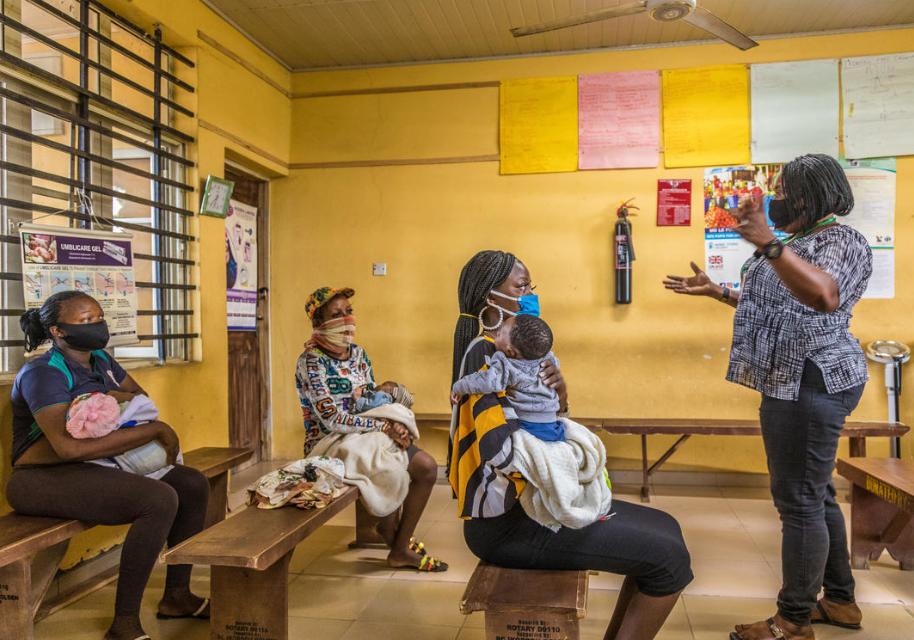
Rova Ralaindimby: We conduct ongoing advocacy with the Ministry of Health and local authorities for better recognition of sex workers as a key population. After several exchange days, some primary health centres have set up non-stigmatising reception hours, and members of the National Assembly have visited our outreach rounds to understand field realities. In the medium term we are advocating for the adoption of a national reception protocol for sex workers and the inclusion of a dedicated budget line for prevention supplies. In the long term we aim for legislative reform guaranteeing the right to health and protection against violence for everyone.
How does DESPS concretely support peer educators (PE)?
Rova Ralaindimby: Beyond their field engagement, we provide PE with regular technical support: continuous training (sexual and reproductive health and rights, gender-based violence, negotiation techniques and self-defence), psychosocial support, compensation for night outreach, and the supply of safety equipment (torches, high-visibility vests, liaison phones). These measures enable them to work with confidence and to overcome security risks and professional burnout. We also organise debriefing and analysis groups so they can share experiences, collectively identify solutions and strengthen their role as community leaders.
What are the main challenges and the vision for the future?
Rova Ralaindimby: Stockouts of prevention commodities (condoms, testing supplies) and the need to involve local authorities remain our biggest obstacles. We have established buffer stocks and strengthened logistics management in supported primary health centres. For the future, we want to consolidate referral pathways, scale the DESPS model nationally and develop a best-practice guide for public policies. Our conviction: without inclusion of sex workers in health governance, the targets for combating HIV and sexually transmitted infections will remain out of reach.