
Supporting to strengthen health and rights: immersion in the daily life of peer educators who are sex workers
In Madagascar, Mandaniaina and Masinjaka — both sex workers — work as peer educators within the DESPS project (Rights, Empowerment and Health for Sex Workers), run by Médecins du Monde with support from L’Initiative. Trained to support their peers, they run night-time outreach rounds and lead self-defence workshops, building the essential trust needed to remove barriers to healthcare and rights.
A hard daily life, marked by violence and danger
It is 7:30 pm. Mandaniaina slips out of her cramped room, holding her baby’s blanket to her chest. She puts on her heels, touches up her hair, then crosses the compound towards the meeting place.
“In the morning I already have to think about earning enough to eat. Every step I take is a choice: my child’s hunger or the danger of the street,” Mandaniaina confides.
Among hurried drivers and street vendors she scans for potential clients for the night. Always on guard, she knows the smallest moment can turn violent: “One evening a client in a 4×4 pulled up to me. He negotiated the price. We agreed, I got into the car, then I suggested going to a short-stay room. He refused, preferring to do it in the open. We, sex workers, know those requests are among the most dangerous. We become vulnerable and more exposed to attacks and violence. That’s why I refused. He began to force himself on me, to insult me, and locked me in his car. Immediately I smashed the window with my heel to get away. Without that technique, I don’t know where I would be today.”
At dusk, raising awareness among peers
Two days later, at 5:30 pm, night is falling over Antananarivo. Masinjaka watches from the doorway of her makeshift home. She has been a sex worker for several years. To feed and support her family, she initially hid the work from her husband. When he found out he left her and the children. Since then, she has continued sex work to survive.
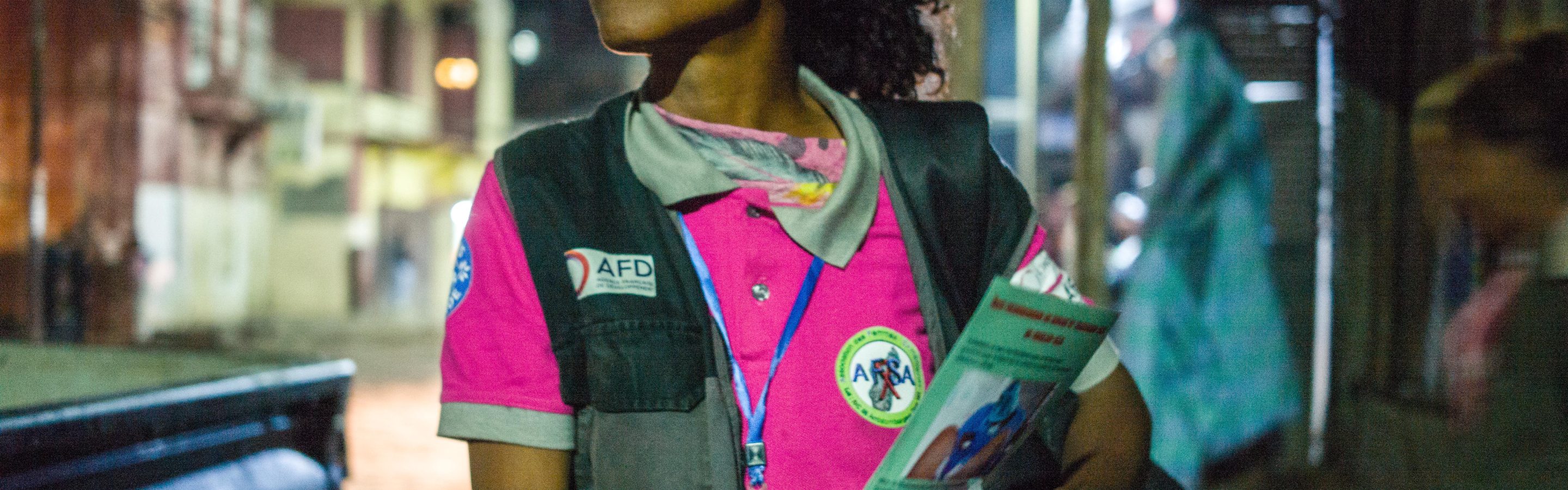
Tonight Masinjaka leaves her high heels and short skirts behind and adopts a different posture: she will run an outreach round in the meeting places to listen to and inform sex workers about health and their rights. She goes to meet them, tells them she will be there and explains the rendezvous point.
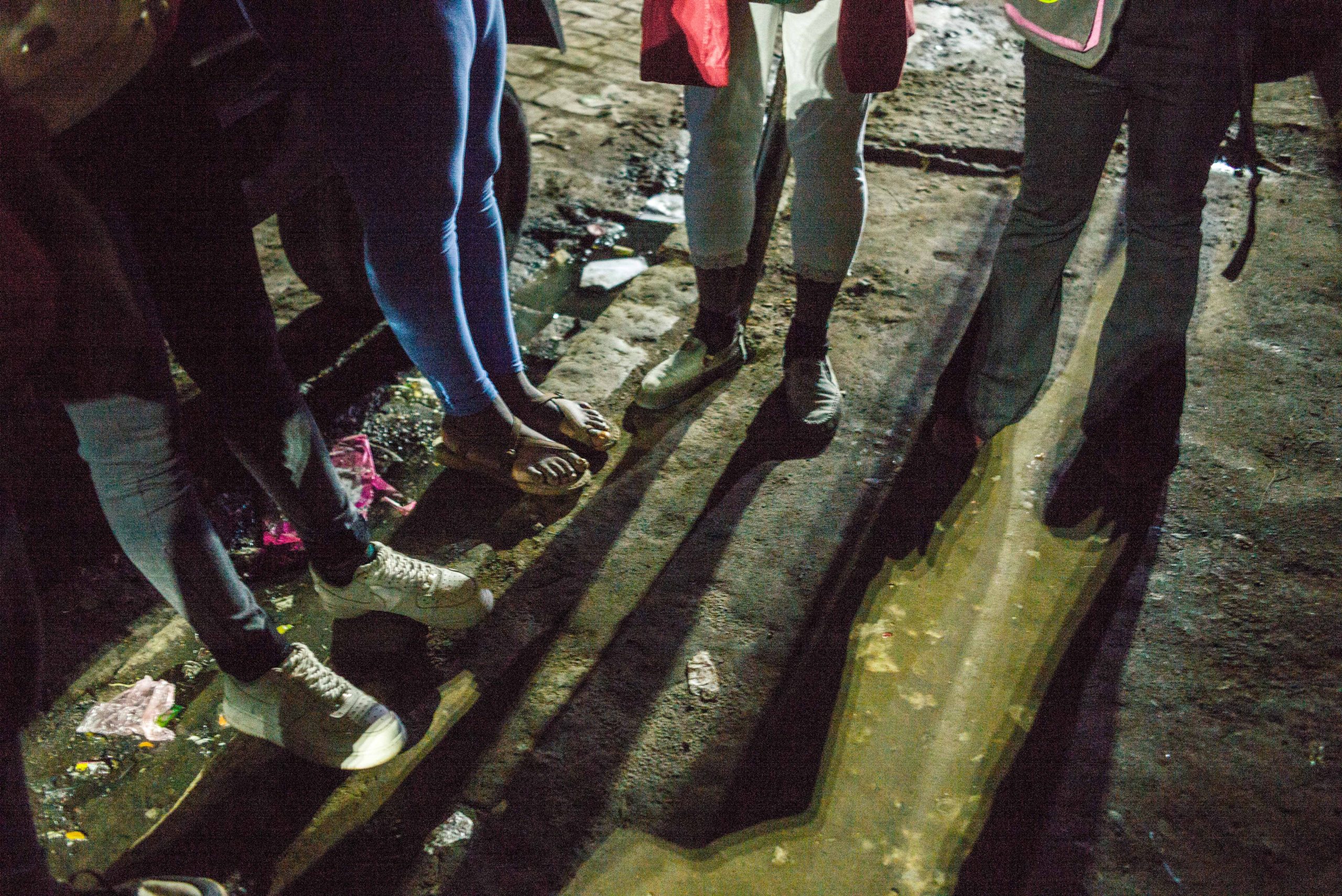
Thirty minutes later the sex workers gather in a circle, attentive and hesitant. One of them spots a client and chooses to leave. She needs the money and cannot afford to spare these few minutes.
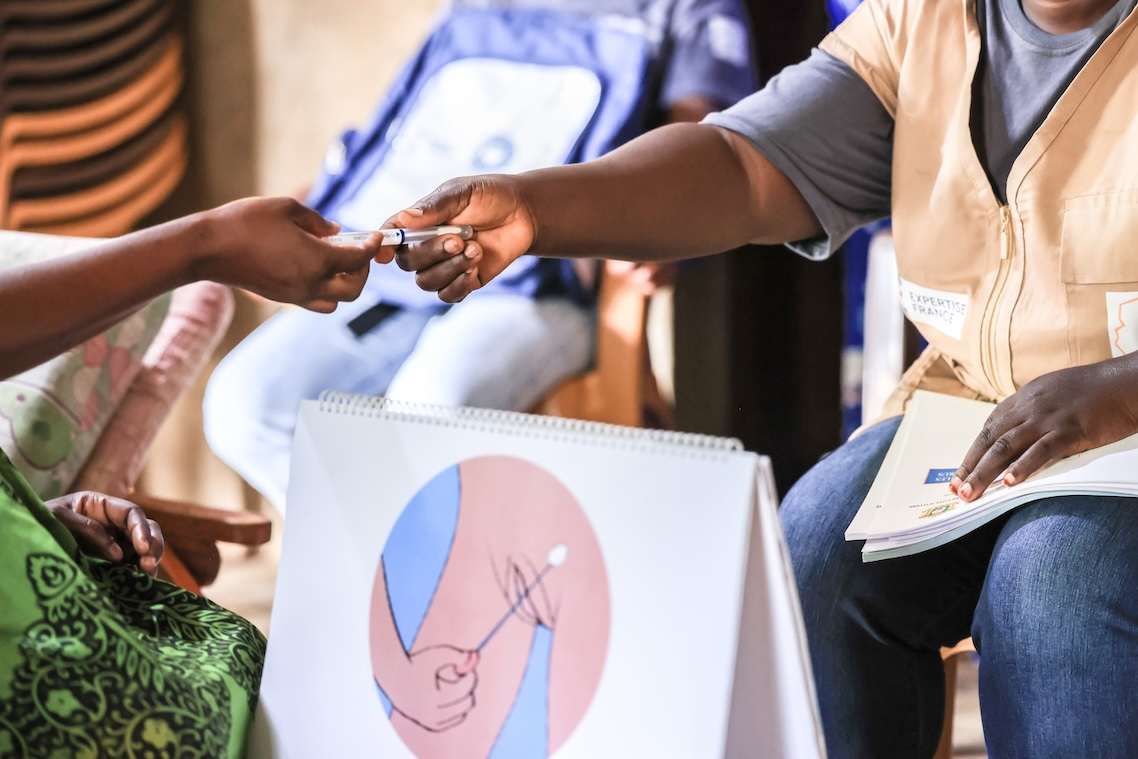
Masinjaka brings out her materials: a large illustrated information book, leaflets, and a wooden penis. The alley is dark; the peer educator switches on her torch and smiles: “Good evening, thank you for being here. How are you?”
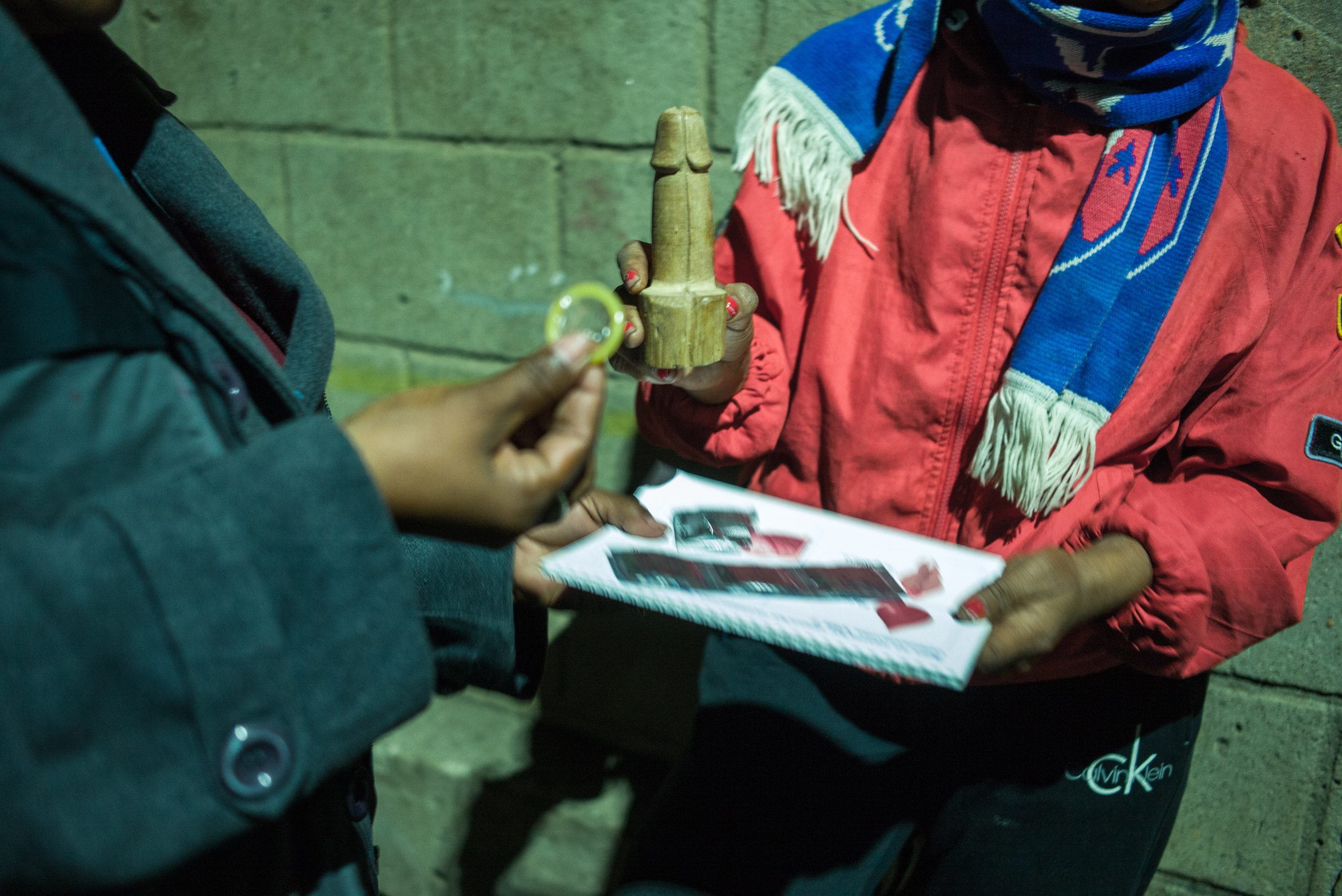
She breaks the ice, asks how people are, laughs with her peers to build trust. Masinjaka introduces the sexual and reproductive health and rights topics she will cover: sexually transmitted infections, family planning, available health services, the right to health, the right to care in cases of violence… the awareness messages follow one another. She uses IEC tools — even the wooden penis to demonstrate condom use. Speaking to the realities of their daily lives, the messages get through. In a setting marked by violence, sex workers support one another. Tongues loosen. The discussion drifts and they open up to Masinjaka. One sex worker speaks up, still shocked by what happened to a colleague recently.
“She was pregnant. To prepare for her child and meet basic needs, she kept working. One evening a client, alone, arrived by taxi. He took her to the nearby cemetery and suddenly there were four other people. My friend was attacked by those five people. They abused her. They ran off without paying her, leaving her alone and traumatised. And then, later, she lost the baby.”
Masinjaka knows there are often similar cases: sex workers facing clients who refuse to pay after sex, abuse, violence, rape. Such situations are frequent and leave deep marks.
“Next week we will hold a workshop so you can learn self-defence — you are welcome!” the peer educator announces at the end of the outreach.
Knowing how to react to violence and danger
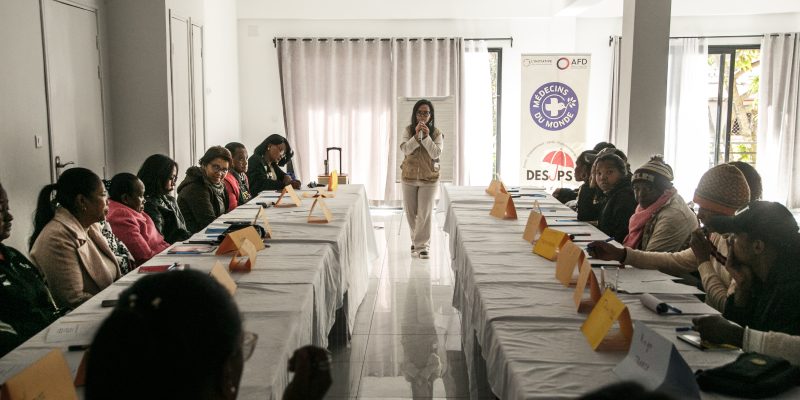
LThe following week Mandaniaina prepares for two days of self-defence training. At 8:30 am she enters a room set up for the occasion. The rubbery smell of gym mats hangs in the air; on a large whiteboard the day’s agenda is listed: sharing experiences, negotiation techniques, learning and practising self-defence moves without attacking…
Around Mandaniaina, men and women — including transgender people — from various backgrounds take their places. The workshop starts with a round of introductions during which each person states their expectations: to feel safe, know how to negotiate, protect their body. At 9:00 the coach proposes a pre-test to identify strengths and individual fears. Mandaniaina, drawing on 11 years’ experience, listens, always attentive with her baby in her arms.
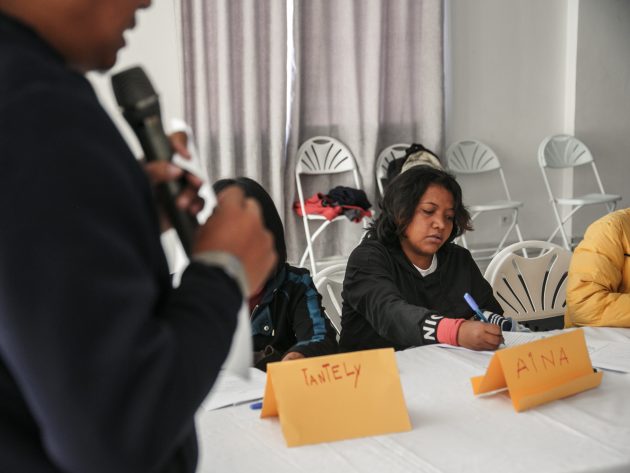
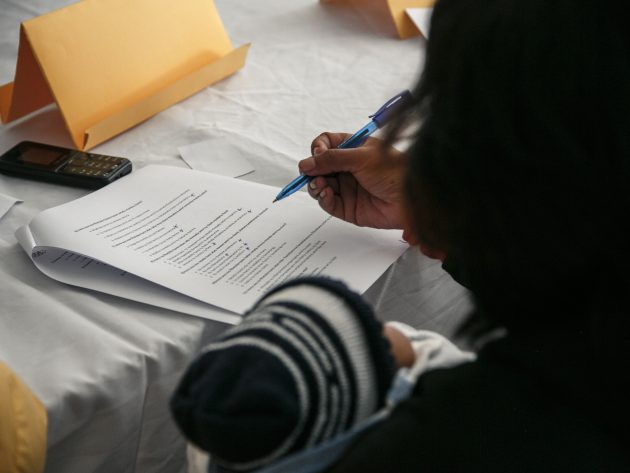
The first major session focuses on negotiation: how to assert a refusal to have unprotected sex? Facing a coach playing a drunken client, participants practise and repeat so they know how to react.
The movement is hesitant at first, the voice unsure. Gradually words become verbal shields and faces lift.
The day continues with the use of everyday objects for self-protection: a scarf, a pen, a shoe — each item can be used to defend oneself. The guiding principle is clear: learn to defend without attacking. Participants exchange conspiratorial laughs — shyness and apprehension give way to an atmosphere of empowerment, participants feeling increasingly like guardians of their own safety.
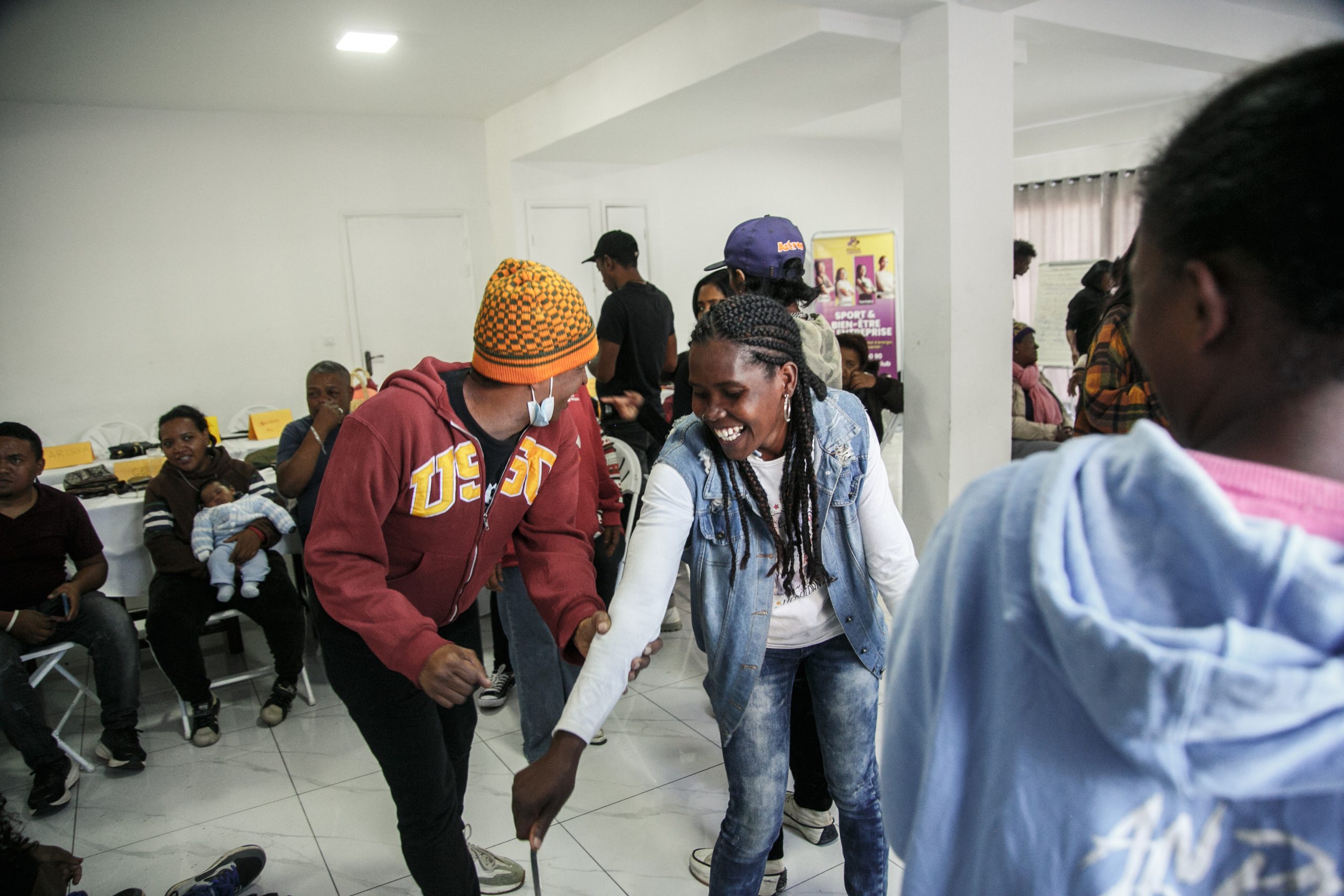
“Before, I thought defending myself required strength,” admits a young sex worker, “but I have understood that it’s all about technique and strategy.”
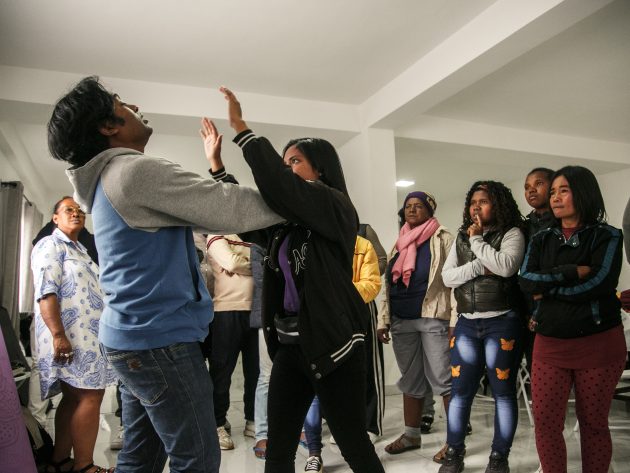
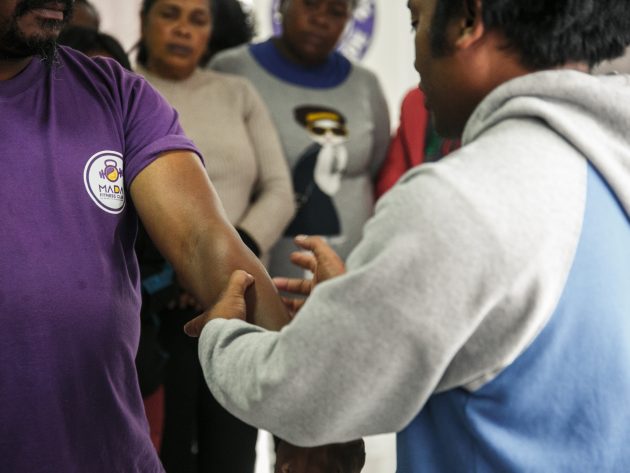
The next day, around a car, the coaches run through simulations of sex workers’ everyday situations to allow for physical techniques: getting into a car butt-first so as not to risk a facial attack, keeping a hand on the belt buckle throughout negotiations, passing an arm out the window to block the window closing. The afternoon allows participants to practise after learning about the body’s weak points and strategies for using an attacker’s force against them. Emphasis is given to advanced moves: breaking free from a choke-hold, disarming a knife attack, getting up after a fall…
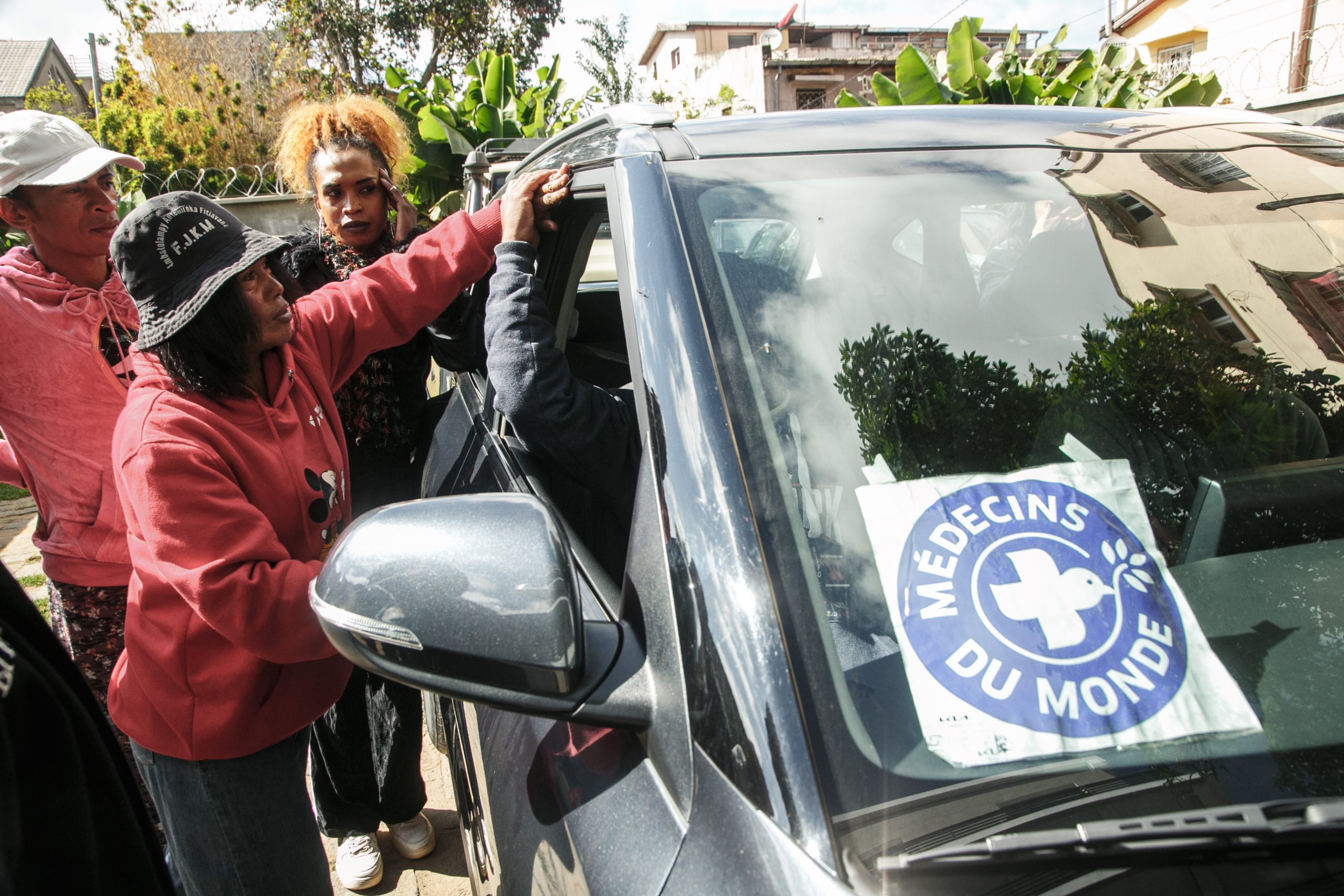
Mandaniaina testifies: “The techniques are simple and direct. There are no useless moves. Anyone can perform them.”
At the end of the training, the sex workers are unanimous: the course gives them confidence, teaching the moves and attitude to protect themselves without attacking.
“I feel ready to react if something happens, while keeping a cool head,” says Mandaniaina with a sure tone.
From the streets to the improvised gym, these women and men — including transgender people — embody the project’s spirit: go out, listen, equip and empower. Each outreach builds a bridge of solidarity, each self-defence move is a bulwark against violence. To effectively curb HIV — whose prevalence was estimated in 2017 at 5.6% among female sex workers and 14.8% among male sex workers — and sexually transmitted infections, targeting these vulnerable populations through peer-led approaches is essential: by giving sex workers the negotiation tools and physical protection skills they need, the project not only strengthens their safety, but also their ability to insist on condom use and to access care calmly. It is also here, in the heart of neighbourhoods and in the intimacy of these workshops, that the next victory against infections, violence and stigmatisation is being forged.