
SAGCO strengthens women in sex work’s access to health care in the Centre, Littoral, West and South regions of Cameroon through a participatory, transformative approach that combines gender-sensitive community empowerment, local multi-condition health services and an improved response to gender-based violence (GBV).
Contexte
In Cameroon, women in sex work have one of the highest prevalences (24.3%) compared with the general population aged 15–49 (2.7%). Criminalisation of sex work, stigma and GBV strongly limit their access to quality care. Targeted, non-stigmatizing responses are therefore needed.
Description
To increase sex workers’ access to health care, the SAGCO project is structured around four complementary components:
- Monitoring & evaluation, capitalization and advocacy: establishment of a confidential GBV database, documentation of access barriers, production of guidance materials, collection of life stories and production of a short advocacy video.
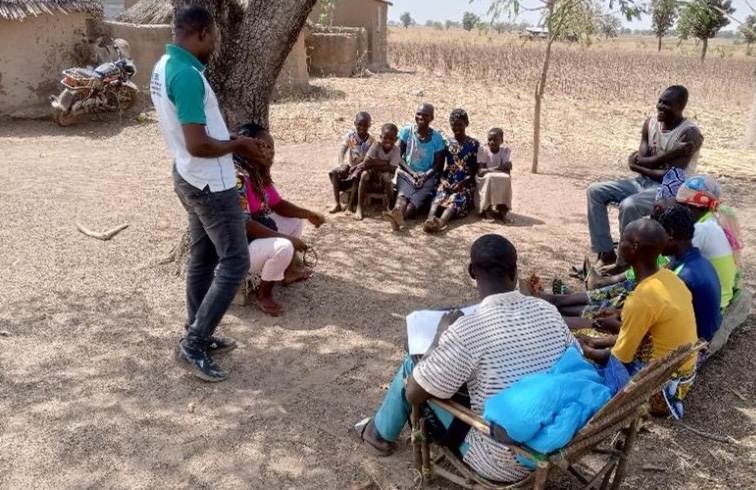
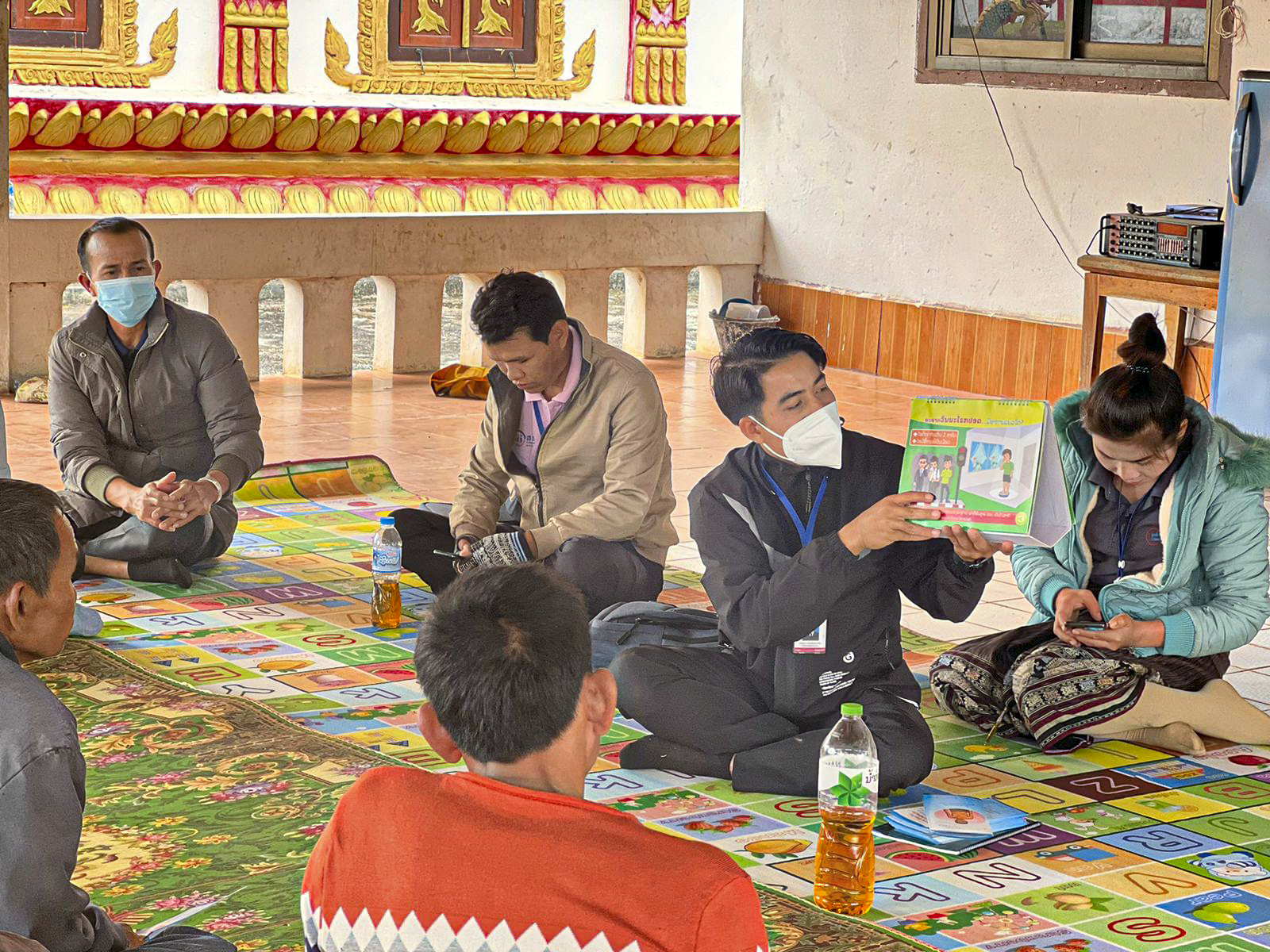
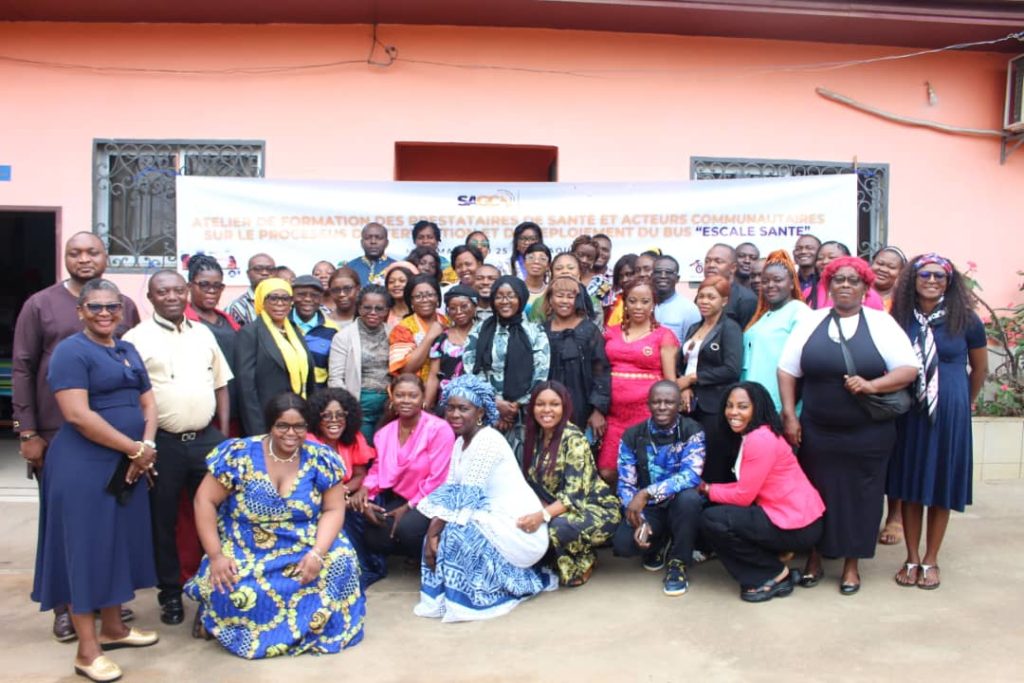
- Community empowerment and mobilisation: capacity building for peer educators (PE) who are women in sex work and for gatekeepers (training, development of educational outreach tools, formative supervision) to conduct sensitisation activities — notably on HIV/AIDS, comorbidities, and inclusive, gender-sensitive sexual and reproductive health;
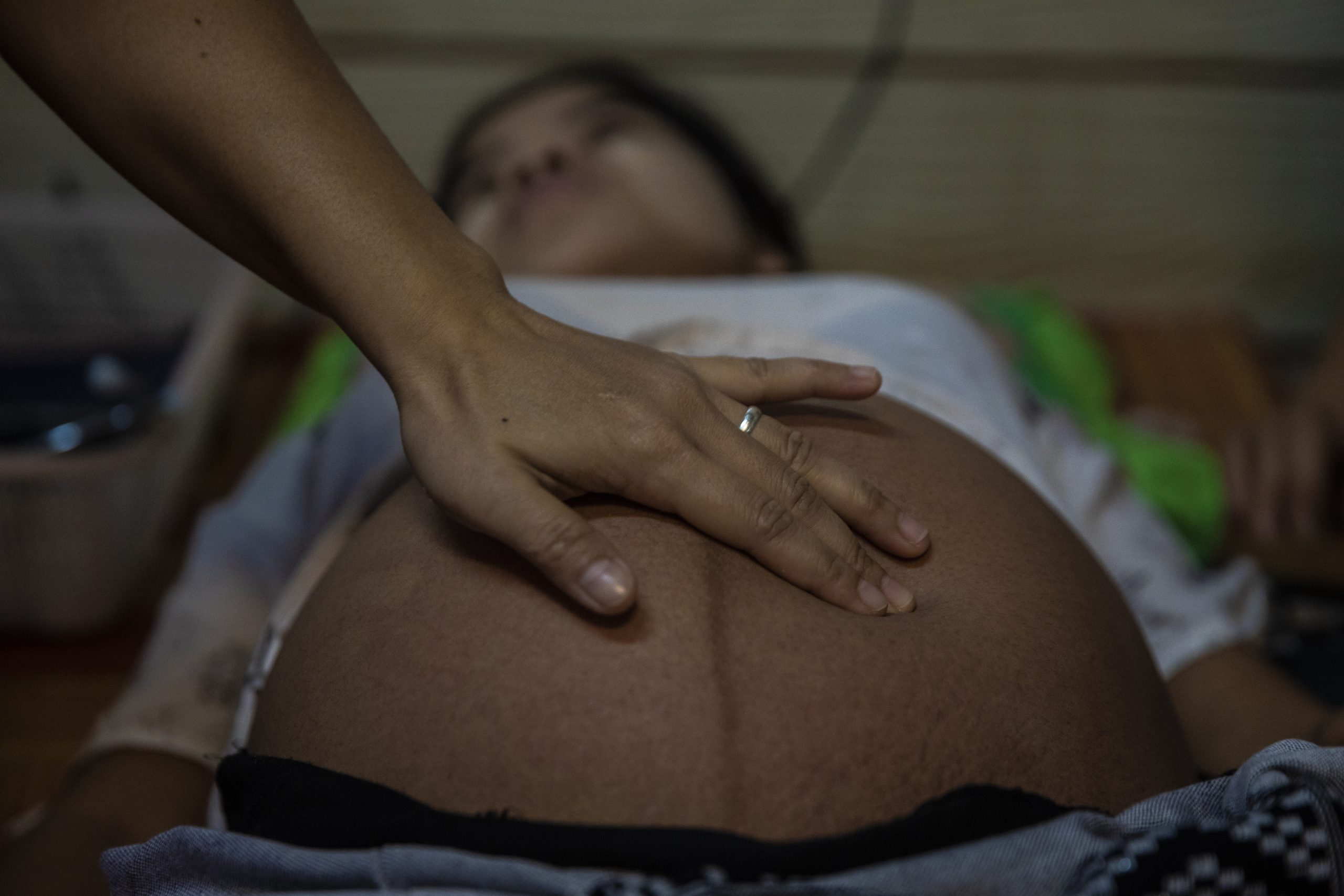
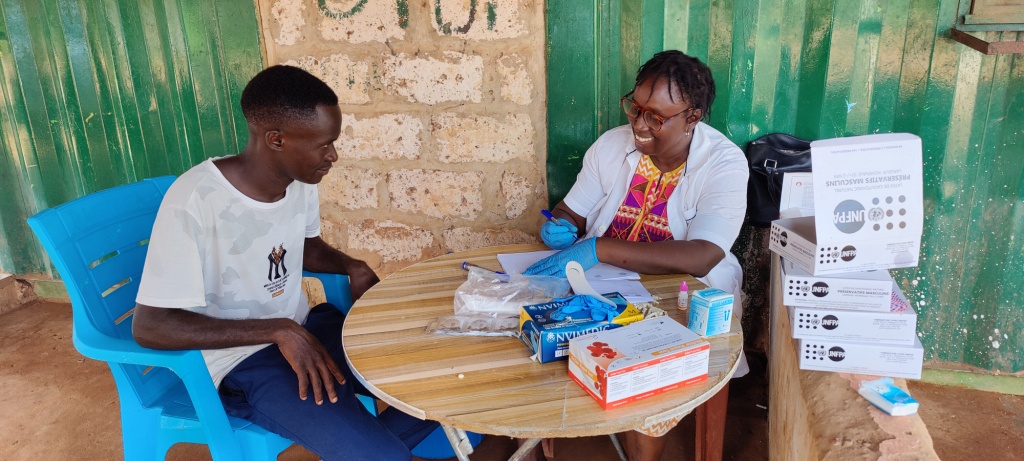
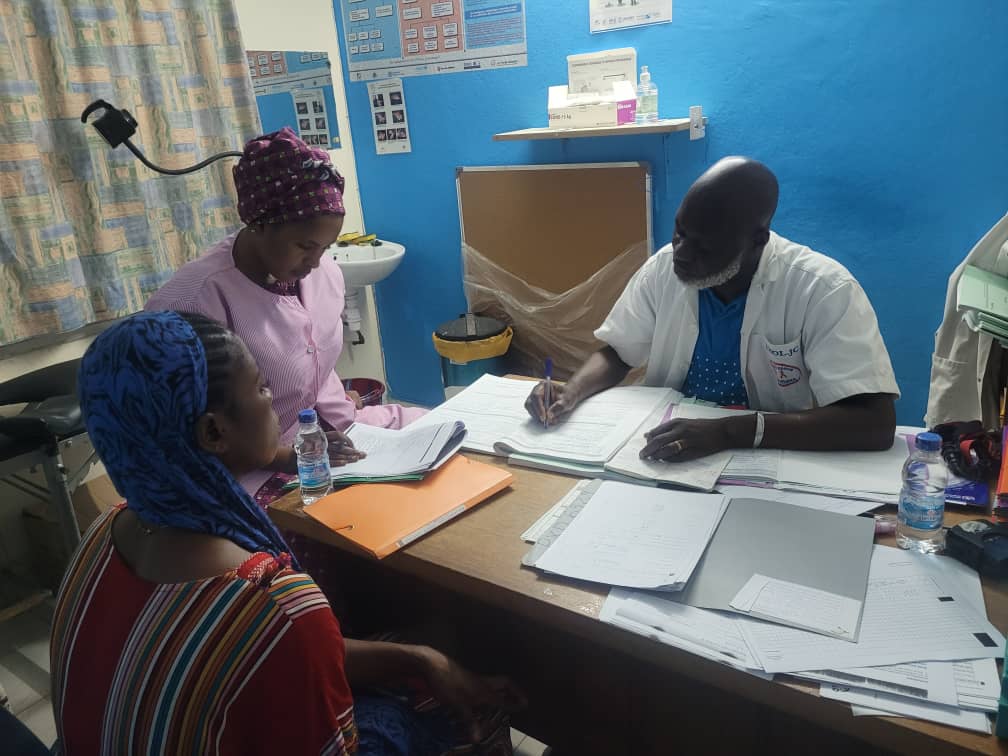
- Community-based multi-condition care — “Bus Escale Santé”: deployment of a mobile unit offering prevention, general consultations, diagnostics (HIV, STIs, malaria, human papillomavirus, hypertension, diabetes, hepatitis, pregnancy testing, etc.), immediate care or referral to health services;
- Strengthening the GBV response: identification and documentation of cases, psychosocial and medical care, support groups, self-defence training and referral to legal clinics when needed;
Impact
SAGCO aims to mobilise over 1,900 women in sex work, deliver approximately 1,500 multi-condition consultations, provide care to around 1,000 GBV survivors and train 16 peer educators and 8 peer gatekeepers. The project seeks to empower beneficiaries, diversify the service package to include GBV response and wellbeing care, and improve overall access to quality services.