
Lisa Huang: “Cervical cancer screening exists. The challenge is making it accessible.”
Cervical cancer is one of the few cancers for which a global elimination strategy now exists. Yet it continues to cause hundreds of thousands of deaths every year, mainly in low- and middle-income countries, and disproportionately affects the most vulnerable populations, regardless of the country considered. Implemented by Expertise France with the support of Unitaid, the SUCCESS project, launched in 2019, supports countries in bridging the gap between international recommendations and their effective implementation. Interview with Lisa Huang, Program Director.
Why does SUCCESS focus on secondary prevention of cervical cancer?
Lisa Huang: Since the adoption in 2020 of the WHO global strategy for the elimination of cervical cancer, a shared international framework has been in place, structured around the so-called “90–70–90” targets to be achieved by 2030: HPV vaccination, screening, and treatment of precancerous lesions. In practice, however, secondary prevention currently represents the weakest link in this strategy in many countries.
Historical screening approaches, such as visual inspection with acetic acid when used alone, have shown limitations in terms of performance, quality and scalability. HPV screening offers far more robust prospects from a medical perspective, but it is also more demanding: it requires laboratory capacity, appropriate service organisation, and above all continuous care pathways to ensure effective linkage between screening, diagnosis and treatment.
SUCCESS was designed in response to this reality. The project focuses on secondary prevention not to add another intervention, but to support the operational translation of international recommendations, taking into account the real constraints faced by health systems. The challenge is not to demonstrate that solutions exist, but to create the conditions under which they can function sustainably at scale.
What does SUCCESS show regarding the integration of screening into health systems, particularly at the HPV/HIV interface?
Lisa Huang: The experience of SUCCESS shows that integrating cervical cancer screening cannot be considered independently from existing services. Introducing a more performant test is not sufficient. It is necessary to work simultaneously on governance, financing, human resources, laboratory capacity, health information systems and service organisation.
The link between HPV and HIV illustrates these challenges particularly well. Women living with HIV face a significantly higher risk of developing cervical cancer, often at a younger age. Yet in many contexts, HIV care services and cervical cancer prevention services remain largely siloed.
SUCCESS supports countries in reducing these silos by integrating cervical cancer screening and care into existing HIV and sexual and reproductive health services. This integration makes it possible to reach particularly exposed populations, but it also raises very concrete challenges in terms of organising care pathways, training health workers and ensuring continuity of care.
The issue of follow-up for women lost to care is central. In some contexts, a significant proportion of women who are screened do not go on to receive treatment. One of the contributions of SUCCESS is to make these systemic weaknesses visible, which is a necessary condition for adapting responses and strengthening continuity of care. Support from L’Initiative has enabled the scaling up of good practices and approaches demonstrated by SUCCESS in other countries.
What lessons can be drawn for countries and partners at the international level?
Lisa Huang: SUCCESS is implemented across a wide range of national and regional contexts, in Africa, Central America and Asia, in countries such as Burkina Faso, Côte d’Ivoire, Cameroon, Guatemala and the Philippines, each with very different health system configurations, regulatory frameworks and levels of resources.
This geographic diversity is a central feature of the SUCCESS experience. It makes it possible to compare contrasting situations and to identify cross-cutting lessons, without overlooking local specificities.
Experience shows that the success of secondary prevention strategies depends less on a single tool than on a set of structural conditions: sustainable financing of inputs, reliable supply chains, strengthened steering and governance capacities, and effective integration of secondary prevention into the training of health professionals, existing services and community-based mechanisms.
In Asia, the SUCCESS–FAP component is part of this approach. It supports countries in adapting secondary prevention strategies to their specific contexts, while pursuing a shared objective: making screening and care effectively accessible to women.
The longevity of the program, made possible by a relationship of trust with Unitaid and by the expertise gradually built up by Expertise France, has allowed these lessons to be embedded over time. For partners, SUCCESS is a reminder that the challenge is not to replace national systems, but to support their progressive ownership and responsibility. Beyond the diversity of contexts, equity and effective access to care for the most vulnerable populations emerge as a common thread among strategies that work.
Why continue the effort despite a 2030 horizon that is difficult to reach?
Lisa Huang: We must be clear-eyed: in many countries, the goal of eliminating cervical cancer by 2030 will probably not be achieved. This does not, however, call into question the need to act. Cervical cancer is a preventable cancer, and every improvement in access to screening and treatment has a direct impact on mortality.
SUCCESS is part of a long-term perspective: strengthening what works, adjusting what needs to be adjusted, and continuing to invest in integrated and sustainable approaches, in Africa as well as in Asia. The challenge is not only to reach a global target, but to consolidate national trajectories capable of producing lasting effects.
Every woman who dies today from cervical cancer dies from a cancer that we know how to prevent. It is this reality that continues to guide the project’s action.
The SUCCESS programme on the ground
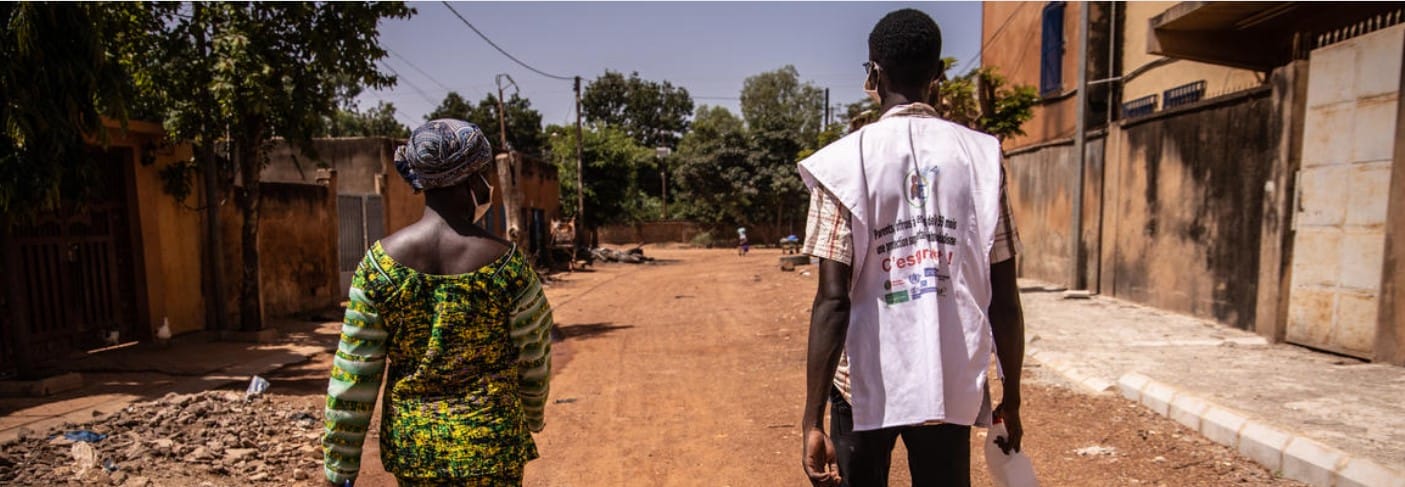
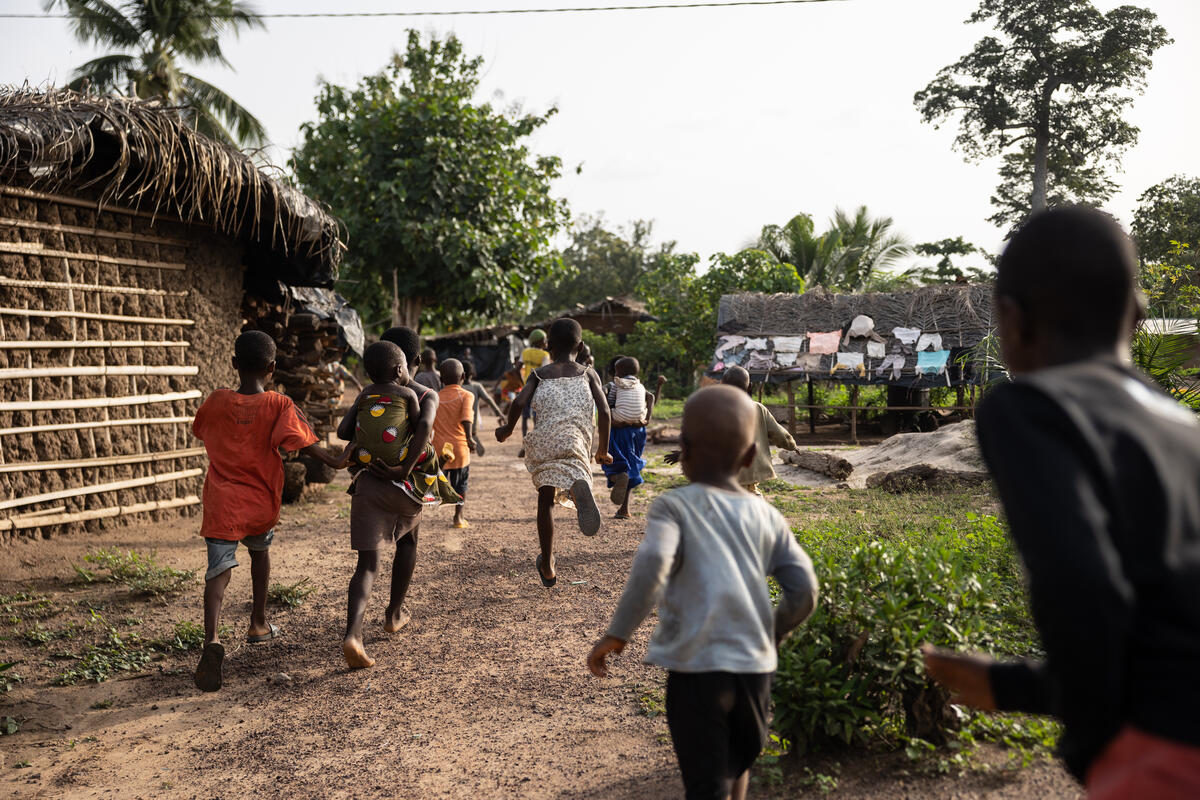
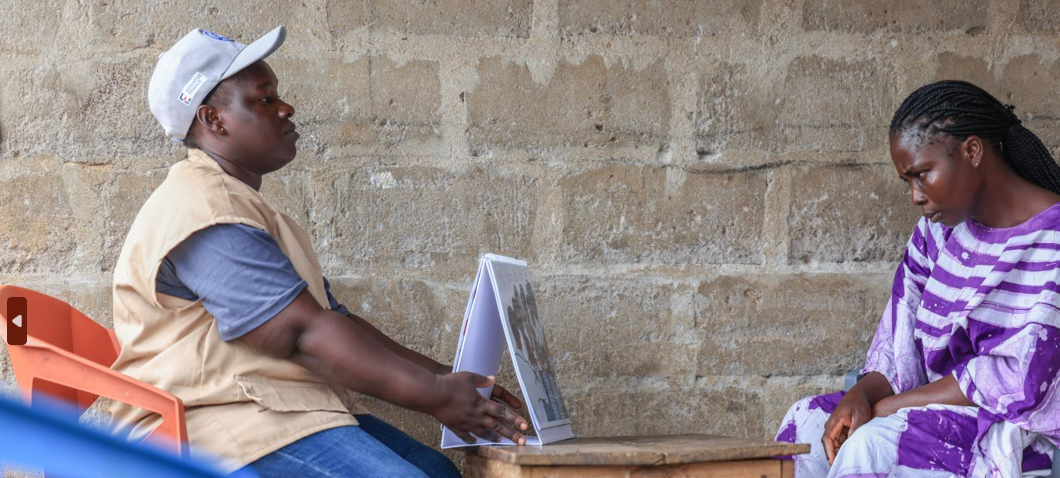
“We build trusting relationships with families so that every woman can know her HPV status. That’s essential for detecting the disease early,” explains Soro Nagnandjo, a community health worker (CHW) in Pont-Néro, a village in the San-Pédro district, in the documentary about SUCCESS activities in San-Pédro, Côte d’Ivoire.
Led by Médecins du Monde in San-Pédro, Côte d’Ivoire, discover the work of community health workers as part of the SUCCESS programme.