
Jeunes en Vigie: national ownership, democracy and feminist health in Senegal, with Jane Medor
Following an initial phase piloted by Equipop, the Jeunes en Vigie project is now being rolled out under the aegis of the Senegalese organisation Jeunesse et Développement to strengthen youth civic monitoring of access to reproductive health services. Jeunes en Vigie highlights the power of women’s leadership: trained female auditors, embedded in their local areas, are transforming relations between young people and healthcare providers and carrying the advocacy for rights-based reproductive health. Interview with Jane Medor, Programme and Resource Mobilisation Officer at Jeunesse et Développement.
From legacy to national ownership: what is the project and what are the ambitions for Phase 2?
Jane Medor: Jeunes en Vigie (JeV) is an innovative health democracy project driven by a youth civic monitoring network. The auditors were (Phase 1) and will be (Phase 2) responsible for collecting data on young people’s needs regarding access to reproductive health services; these data will feed advocacy directed at local authorities, in partnership with service providers. Thirty auditors were trained during Phase 1, at a rate of 15 auditors per district. For Phase 2, we have expanded activities to Saint-Louis and Sédhiou, in addition to Mbour and Matam. Now implemented by Jeunesse et Développement, a Senegalese NGO, Phase 2 is carried out directly by community actors, service providers, authorities and the auditors so that they can appropriate the strategies and ensure the sustainability of the mechanism. Governance is intended to be inclusive: it will be the local actors who steer activities according to needs and contexts, facilitated by consortium members.
Social audit is at the heart of JeV: why maintain and strengthen this method now?
Jane Medor: The social audit carried out by the auditors is an essential reservoir of information for understanding the barriers young people face in accessing care. During Phase 1, two social audits were completed. In the short term, it strengthens the auditors’ agency, who are recognised as resource persons by their peers. Day by day, they gain legitimacy. In the medium term, they will have allies to carry advocacy to decision-making bodies and influence policies in favour of young people’s reproductive health rights. The project therefore builds on women’s leadership and is grounded in feminist health democracy.
Methodological innovation: what does the “measure of social utility” bring to the project?
Jane Medor: This measurement will participatively assess the auditors’ real impact on young people–provider relations, the quality of services and actual access to care. It combines quantitative indicators and qualitative testimonies to demonstrate tangible changes. The change-oriented approach defines expected trajectories and transformation factors from the outset.
Youth empowerment: what concrete activities and impacts do you expect?
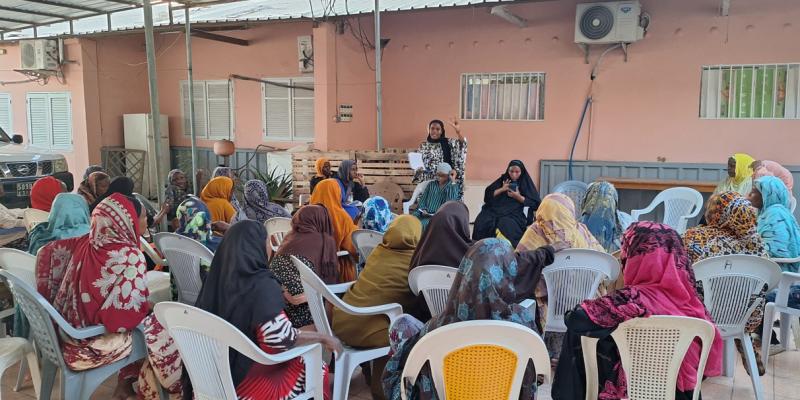
Jane Medor: Empowerment is achieved through strengthening agency: media training, sexual and reproductive health rights, leadership, and citizenship. The auditors will be able to carry out local outreach activities and will reach at least 5,000 people per zone. During Phase 1 they were already called upon as resource people. Phase 2 will intensify collaboration with service providers to remove barriers on both sides and facilitate access to services.
Synergies and networking: what are the benefits for regional and national advocacy?
Jane Medor: JeV works in synergy with several projects implemented in Senegal such as SANSAS, C’est La Vie 2 and Jeunes filles en mouvement. In this dynamic, national and local frameworks have been established in order to collaborate effectively and efficiently with all partners and public authorities. The projects dovetail at several levels: strengthening the capacities of health providers and young people with complementary approaches and a desire not to target the same groups; setting up a social accountability mechanism at local and national levels, reinforced by a civic monitoring system. “C’est La Vie 2” will therefore initiate advocacy for the implementation of the accountability mechanism at national level. JeV2 will help collect the data needed to understand young people’s barriers to reproductive health and thus set up a civic monitoring mechanism. In addition, SANSAS will formalize the accountability mechanism and the network of young trained people who will carry voices at national level.
Gender and protection: how does JeV2 protect and strengthen young women against sexist and sexual violence?
Jane Medor : JeV2 strengthens a feminist approach: training on sexist and sexual violence, rights and care pathways for auditors and service providers. The auditors will identify, report and refer cases to health posts; providers will be trained to welcome and respond better to young people’s specific needs. Thanks to synergy with other projects, several health posts will be equipped to improve youth-friendly reception.