
Learning from the field to strengthen health action: a first geographic evaluation in Madagascar
When L’Initiative decided, for the first time, to conduct a geographic, cross-cutting evaluation of its interventions within a single country, the aim was to make evaluation a strategic learning tool. Carried out over several months in Madagascar with co-constructed recommendations — notably through a workshop in Antananarivo — this unprecedented exercise did more than diagnose the situation: it opened a shared operational agenda to better strengthen the response to the three pandemics and improve health access for all.
Thinking systemically, acting concretely
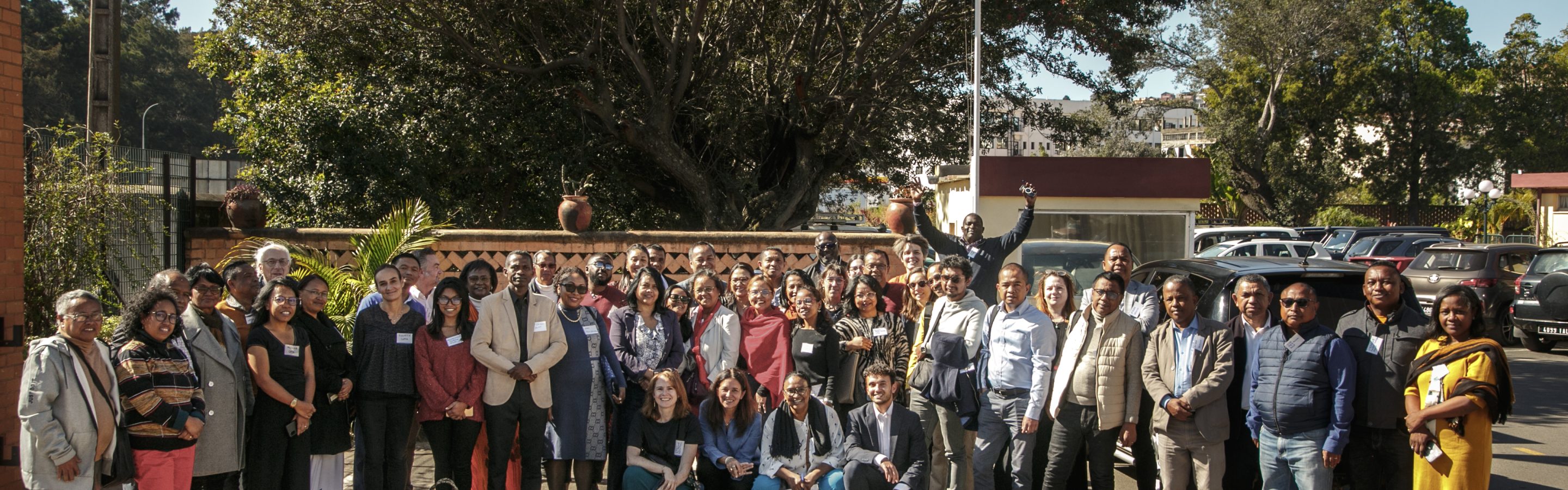
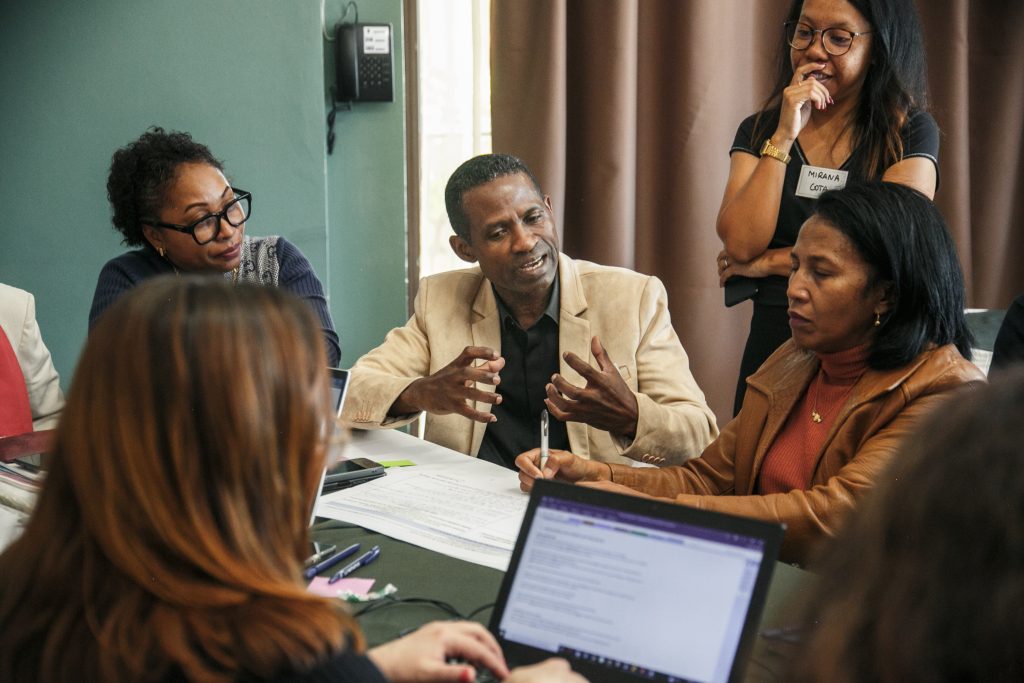
Rather than evaluating projects one by one, the geographic approach reconstructs chains of change to assess overall coherence: what collective effects emerge from a portfolio made up of projects, technical assistance and expert missions? Where has support been catalytic? Where are the blind spots? How do actor networks operate in Madagascar? To answer these questions, the evaluation combined multiple methods — document review, case studies, actor-network analysis, field visits and, importantly, participatory modalities: scoping and co-construction workshops that brought together more than 100 participants from ministries, Malagasy NGOs, technical partners and community representatives.
This methodological choice reflects a simple but demanding conviction at L’Initiative — Expertise France: evaluation is collective learning to adapt actions and promote national ownership. As Rébecca Gillard, Head of the East Africa & 3 Oceans unit, reminds us, “Madagascar is an important country for L’Initiative. It is essential to measure this impact because we manage public funds.”
Read her remarks and those of Juliette Papy, evaluator, from the recommendation co-construction workshop.
Highlighting tangible achievements and structural needs
The evaluation underscores the scale of national health challenges: rising new HIV infections, a resurgence of malaria and significant room for improvement in tuberculosis detection and care. These epidemiological trends, combined with weaknesses in health data and human-resource needs, make strategic, targeted positioning necessary.
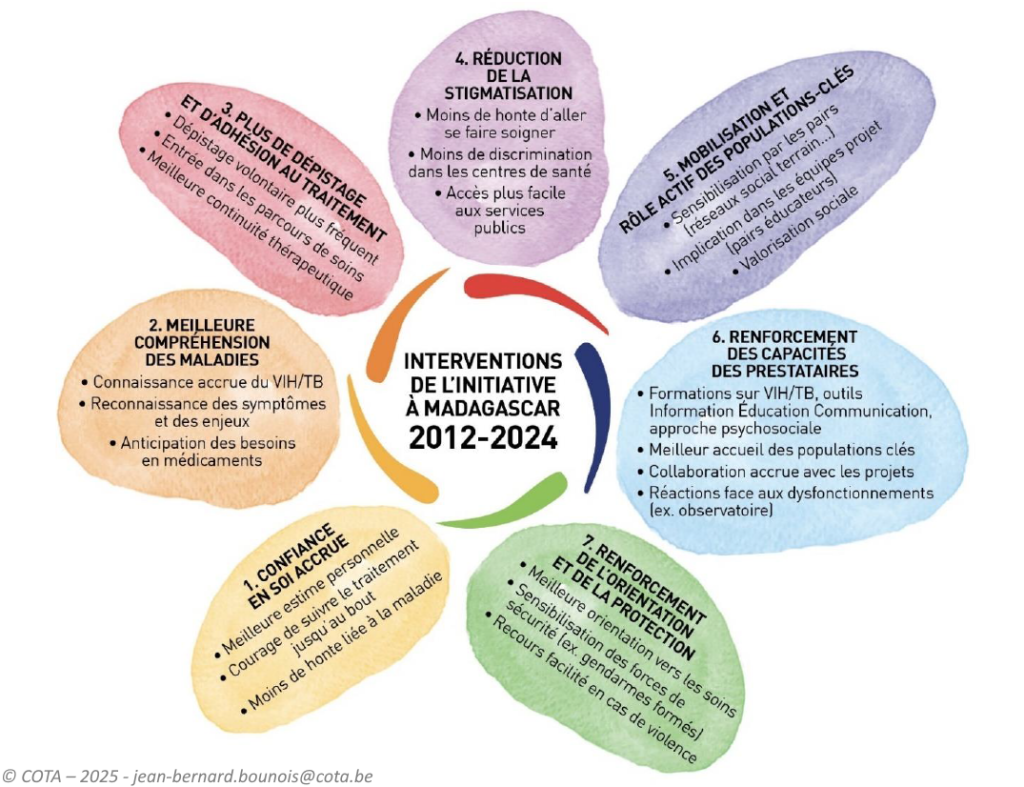
Regarding L’Initiative — Expertise France’s support, the analysis confirms concrete advances. Funded and supported interventions have deployed services adapted to key populations, strengthened local capacities and supported screening and care pathways (notably for HIV and tuberculosis). Several technical-assistance missions contributed to reinforcing national programmes and delivering operational results where local partners needed them.
But the geographic exercise also highlights persistent challenges and raises practical questions:
- How can we strengthen the institutional and community anchoring of interventions to promote ownership?
- How can we reinforce the structuring of Malagasy civil-society organisations?
- How can visibility and resources be pooled in an increasingly complex international context, particularly regarding sustainable and solidarity-based investments?
The evaluation did not stop at diagnosis: stakeholders co-constructed recommendations around concrete questions, designed to make the health response ever more efficient for everyone.
Key results and recommendations
The evaluation summary will be available for download.
In the spirit of accountability and shared good practice, it will highlights the key results and recommendations.
Turning diagnosis into a roadmap
The evaluation marks the start of a cycle, not its end. Designed as a learning instrument, it is intended to lead to an operational roadmap. The objective is clear: move from findings to concrete support — institutional strengthening, targeted technical assistance and inclusive financing mechanisms for Malagasy civil society.
For L’Initiative — Expertise France, this exercise confirms a fundamental stance: evaluate to steer better, learn from experience to make the pandemic response ever more efficient and sustainable.
Madagascar’s geographic evaluation sets a course. It provides L’Initiative and its partners with an empirical, participatory basis to make interventions increasingly coherent and effective — to the benefit of pandemic control and of health access for all.
A public roundtable on the evaluation
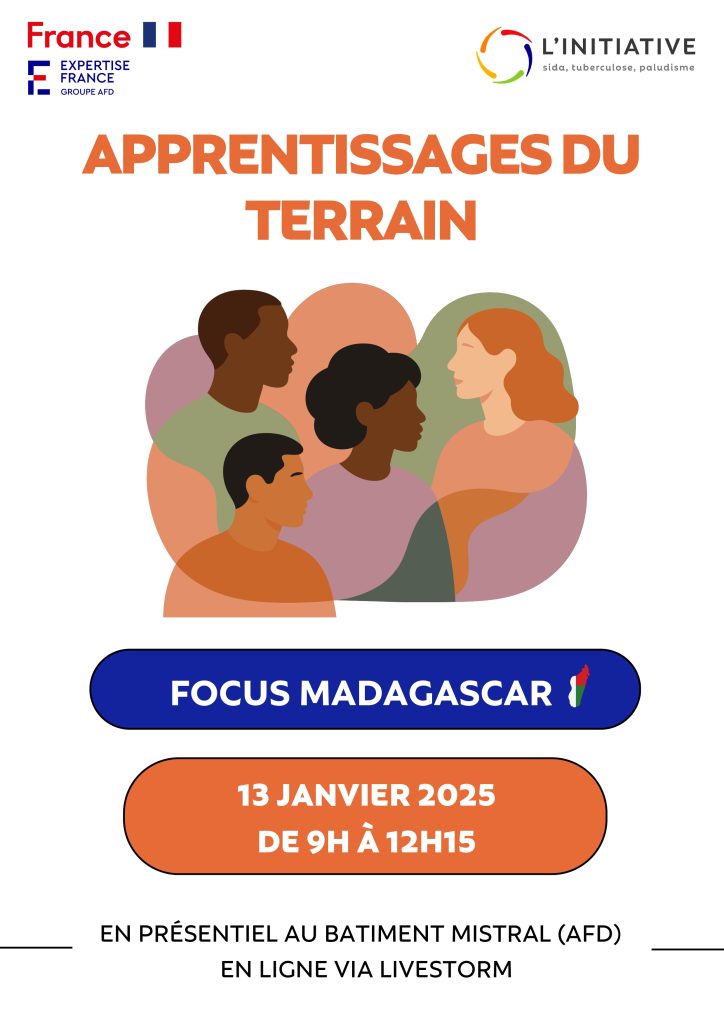
We hosted a half-day event on Tuesday, 13 January 2026 from 09:00 to 12:30 (UTC+1) dedicated to lessons learned from the field and to the actors who bring projects and technical-assistance missions to life.
The session drew on the results of the geographic evaluation. It combined a roundtable with Malagasy civil-society actors on the permanence of NGOs and the sustainability of the dynamics they initiate; a concise presentation of the evaluation’s lessons and recommendations; reflections and feedback from partners and L’Initiative — Expertise France; and field testimonies so that experience, nuance and locally lived constraints remained both the starting point and the anchor of the discussion.
A replay of the event is available.