
« In the face of financial constraints, we must protect the gains made in the HIV response »
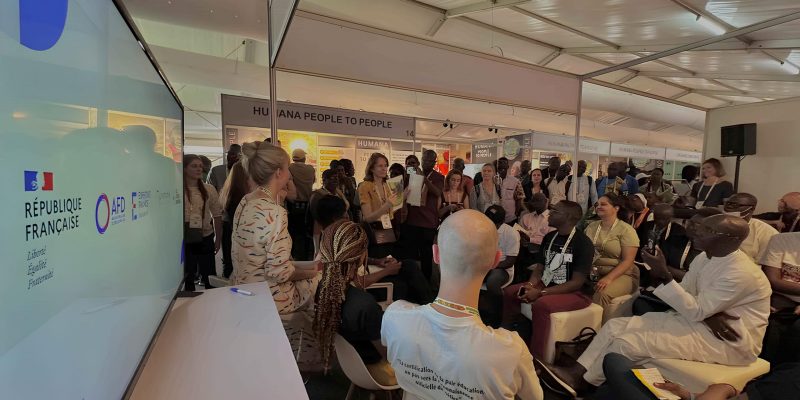
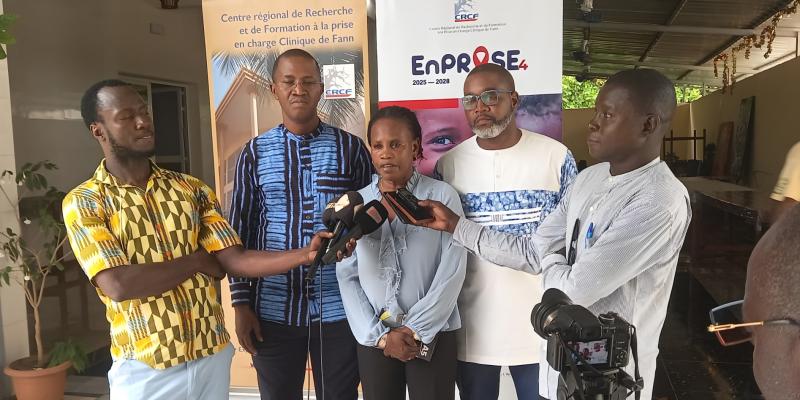
At the AFRAVIH 2026 conference – the international French-speaking forum dedicated to HIV, hepatitis, sexual health and emerging infections – Mohamed Coulibaly, International HIV/AIDS Technical Expert at Expertise France, reflects on the key challenges facing the response: access to innovations, prevention, an integrated approach to HIV-hepatitis-STIs, and the long-term sustainability of interventions. Through the L’Initiative programme, he provides support to national programmes and stakeholders involved in the fight against HIV in Mauritania and Chad.
What is the context for this edition of AFRAVIH?
Mohamed COULIBALY : This conference is taking place in a difficult environment, marked by serious concerns about funding for the HIV response and, more broadly, for the response to major pandemics. We are seeing constraints at multiple levels. Announced funding amounts are lower than in previous cycles, particularly on the Global Fund side, and this is creating anxiety across the community of actors engaged in the fight against HIV.
But this context should not obscure another reality: scientific innovation remains highly dynamic. AFRAVIH has a distinctive role in keeping French-speaking stakeholders up to date on major scientific and operational advances. Innovations in prevention, treatment, psychosocial support, human rights and equity are all discussed together. This is essential, because the HIV response cannot be purely biomedical – it must also account for social realities, discrimination, and the concrete conditions under which people access services.
AFRAVIH also serves as a scientific bridge. It distils, for French-speaking audiences, the results and lessons from major international gatherings that many people do not always have the opportunity to attend directly. The conference brings this knowledge together, opens it up for discussion, and makes it actionable for programmes and frontline practitioners.
What advances in HIV prevention stand out to you as most significant today?
Mohamed COULIBALY : What struck me most was the opportunity to deepen our understanding of HIV prevention. We now have a broader toolkit, with significant advances around PrEP.
Oral PrEP has already proven its worth. But new horizons are opening up with injectable formulations and more spaced-out dosing schedules – every two months, for instance – and, in the longer term, the prospect of six-monthly injections with molecules such as lenacapavir. For people living with HIV risk, this could significantly simplify adherence.
This is a major issue for the most exposed populations: men who have sex with men, transgender people, sex workers, and more broadly all those who stand to benefit from these prevention strategies. Today, the efficacy of PrEP is no longer really the debate. The debate is about adherence, uptake, and the capacity of health systems to offer these tools in an accessible, appropriate and sustainable way.
The other challenge is availability and access. How do we enable the least developed countries to benefit from these innovations? How should services be organised? How should these products be financed? Generic production is a key lever, as it drives down costs. Local manufacturing can also help bring products closer to the people who need them and strengthen countries’ autonomy — but this requires scientific, technical and regulatory support.
Finally, access to innovations requires strong political will. In many countries, that will is declared but implementation remains difficult. Prevention programmes targeting the most exposed populations still run up against stigma, homophobia, and social or political resistance. Yet protecting these populations is not only about improving their health — it is about protecting the wider community. Health is a common good. The better we protect the most exposed populations, the better we protect everyone.
Why is an integrated approach becoming so central?
Mohamed COULIBALY : HIV treatment has come a long way. We now have highly effective therapeutic combinations, even if some innovations are still pending or not yet accessible in the least developed countries.
One of the important points raised at AFRAVIH concerns comorbidities. We need to do more to diagnose and manage associated conditions: hepatitis, sexually transmitted infections, cancers — including liver cancer and cervical cancer. I often tell my colleagues: there is no point in having a patient die with an undetectable viral load. What we want is for the person to live.
If we control HIV but fail to diagnose hepatitis, cirrhosis, cervical cancer or other conditions, we are missing the real objective of care. We need to move towards earlier diagnosis of comorbidities and a comprehensive approach to patient management.
The same applies to sexually transmitted infections. Some diseases once thought to be less prevalent are re-emerging, or are now being more frequently diagnosed. We should be careful in our analysis: this increase may also reflect better screening, particularly in the context of follow-up for people on PrEP. But it clearly shows that care cannot be limited to HIV alone — it must be holistic.
This approach also extends to sexual and reproductive health. Projects supported by Expertise France, including work on cervical cancer, demonstrate the importance of not focusing on a single disease, but of building responses that are more comprehensive, earlier-reaching and more coherent.
AFRAVIH also addressed other dimensions, such as the infodemic. For medical professionals, these topics may seem distant from clinical care, but they have a direct impact on communities, patients and their access to services. The flow of information — and of misinformation — influences prevention, testing, adherence and trust in health interventions.
How do these insights inform the support provided by Expertise France and L’Initiative to partner countries?
Mohamed COULIBALY : In my role as an HIV expert, I work with national programmes and the various actors engaged in the fight against HIV, particularly in Mauritania and Chad. A conference like AFRAVIH allows us to return to our work with stronger conviction about the approaches and strategies we should be promoting to improve outcomes.
Our role is to help countries strengthen their performance in grant management and in implementing their health strategies. For example, scientific discussions on the triple elimination of HIV, hepatitis B and syphilis are extremely relevant to the countries we support. They offer simpler, more integrated approaches that can be taken forward with national stakeholders.
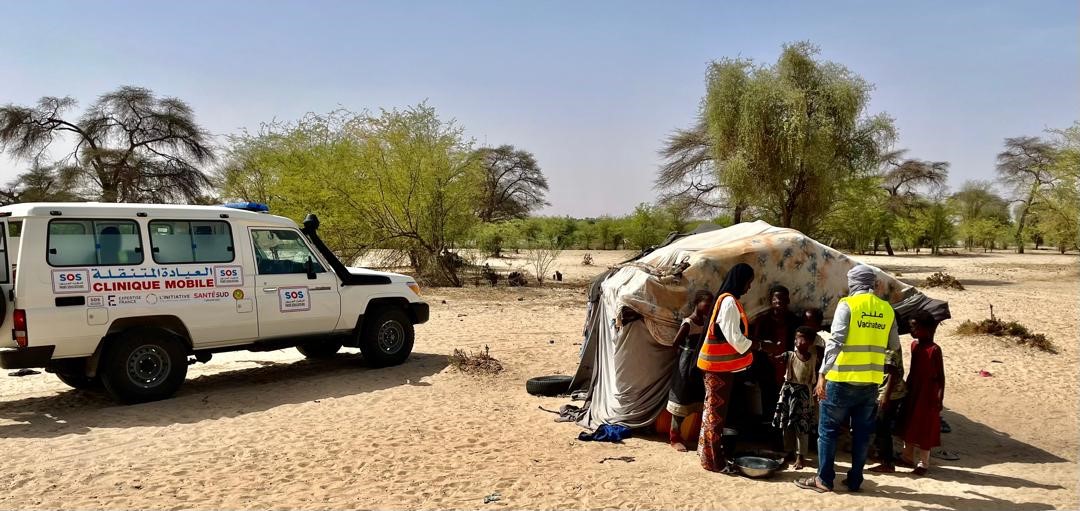
Expertise France supports the ZeroHIV project in Mauritania, which operates across two health districts and works towards the triple elimination of HIV, hepatitis B and syphilis. Insights from AFRAVIH can directly contribute to improving interventions of this kind.
This knowledge is equally valuable for national AIDS programmes. In both Mauritania and Chad, these programmes already encompass the fight against hepatitis and sexually transmitted infections — all three components are brought together within a single programmatic framework.
Both countries will shortly be revising their national strategic plans. This is an important opportunity to incorporate new scientific data, new approaches, and research findings presented at AFRAVIH. The conference gives us additional evidence to justify the selection of particular strategies. This is what evidence-based medicine means in practice: grounding national decisions in solid scientific results.
This is also the purpose of Expertise France and L’Initiative: to mobilise technical expertise in support of countries’ strategic choices, to help them update their interventions and to improve the care available for HIV, hepatitis and STIs.
What message would you like to leave people with at the end of this conference?
Mohamed COULIBALY : I would like to convey two messages.
The first is a call to technical and financial partners, investors, and all stakeholders engaged in the fight against HIV, hepatitis and sexually transmitted infections: we must continue to support these responses. We have made enormous progress. A withdrawal of support risks reversing gains that took years to achieve.
The second message is directed at governments and national programmes. Technical and financial partners are making considerable efforts, but they cannot cover all needs. Countries must also progressively strengthen their own domestic contributions, increase dedicated budgets, and take on a greater share of responsibility for sustaining these interventions.
In the current context, the question is not only about continuing to innovate. It is also about making those innovations accessible, sustainable, and embedded within health systems.