
POUVOIR+: An Integrated Response for the Sexual and Reproductive Health and Rights of Key Populations
Implemented by SOLTHIS with the support of L’Initiative, the POUVOIR project strengthened access to sexual and reproductive health and rights for cisgender and transgender female sex workers in Côte d’Ivoire between 2022 and 2025. Its second phase, POUVOIR+, expands the intervention to other highly vulnerable populations at particular risk of HIV, violence, and discrimination – including men who have sex with men and women who use drugs and engage in sex work. By bringing together HIV, sexual and reproductive health and rights, mental health, gender-based violence, community engagement, and advocacy, the project aims to move beyond an HIV-centred response and better address the real needs of the people it serves. An interview with Kouassi Noël N’Guessan, SRHR project coordinator at Solthis Côte d’Ivoire.
What does POUVOIR+ change compared to the first phase of the project?
Noël N’GUESSAN : POUVOIR+ builds on POUVOIR, launched in 2022 with the support of L’Initiative. That first phase aimed to improve the provision of sexual and reproductive health and rights services for cisgender and transgender female sex workers, working with several partners in Côte d’Ivoire: Espace Confiance, Conscience et Vie, Arc-en-Ciel Plus, the National Maternal and Child Health Programme, and the National HIV/AIDS Control Programme.
With POUVOIR+, we are consolidating what has been achieved while also broadening the scope of the intervention. First, the populations we work with have expanded: in addition to cisgender and transgender female sex workers, the project now includes men who have sex with men and women who use drugs. Second, the intervention extends to new areas, including Treichville-Marcory, Koumassi, and Port-Bouët.
Finally, we want to roll out more widely certain approaches that were tested during the first phase and showed real promise – including self-care workshops, passing workshops for transgender people, and self-defence workshops. The goal is both to adapt these to new populations and to embed them more durably in the practices of community partners and health facilities.
Why is it necessary to move beyond an approach focused solely on HIV?
Noël N’GUESSAN : Projects targeting key populations have long been centred on HIV: testing, treatment, care. But when we conduct needs assessments with female sex workers, they tell us: “HIV is not our only problem. All day long, it’s HIV, HIV.”
That is the whole point of POUVOIR+: to start from the real needs of the people we work with, not just from a biomedical entry point. Female sex workers need prevention and treatment for sexually transmitted infections, but they also need contraception, cervical cancer screening, and support around unwanted pregnancies, unsafe abortions, and gender-based violence. For transgender people, there are also specific challenges related to mental health, exposure to violence, and hormone therapy — which is often undertaken without any medical supervision. Women who use drugs face multiple, overlapping vulnerabilities that need to be addressed together.
An effective response cannot be built within an HIV-only silo. Integrating HIV, sexual and reproductive health, mental health, and human rights allows for a more comprehensive response — one that is better adapted and more attuned to the lived realities of the people concerned.
How do you concretely bring services closer to the people you work with?
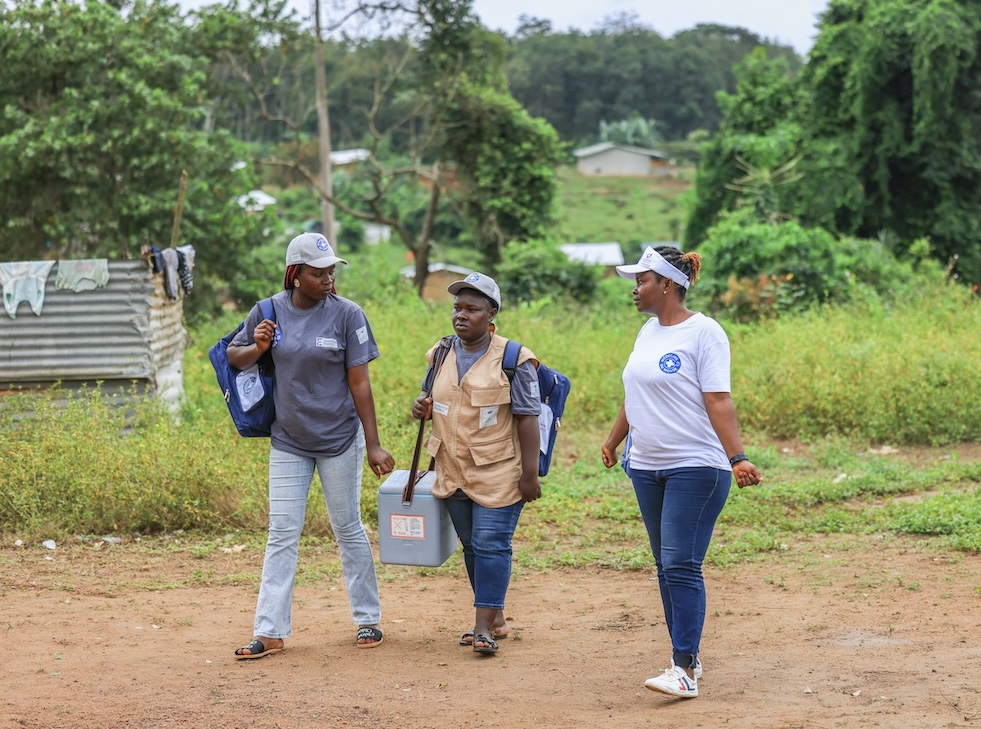
Noël N’GUESSAN : One of the keys is placing peer educators at the centre of the strategy. Female sex workers are highly mobile and rarely trust outsiders. They are, however, more willing to open up to their peers. This bond of trust is essential to preventing gaps in the care pathway
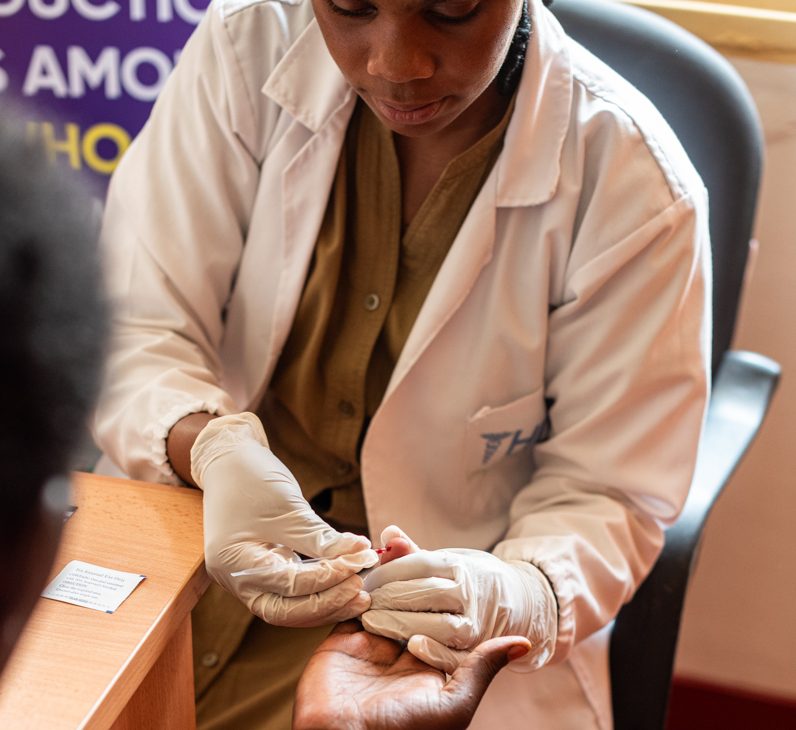
As part of POUVOIR, we integrated HPV screening for cervical cancer prevention, in partnership with Médecins du Monde. Peer educators were trained to offer screening directly at sex work sites, including in Abobo.
In practice, they raise awareness among female sex workers, offer self-sampling, collect the samples, transport them to the health centre, and then return to the beneficiaries with their results. When a result comes back HPV-positive, they organise an active referral to the health centre for a VIA test — visual inspection with acetic acid — to identify any precancerous lesions. When the VIA is positive, treatment can be carried out on the spot by thermocoagulation at centres supported by the project. For more extensive lesions, a referral is organised to a partner hospital.
This approach has enabled more than 600 female sex workers to be screened for HPV. Over 60% of those with a positive HPV result went on to have a VIA test; 44 had a positive VIA result and all were able to receive treatment. This outcome is the result of close follow-up: delays between steps must be minimised, contact with individuals must be maintained, and peer educators — in whom they have trust — must remain central to the process.
How do you adapt interventions to the specific needs of different people?
Noël N’GUESSAN : We start from the approaches that worked in POUVOIR and adapt them to new populations. Self-gynaecology workshops, for example, were very well received by cisgender female sex workers. They provide a collective, safe space to address topics such as body awareness, contraception, menstrual health, consent, and violence.
With POUVOIR+, we are working to adapt this approach for transgender people, men who have sex with men, and women who use drugs. The goal is not to apply a single model across all populations, but to start from their specific realities: exposure to violence, access to care, sexual practices, mental health, relationship to the body, substance use, and hormone therapy pathways for transgender people.
This involves self-care workshops, passing workshops for transgender people, and self-defence workshops, as well as tailored information resources — for example on anal health, intimate hygiene, and harm reduction related to abortion. To develop these adaptations, we also draw on community expertise and the direct involvement of the people concerned.
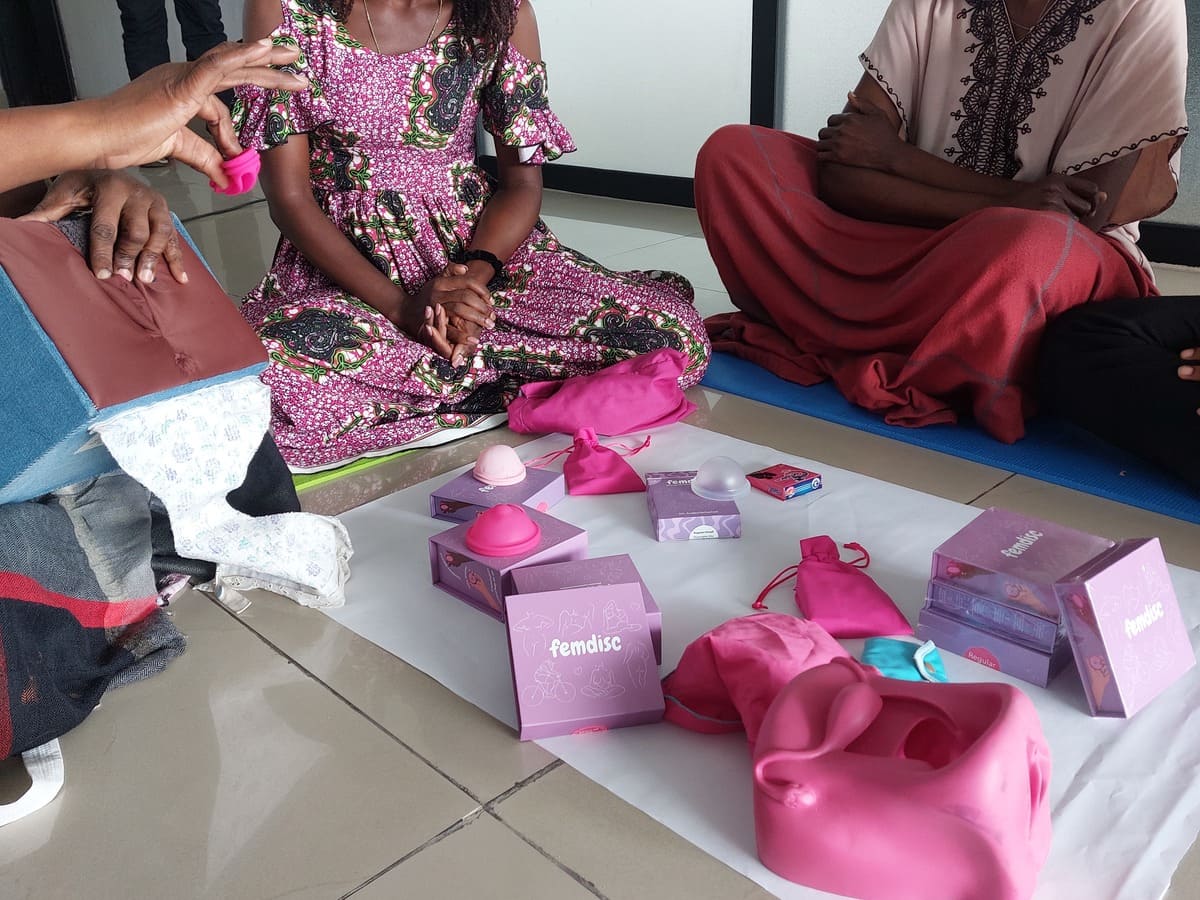
We have also piloted very practical tools, such as the menstrual disc. This reusable menstrual protection can allow female sex workers to continue their work during menstruation without resorting to practices that are harmful to their health. An evaluation found that more than 56% of participants had incorporated it into their professional practices following the self-gynaecology workshops.
Why have mental health and the response to violence become central to this second phase?
Noël N’GUESSAN : Mental health is one of the key priorities of POUVOIR+. The people we support are very frequently exposed to violence, stigma, and trauma. During the first phase, we encountered situations where we felt ill-equipped. Certain activities — such as self-gynaecology or self-defence workshops — touch on deeply personal experiences and can bring past violence to the surface.
In this new phase, mental health has therefore been integrated as a cross-cutting dimension. Three psychologists are based at partner medico-social centres. We are also preparing psychological first aid training for peer educators, so that they can identify signs of psychological distress, provide initial support, and refer people for appropriate care.
This dimension also concerns the teams themselves. Peer educators, community partners, and project staff are on the front line, regularly exposed to accounts that can be deeply distressing. That is why POUVOIR+ also includes staff care activities — equipping teams, preventing burnout, and enabling them to continue supporting beneficiaries effectively.
What are the main sustainability challenges today?
Noël N’GUESSAN : Medico-social centres play an essential role, as they offer a range of services adapted to highly vulnerable populations in an environment where people feel safer and more at ease. But sustainability also depends on public health facilities. The goal is for female sex workers, transgender people, men who have sex with men, and women who use drugs to be able to access these facilities without facing stigma and to receive appropriate services.
This requires training providers, reorganising patient pathways, and equipping facilities — but also working on attitudes and perceptions. Workshops on attitudes have a strong impact. Some providers arrive with preconceived ideas, sometimes shaped by their religion or social norms. After the workshops, many leave with a transformed outlook. The current limitation is the number of people we can reach given the reduction in available resources.
The other major challenge is the broader context of declining international funding, particularly for programmes targeting highly vulnerable populations. Needs are not decreasing, but the number of actors is shrinking. In this context, the support of The Initiative makes it possible to maintain an integrated response, in coordination with community partners and national programmes.
Advocacy therefore remains central: for the effective implementation of free contraceptive products, for access to supplies, for the adoption of a more enabling framework for reproductive health, and more broadly for public policies to genuinely reflect the real needs of key populations.