

“In Rio, the international political climate even shaped our words”
The 26th International AIDS Conference was held from 26 to 31 July 2026 in Rio de Janeiro, against a backdrop of profound upheaval in global health financing. Isabel Hottelart and José Boff attended to represent L’Initiative within the France team, and helped run the France stand, including two panel discussions. They look back at what this edition reveals about the state of the HIV response: a financial dependency now openly acknowledged as such, a debate on access to innovation made concrete by the Brazilian context, and public discourse on human rights that has become guarded.
This edition took place as international health aid is undergoing an unprecedented contraction. What did you observe on the ground?
Isabel Hottelart: The conference itself was a telling indicator. For the first time, the United States of America did not co-fund it, and its presence was markedly reduced, even though it officially presented its global health policy beforehand for the first time. Delegations were smaller, and the Global Village had fewer stands than in previous editions. These are visible signs, but they reflect a budgetary reality affecting every stakeholder.
José Boff: What came through over the course of the sessions was a collective realisation of the HIV response’s structural dependency on a very small number of donors. This finding wasn’t new, but it stopped being theoretical. It fed into concrete discussions on the financing mechanisms needed to build national ownership of programmes and mobilise domestic resources for health.
“Communities are at the heart of the fight against AIDS”
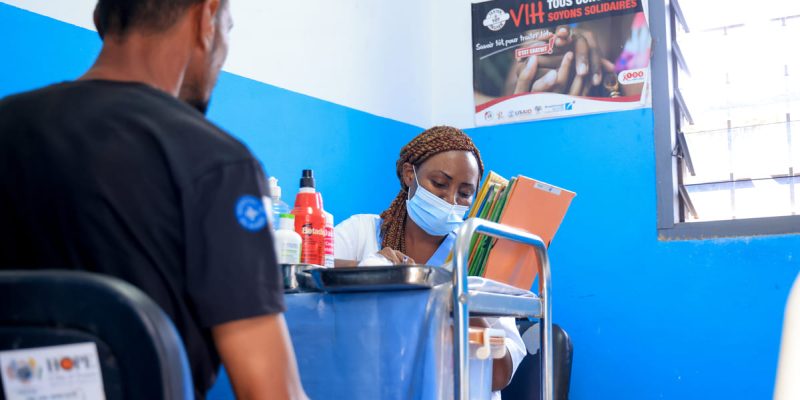
Against a backdrop of declining international funding, weakening human rights protections and the risk of a resurgence of the HIV epidemic, the role of communities in the HIV response has never been more critical. For Nicolas Lorente, Head of the Research Department at Coalition PLUS, affected communities should not merely be consulted—they must actively contribute to generating evidence, adapting services and shaping advocacy efforts.
Access to therapeutic innovations was central to the discussions. In what form did this issue come up?
Isabel Hottelart: Holding the conference in Brazil gave this debate a particular edge. The country was, in parallel, negotiating access terms for injectable PrEP with manufacturers. The product had been approved there, but remained unavailable to the population for lack of agreement on price. Brazil is known for its universal health coverage system, which guarantees free care for everyone: but how do you factor in prevention at that cost? The question of equitable access became very concrete there.
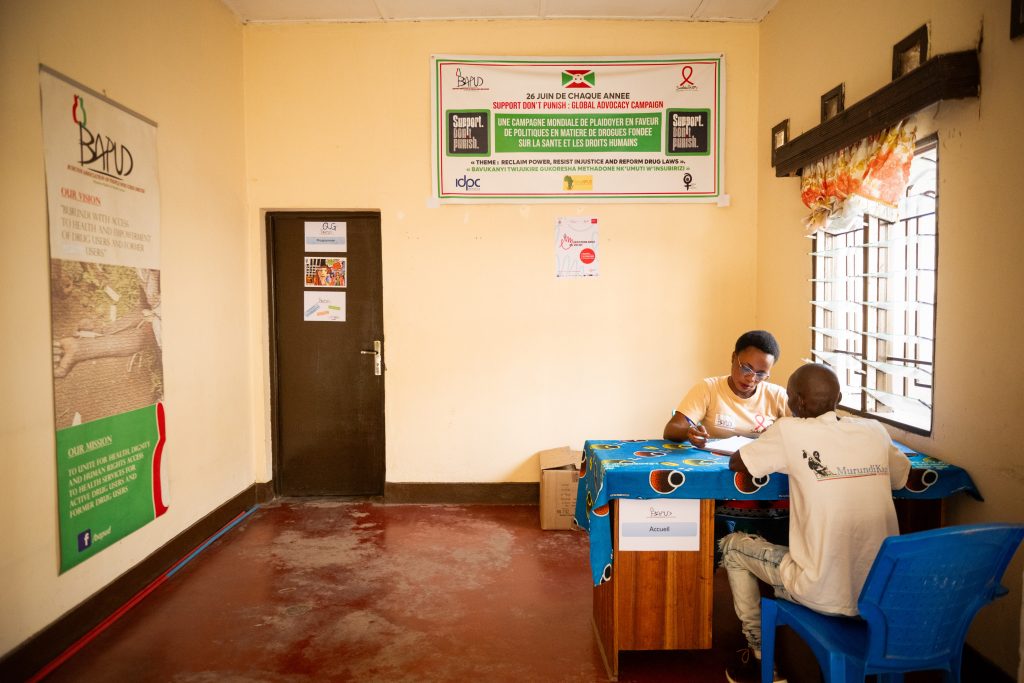
José Boff: A phrase coined by Alexandre Padilha, Brazil’s Minister of Health, and then taken up by Philippe Duneton, Executive Director of Unitaid, circulated throughout the conference: “innovation without access creates injustice.” It captures a shift in the debate. Lenacapavir was widely discussed, as were Unitaid’s twenty years, the publication of the UNAIDS report, and the World Health Organization’s new recommendations on managing sexually transmitted infections and integrating services. The difficulty no longer lies in the existence of the tools, but in the conditions for making them available and ensuring effective access for populations — with particular attention to the most marginalised, or to those requiring a differentiated approach to access, such as children or adolescents, for example.
“Innovation without access creates injustice”
Published during the conference, UNAIDS’ new global report, United to End AIDS, warns of the fragility of the progress made against HIV. In this context, the question is no longer simply about producing new solutions, but about ensuring they quickly reach the populations that need them most. Philippe Duneton, Executive Director of Unitaid, discusses what it takes to achieve equitable access to innovation.
You mentioned that discourse on human rights has become guarded. What do you mean by that?
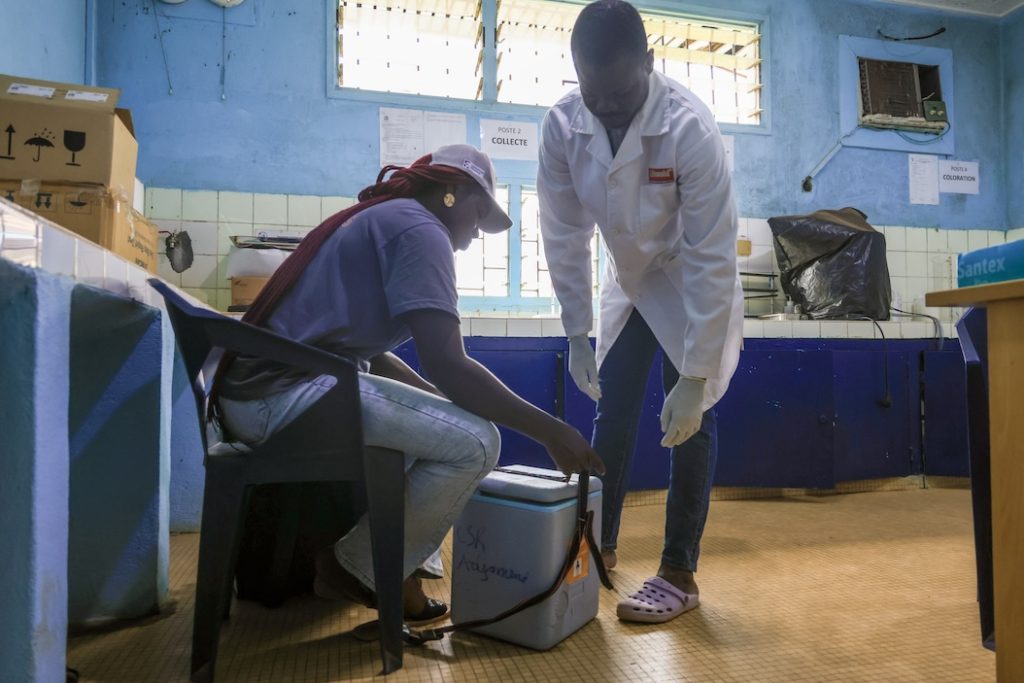
Isabel Hottelart: Human rights remain present in the messaging, but they are framed in general, often implicit terms. This vagueness isn’t a lack of interest. It’s a calculated choice. In the current international political climate, naming precisely which populations or situations are at stake exposes organisations to retaliatory measures, including on funding. Several actors, including Coalition PLUS, have observed this. Cautious language has become a condition for staying operational.
José Boff: That takes nothing away from how real the issue is. In West and Central Africa, restrictions advancing in several countries directly affect people’s access to health services, particularly for key and vulnerable populations. Rights are a precondition for access to healthcare, not a side consideration. The risk with this collective caution is that, through sheer generality, concrete situations stop being documented — which is precisely the effect sought by those imposing it.
Isabel Hottelart: New risks to populations are being identified in connection with the use of AI and new technologies — a topic that was, in fact, very present and highlighted throughout the conference. How do you guarantee security and prevent leaks of sensitive data on populations that are already vulnerable, or even criminalised? While these tools do offer an opportunity to scale up interventions and support approaches such as community-led surveillance, they can also raise security concerns in this particularly sensitive context of declining human rights.
Beyond the plenary sessions, what does this kind of gathering concretely make possible?
José Boff: It makes three distinct things possible, which shouldn’t be conflated. Scientific monitoring, first: it’s where you learn about research before it reaches programmes. Dialogue with our partners, second. In Rio, we spoke with the IAS about the follow-up to the mentoring programmes we fund, and with our Dutch partner Aidsfonds about prospects for future collaboration — an exchange that continued after the conference, notably regarding the MENA region. And representing and showcasing our work, finally, through the panel discussions: an opportunity to highlight the partners we support, their innovative approaches, their challenges, and their achievements. Here, we focused on the role of community actors and on access to innovation.
Isabel Hottelart: Holding the conference in Latin America also broadened the range of partners we were able to meet. We spoke with a Haitian partner working on a prison-based project we fund, as well as with Ukrainian partners present at the Global Village, whose activities we also support. These exchanges feed directly into our work: access to innovation is never automatic, and community actors are central to the response, to continuity of care, and to the fight to guarantee last-mile access.
“HIV: We must not choose between innovation and essential needs!“
On the occasion of the International AIDS 2026 Conference, Veronica Noseda, Head of Unit at L’Initiative – Expertise France, calls for moving beyond the false dilemmas that currently shape the global HIV response. As international funding declines, she argues that preserving access to essential healthcare while continuing to invest in innovation, communities and human rights is the only way to keep the goal of ending the epidemic within reach.