
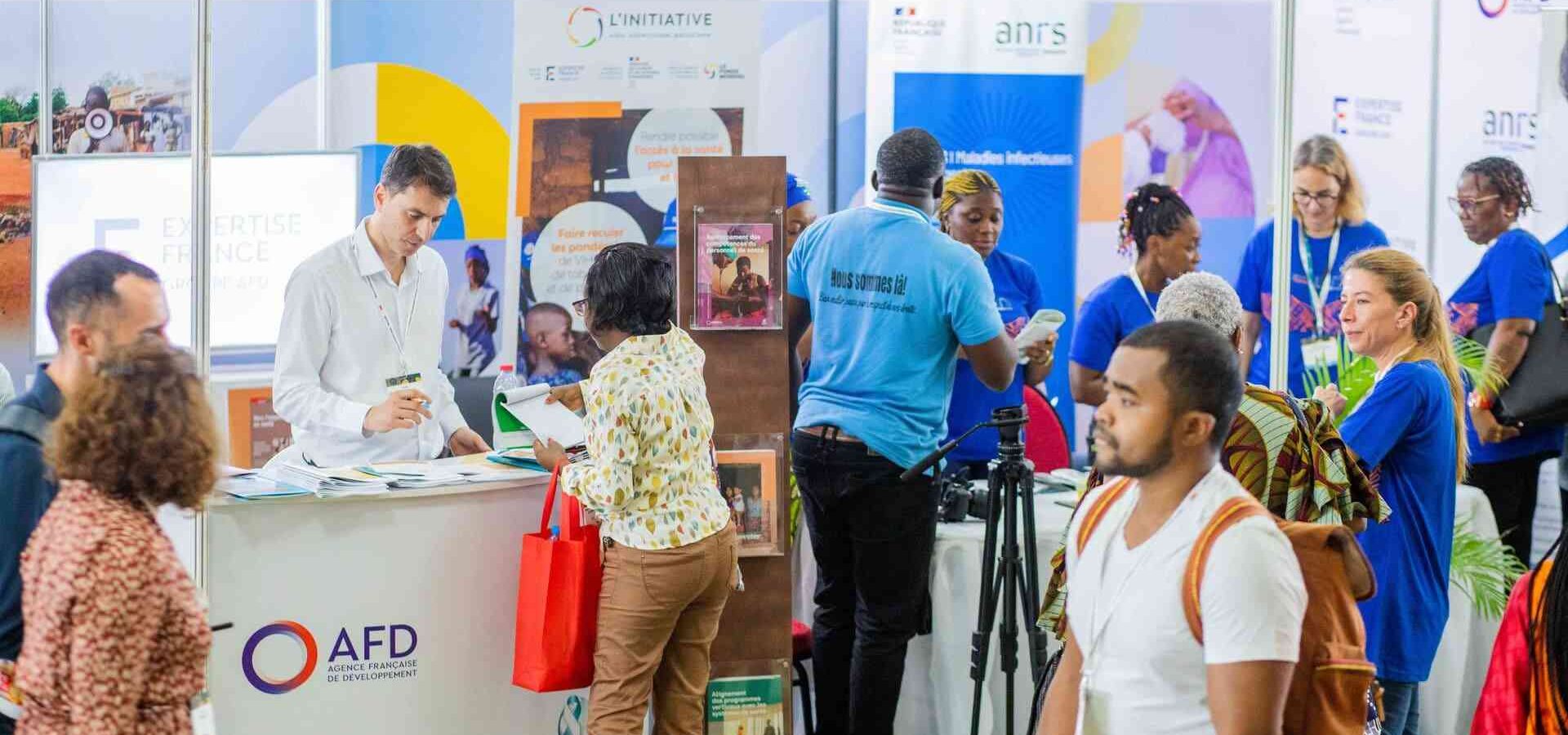
AFRAVIH 2026 : A Major Milestone in the Fight Against HIV and Emerging Infections
Expertise France, through its L’Initiative programme, will take part in the 13th edition of AFRAVIH, the international French-speaking conference on HIV, hepatitis and emerging infections, to be held from 4 to 7 May 2026 in Lausanne, Switzerland.
The conference comes at a time when development aid is facing serious headwinds: declining international funding, growing mistrust of science, and mounting pressure on the rights of the most at-risk populations. Against this backdrop, AFRAVIH 2026 carries particular weight.
Founded in 2009, AFRAVIH brings together health professionals, researchers, community actors and institutional decision-makers every two years. It provides a space for dialogue between scientific output, public policy and field practice across French-speaking countries.
Building on AFRAVIH 2024 in Yaoundé, this 13th edition will place a strong emphasis on therapeutic and preventive innovations, as well as on access to care for the most vulnerable and marginalised populations.
For Expertise France, the conference is an opportunity to strengthen partnerships and engage with all stakeholders involved in the fight against HIV. L’Initiative will play a central role: as a programme that bridges research, knowledge production and support for field action, it sits at the intersection of science, implementation and operational realities.
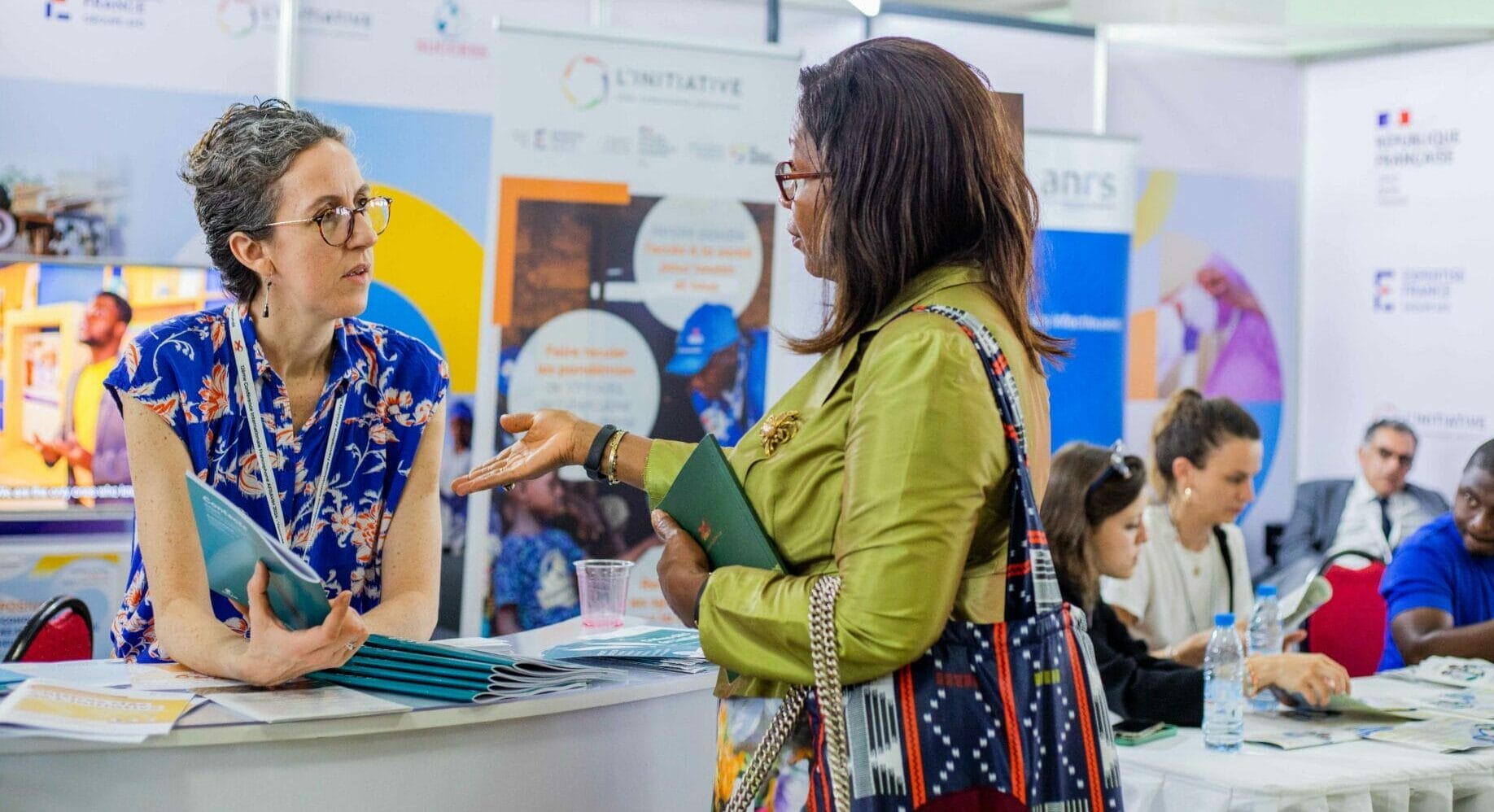
In this capacity, L’Initiative will participate in the discussions alongside ANRS MIE and IRD, notably through a joint “Team France” stand designed as a space for dialogue between institutions, researchers and practitioners.
A highlight of this participation will be the symposium held on 5 May, dedicated to the fight against HIV in the age of the infodemic.
Health misinformation is not a new phenomenon: long before the Covid-19 pandemic, the most widely shared false information online already concerned vaccination, HIV, cancer and alternative medicine. In a context where some political leaders — themselves a source of these narratives of distrust — are also cutting funding for research and health programmes, the stakes take on an entirely different dimension. Understanding the structural factors that drive belief in misinformation, and identifying strategies to uphold evidence-based approaches for the benefit of populations, has become a matter of urgency.
Programme :
- The challenges of fake news dissemination and adherence
Sacha Altay, University of Zurich, Switzerland
- Lessons learned from the Cameroonian experience with COVID vaccines
Marie-José Essi, University of Yaoundé I, Cameroon
- Round table: How to continue advocating for a science-based approach for the benefit of populations
Isabelle Kouamé (UNAIDS Côte d’Ivoire), Atsou Jean-Marie Alley (Espoir Vie Togo), Thalia Bayle (French Ministry for Europe and Foreign Affairs), Marie-José Essi, Sacha Altay
The full AFRAVIH 2026 programme is available here.