
Childhood Tuberculosis: Improving Diagnosis in Children Through Digital Tools
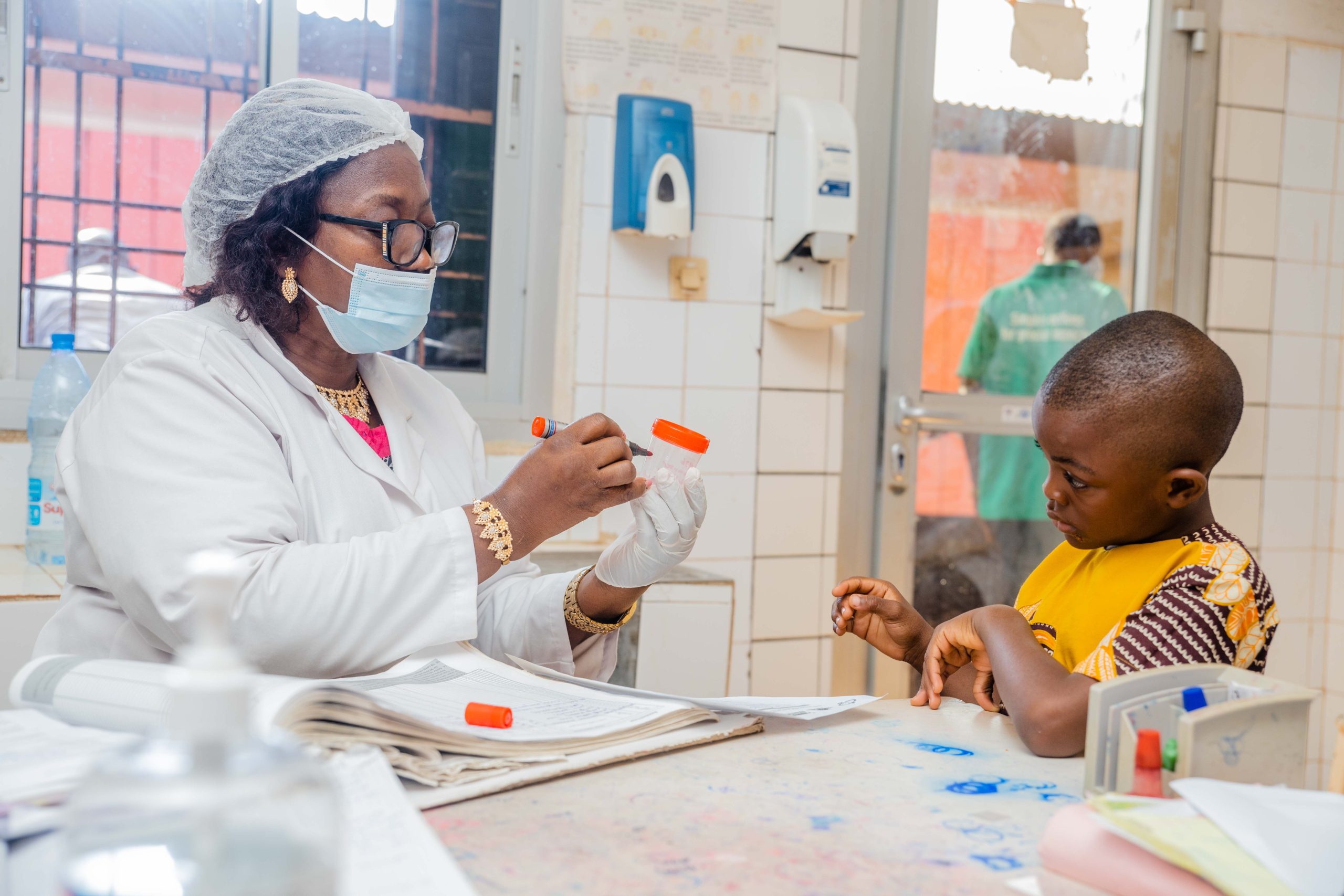
Tuberculosis remains difficult to diagnose in children, particularly in peripheral health facilities. Under-diagnosis accounts for a significant share of TB-related mortality in children, as those who go undetected never access treatment. Each year, between 175,000 and 200,000 children die from tuberculosis, out of approximately 1.2 million children affected. Implemented in Côte d’Ivoire and Mozambique, the eHealth4ChildTB project aims to improve the detection and management of children with tuberculosis through digital clinical decision-support tools, developed and deployed in partnership with national tuberculosis programmes. Prof. Olivier Marcy, Research Director at the Institute of Research for Development (IRD), reflects on the stakes of this operational research, supported by L’Initiative.
Why does childhood tuberculosis remain so difficult to diagnose?
Olivier MARCY : The core problem is that tuberculosis in children is most often paucibacillary: there are fewer bacilli — fewer of the bacteria responsible for the disease — in children’s lungs than in adults. Children can therefore have tuberculosis, even in a severe form, without it being possible to confirm microbiologically.
In highly specialised settings, such as certain large hospitals in South Africa where tuberculosis is highly prevalent, microbiological confirmation in children can reach 40%, sometimes 50%. But in peripheral facilities in countries like Côte d’Ivoire or Mozambique, where we work, these proportions fall sharply. In the best cases, we are looking at around 20 to 30%.
This means that 70 to 80% of children must be diagnosed through other approaches. This requires combining patient history, clinical examination, and chest X-ray. The clinician looks, for example, at whether the child has been coughing for several weeks, whether they have been in contact with someone with tuberculosis, or whether clinical signs can point toward a diagnosis.
These elements require paediatric expertise that is not always available in decentralised care settings. This is where diagnostic and therapeutic decision algorithms can play an important role: they provide health workers who do not necessarily have this expertise with tools that are simple to use yet built on a solid clinical knowledge base.
How can digital tools support health professionals?
Olivier MARCY : Diagnostic algorithms can be difficult to use in practice, as they draw on a large number of clinical variables. For a clinician, making a decision based on 15 or 16 clinical or radiological variables is no simple task — particularly in a constrained care environment.
With eHealth4ChildTB, we are therefore developing digital tools that allow clinical data to be entered into a data collection tool, guide clinical decision-making, and can ultimately be connected to other approaches — such as digital X-ray, whose interpretation can be supported by automated tools. The goal is not to replace the clinician, but to support their decision-making, particularly at peripheral levels of care where the clinician is often not a paediatric doctor but a nurse or health assistant.
These digital tools must be designed with field realities in mind. If developed solely through a researcher’s lens, the risk is wanting to collect too much data. Yet for a tool to work, it must be acceptable, usable, and adapted to the real constraints of health workers.
It must, for example, be able to function offline when there is no internet connection, allow data to be entered locally and then synchronised once connectivity is available. It must also respond to the needs of both health professionals and national programmes. Adaptation goes beyond language or translation. It also concerns organisational structures, professional practices, and ways of working within the health systems into which these tools are introduced. This is a central point of the project: national tuberculosis programmes are not simply beneficiaries or commissioners. They are partners.
What is eHealth4ChildTB testing in Côte d’Ivoire and Mozambique?
Olivier MARCY : The project aims to document what happens when diagnostic algorithms are made available in health centres — alongside microbiology, with or without X-ray.
In Côte d’Ivoire, at the start of the project, children represented only 4% of notified tuberculosis cases, whereas WHO estimates this proportion should be around 10%. The question is therefore whether these algorithms, supported by digital tools, can increase case detection in health facilities. We also want to assess whether these tools are genuinely adapted, usable, and taken up by health professionals.
The project is being implemented in Côte d’Ivoire and Mozambique, across three districts in each country. In each district, it brings together a hospital and several health centres, across different levels of care: coordination centres, tuberculosis diagnosis and treatment centres, and first-contact facilities or primary health centres.
We will observe how each of these levels can integrate the tools, how health professionals use them, and how they can be improved. The goal is also to measure their impact on case detection using appropriate epidemiological methods — in particular by comparing data before and after the introduction of the tools. The project will also assess their feasibility, acceptability, cost-effectiveness, and the budgetary impact of potential scale-up for Ministries of Health.
Part of the research also focuses on usability: how health workers take up the tools, what helps them, what gets in the way, what needs to be adjusted — depending also on the baseline digital literacy of health staff. This is an essential dimension of operational research: it is not enough for a tool to be sound on paper; it is necessary to understand how it performs under real conditions of use.
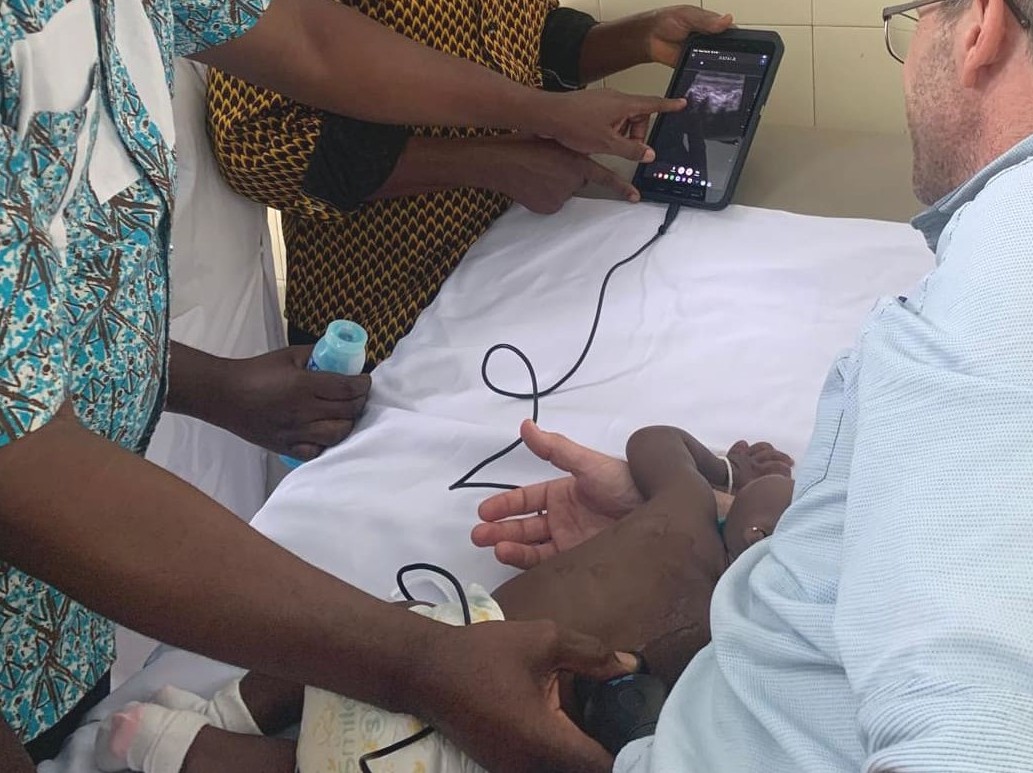
Another component of the project focuses on lung ultrasound. Today, ultrasound can be performed using probes connected to a phone, making it potentially usable as a point-of-care tool. We want to find out whether health professionals can be trained in this practice, and whether integrating it into the algorithms improves their specificity.
Current algorithms have good sensitivity: they detect a large proportion of children who have tuberculosis. But their specificity can be lower, which can lead to over-diagnosis in some children. The challenge is therefore also to refine these tools — to detect more cases without over-diagnosing
Why does this kind of operational innovation matter today?
Olivier MARCY : Globally, children account for around 12% of tuberculosis cases but nearly 16% of TB-related deaths. Among children under five, fewer than half of cases are detected. This illustrates just how critical diagnosis is.
One of the major drivers of tuberculosis mortality in children is that children do not receive treatment because they are not diagnosed. This is what justifies the importance of projects like eHealth4ChildTB: improving diagnosis means creating the conditions for earlier access to treatment.
This type of project is fully embedded in the work of health systems strengthening and operational research. It is not only about producing knowledge — it is about generating data that are useful for national programmes, public policy, and scale-up. Evidence from research projects can inform programmatic decisions, structure funding applications, and prepare for the sustainable integration of tools into health systems.
This is all the more important in the current context of strain on international financing. Tuberculosis suffers from a chronic funding gap, even as significant progress has been made in recent years: new tools, shorter treatment regimens, advances in prevention, clinical trials.
But innovations change nothing if they are not implemented within health systems. Funding for implementation therefore remains crucial. Tools need to be tested, their impact documented, their uptake by health professionals understood, and national programmes supported in integrating them.
It is this link between research, innovation, and public policy that is decisive. A useful innovation is not simply one that is scientifically promising. It is one that can be used, owned, monitored, and embedded in health systems — for the benefit of the children who, still today, too often slip through the diagnostic net. diagnostic.