
“A young person living with HIV cannot bear the weight of their treatment alone”
In Côte d’Ivoire, the Centre Solidarité et Action Sociale in Bouaké has been supporting children, adolescents, and young people living with HIV for more than thirty years. Through the PRESERV 2 project, supported by L’Initiative, Centre SAS is strengthening an approach built on the involvement of family, community, and health care networks. Lambert Doua Toa, project coordinator, reflects on this ‘family approach’ – a key lever for improving HIV status disclosure, treatment adherence and viral suppression, and mental health.
Could you introduce Centre SAS and the PRESERV 2 project?
Lambert DOUA TOA: Centre Solidarité et Action Sociale, or Centre SAS, is an Ivorian organization founded in Bouaké by former social workers from the university hospital. Through their work with children and families, they identified a specific need: to better support children, adolescents, and young people living with HIV, beyond medical care alone.
Centre SAS gradually developed a comprehensive care model combining a clinical component and a community component. This dual approach matters: the child is followed up at the health centre, but is also supported in their daily environment – within their family and community.
With PRESERV 2, we are building on this momentum. The first phase, implemented from 2022 to 2024, strengthened support for children, adolescents, and young people living with HIV. The second phase, running through 2029, aims to consolidate these gains and expand the intervention, with a strong emphasis on the family approach.
Why is the family such a central actor in the care of young people living with HIV?
Lambert DOUA TOA: Centre SAS has developed what we call the family approach. For me, it is the catalytic element of HIV care.
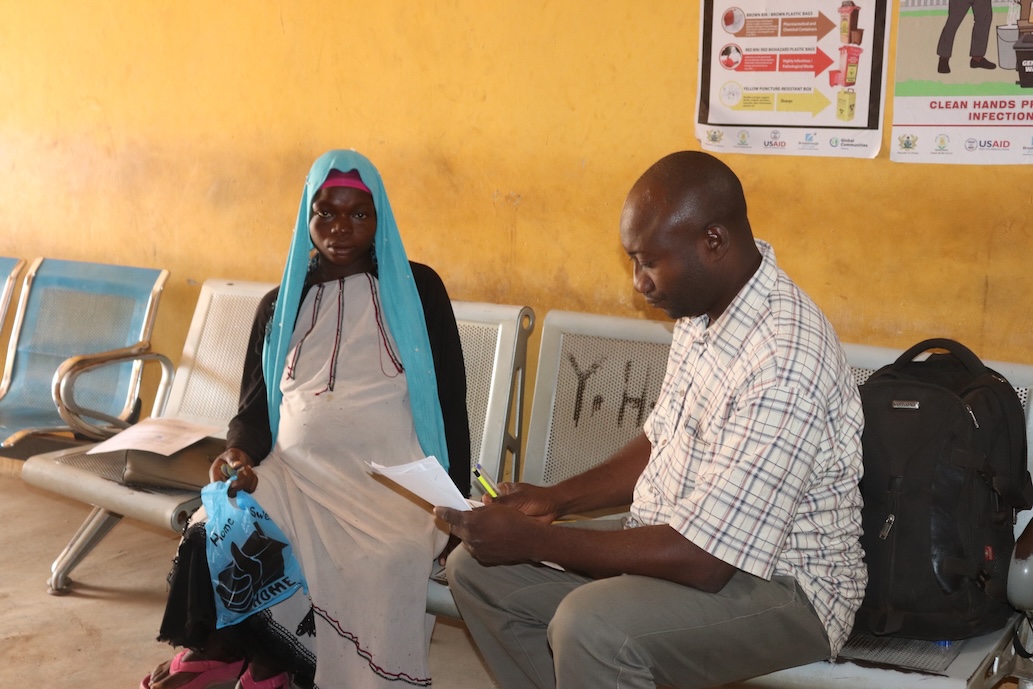
You cannot talk about care without integrating the family. The child does not live at the health centre. They live in a household, with parents, guardians, sometimes siblings, a grandmother, an aunt. These are the people who are present every day – who can help the child take their medication, keep their appointments, and make sense of their situation.
The more vulnerable the family, the more vulnerable the child. That is why we need to strengthen the family – through knowledge, technical support, and sometimes financial assistance. The goal is for the family to be able to ensure continuity of care within the household where the child lives.
In practice, the approach begins with identifying the primary beneficiary: the child, the parent, or the person living with HIV. From there, we identify the family members who can be involved in the support. The idea is that outside the health centre, everyone can contribute to the child’s follow-up and well-being.
How does this approach translate into day-to-day support?
Lambert DOUA TOA: One of the key mechanisms is the Parents’ School. It builds the capacity of caregivers – the people who support the child on a daily basis at home: the father, mother, aunt, guardian, or anyone else involved in their care.
We noticed that at the hospital, the child receives comprehensive follow-up: access to treatment, tests, and counselling. But once they go home, that framework disappears. From the age of ten or twelve, some parents start giving the child more autonomy : “Go take your medication”, “Go to your appointment”. Yet at that age, a child is not always able to manage their treatment on their own.
At the Parents’ School, we therefore work on adherence, side effects, and antiretroviral treatment, but also on psychosocial support. Parents learn how to respond in certain situations. They also share their experiences.
I think, for example, of a mother whose seven-year-old daughter refused her medication because of the aftertaste. Every time she had to take it, the child would cry. The mother found a solution: she gave her a lollipop at treatment time. Gradually, the child incorporated this ritual and started asking for her lollipop and her medication herself. Other parents then took up the idea with their own children.
These are simple things, but they matter enormously. Adherence is not just about protocols. It also comes down to the small gestures of everyday life.
Why is HIV status disclosure such a critical step?
Lambert DOUA TOA: Disclosure is one of the major challenges. For the family approach to work, the status first needs to be shared within the household. If a parent living with HIV cannot speak about it to those around them, involving the family becomes very difficult.
It is even more delicate with children. Centre SAS supports HIV status disclosure from the age of nine. The goal is to help the child understand their situation: “You are living with HIV. Here is what will allow you to take care of yourself and build a good life.”
If the child does not know their status, they may not understand why everyone around them is organizing themselves the way they are. They may wonder why their grandmother, father, or mother insists so much on the medication. They may push back, refuse to take it. In adolescence, that resistance can become even stronger.
When a child understands what they are living with, their relationship to treatment changes. They can take ownership of it. In the first phase of PRESERV, we observed that disclosure contributed to improved adherence and viral load suppression. Young people had a better understanding of their condition, and they were more open to the support being offered.
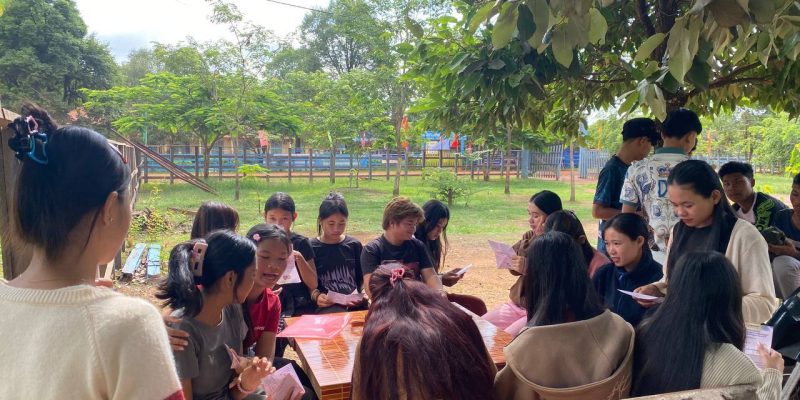
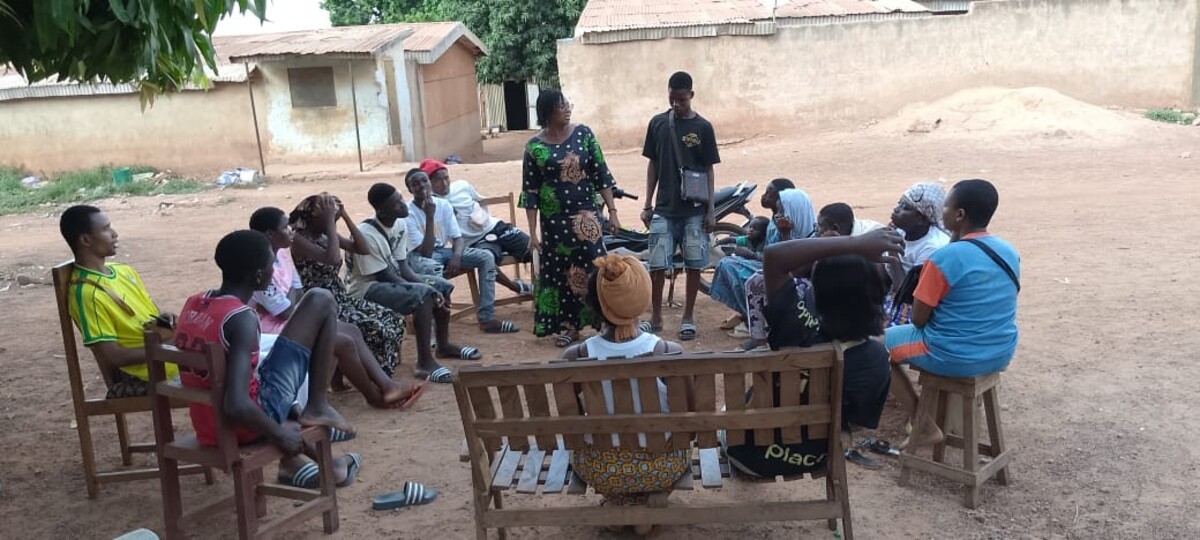
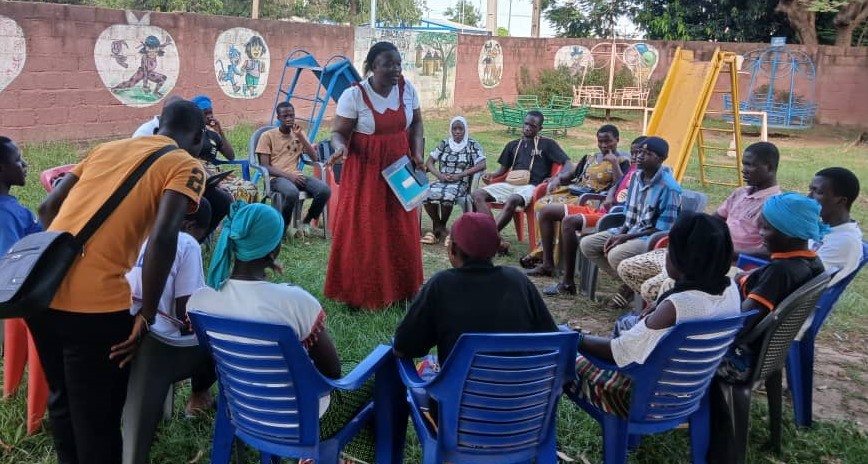
But disclosure alone is not enough. A space where the child can talk also needs to be created. That is why Centre SAS developed the adolescent club — a space that helps young people better understand their condition, cope with self-stigma and community stigma, and build their capacity to stay on treatment.
Beyond parents, how does PRESERV 2 engage the young person’s wider environment – siblings, mental health, peer educators?
Lambert DOUA TOA: Phase 2 goes further in this logic. It does not only take into account the child living with HIV, but their entire environment.
First, there are siblings. In the first phase, only the infected child was directly supported. But in a household with three, four, or five children, this can create tensions. One child benefits from support or free access to certain services, while the others remain entirely the family’s responsibility. This can itself become a source of stigma.
In PRESERV 2, we therefore seek to provide support to all the children in the household, whether or not they are living with HIV. This reduces the burden on the family, and helps prevent the child living with HIV from being isolated or seen as different.
Then there is mental health. Children, adolescents, and young people living with HIV are exposed to depression, stress, burnout, and self-stigma. The project works with two psychologists, who have developed a mental health assessment tool. When a child is in contact with a counsellor — during a home visit or an appointment — this tool can be used. Depending on the results, the child may be referred to a social worker or a psychologist.
Finally, there are peer educators. We have two types: some are themselves living with HIV and support other young people who are also infected; others are trained in sexual and reproductive health and carry out awareness-raising activities in the community.
A young person living with HIV will often listen more readily to another young person than to a doctor or psychologist. When a peer educator says, “For me too, it was hard at first — here’s how I started my treatment,” that can have a real impact. It is a conversation between equals.
What conviction has this experience given you?
Lambert DOUA TOA : The conviction is that a child or adolescent living with HIV needs an environment that understands, supports, and accompanies them. They cannot move forward alone.
The family, caregivers, siblings, peer educators, community counsellors, psychologists, health workers – each has a role to play.
The family approach creates this framework. It helps ensure better follow-up for the child, improves treatment adherence, reduces stigma, and strengthens their well-being. For us, it is a support and accompaniment tool that is genuinely adapted to the care of children, adolescents, and young people living with HIV.