
“Anal health isn’t specific to any particular population – it concerns everyone”
In Cameroon, the PHOENIX project aims to strengthen access to proctological care for key and vulnerable populations in Yaoundé and Douala. Implemented by Affirmative Action, Humanity First Cameroon Plus, and Horizons Femmes, with support from L’Initiative, it builds on years of community-driven health work. Ulrich Mvate, Executive Director of Humanity First Cameroon Plus, speaks about the health, social, and political dimensions of a subject still widely associated with shame and stigma.
What is Humanity First Cameroon PLUS’role in the PHOENIX project?
Ulrich MVATE : Humanity First Cameroon Plus, or HFC+, is part of the consortium implementing the PHOENIX project alongside Affirmative Action and Horizons Femmes. The project extends years of community action aimed at improving access to proctological care for key and vulnerable populations, with the goal of consolidating and sustaining that work over the long term.
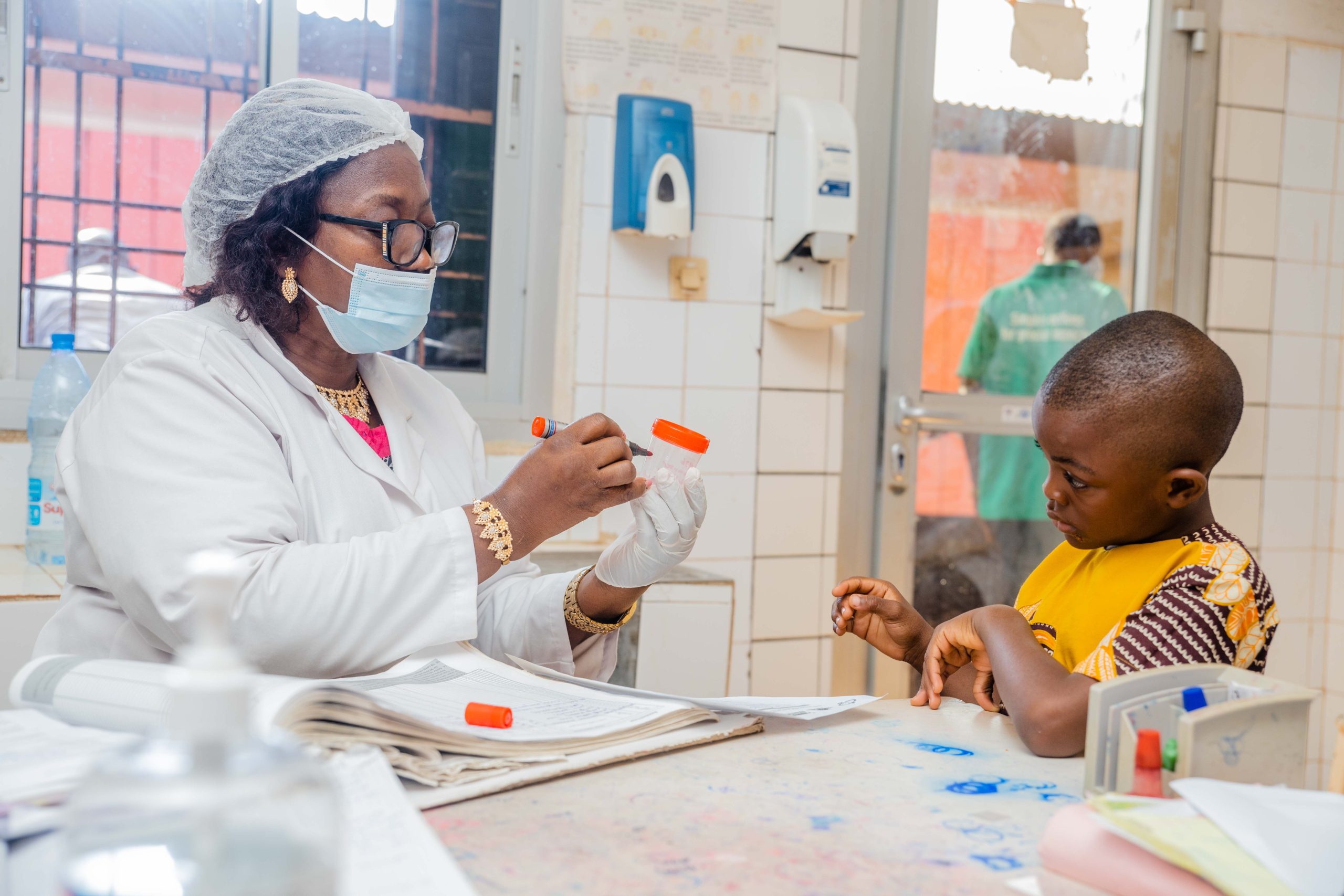
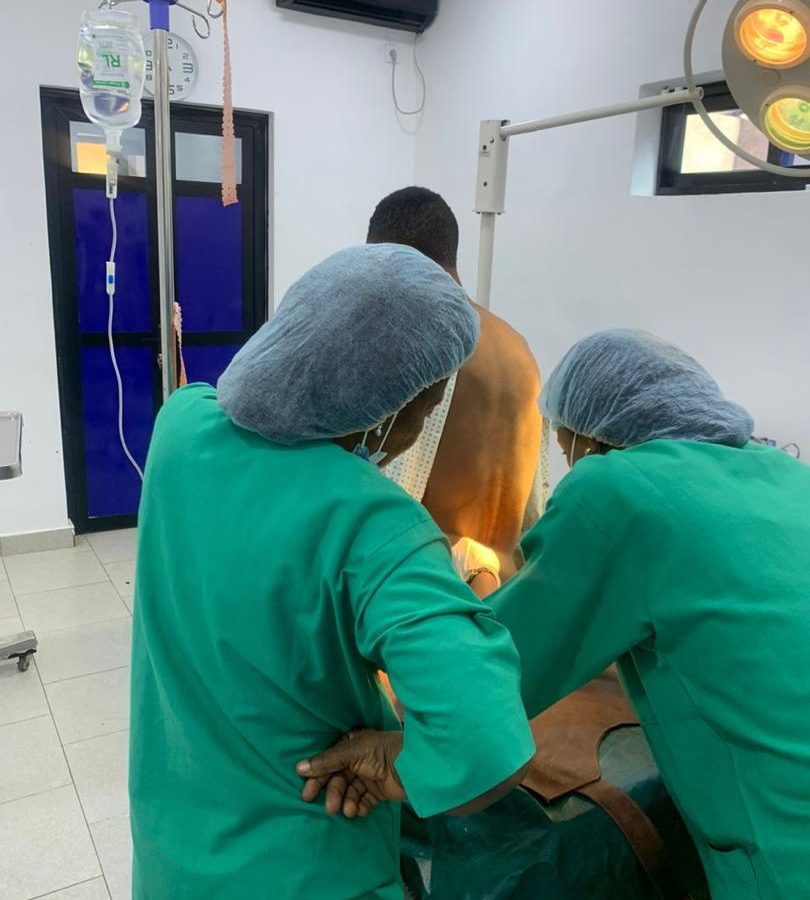
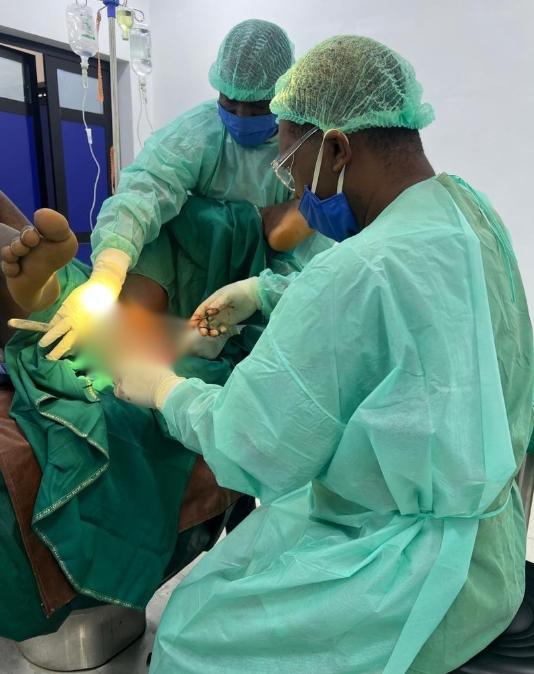
For several years now, HFC+ has been one of the few community-based organizations in Cameroon engaged in the management of anal margin conditions — particularly among men who have sex with men, but also among other populations. Through PHOENIX, we continue that work: consultations, medical procedures, some minor surgical interventions, and referrals when cases exceed what a community organization can appropriately handle.
Our role is also rooted in our closeness to the communities we serve. That proximity allows us to talk more openly about anal health, to reach people who would never spontaneously seek care, and to reinforce the fact that these conditions are not specific to any particular group: they can affect anyone, because everyone has an anus and a rectum.
What are you seeing on the ground when it comes to anal health today?
Ulrich MVATE : The situation is concerning. In the past, there were virtually no interventions in this area. And because there were no interventions, the subject wasn’t discussed. There was no awareness-raising. People lived with anal margin conditions without necessarily seeking help.
For a young man perceived as effeminate, for instance, going to a hospital and asking to see a proctologist can immediately be read as an admission of homosexuality. So it becomes very complicated. People let problems go — condylomas, anal fissures, even fistulas, as well as hemorrhoids, which have nothing to do with a viral infection. All of it tends to be experienced as something shameful.
Today, thanks to the activities we’ve put in place and broader communication efforts, more people are coming in for consultations. I wouldn’t say the situation is alarming, but we are seeing that many people do have real pathologies. In a study we conducted in 2024, we found that 56% of men who came in for condylomas were HIV-positive — and many didn’t know it. We don’t yet have equivalent data for women, as they were less likely to seek care for these issues at that time.
Why is anal health also a key issue for HIV and STI prevention?
Ulrich MVATE : The connection is direct. Today, sexual practices are diverse. Anal intercourse isn’t something that concerns only men who have sex with men — women can be affected too. So this isn’t a subject that belongs to any one population; it’s a universal concern.
When we carry out HIV prevention communications, we need to integrate messages about anal margin conditions. Certain lesions or infections can, in some cases, facilitate the transmission of HIV or other STIs. Anal health should therefore be part of what we address in prevention work.
What we documented in 2024 clearly shows that significant needs exist. It also allows us to make the case that anal health must be recognized as a health issue in its own right — on the same level as other dimensions of sexual health.


Why is the community-based approach so essential?
Ulrich MVATE : It’s essential because in conventional health facilities, staff don’t always have the time to address these subjects. They’re often overwhelmed. And above all, they don’t always feel comfortable talking about highly sensitive issues like anal margin health.
As community actors, we have that time. It’s face-to-face work, one-on-one. We can talk things through, answer questions, and go out to people who can’t make it to the services themselves. Some live in remote neighborhoods; others are afraid of being seen, recognized, or labeled.
Peer educators are on the front line. When they go out to do HIV awareness work, they can also identify other needs. Because they know the services HFC+ provides, they can direct people toward a consultation, psychosocial support, testing, or appropriate care.
Our strength is trust. We know the communities we work with, we know how to talk to them, how to share information, and how to create the conditions for that first contact with care.
Can you give a concrete example of what this approach makes possible?
Ulrich MVATE : There’s one patient from 2024 who stays with me. A peer educator had flagged him: he was sick, but refused to go to the hospital, to come to us, or even to visit another community organization. We sent a team of psychosocial counselors to understand what was blocking him.
He was afraid. The hospital we wanted to refer him to was the one where his aunt worked. He was terrified she would find out he was a man who has sex with men, that he was living with HIV, and that he had condylomas. He was also afraid to come to a community organization like ours, because he assumed we would immediately label him as an LGBT person. And a family member lived in the neighborhood where we’re based.
So we set up a night-time service specifically for him. We saw him at 7 p.m. Fortunately, his condylomas weren’t severe, but his HIV was already at an advanced stage. We were able to start him on treatment and organize the procedure at an adapted time — in the evening or very early morning.
Today, he’s doing very well. This is the kind of approach that’s possible in a community setting. In a conventional hospital, it would be nearly impossible.
How does the connection between community organizations, hospitals, and referral structures work?
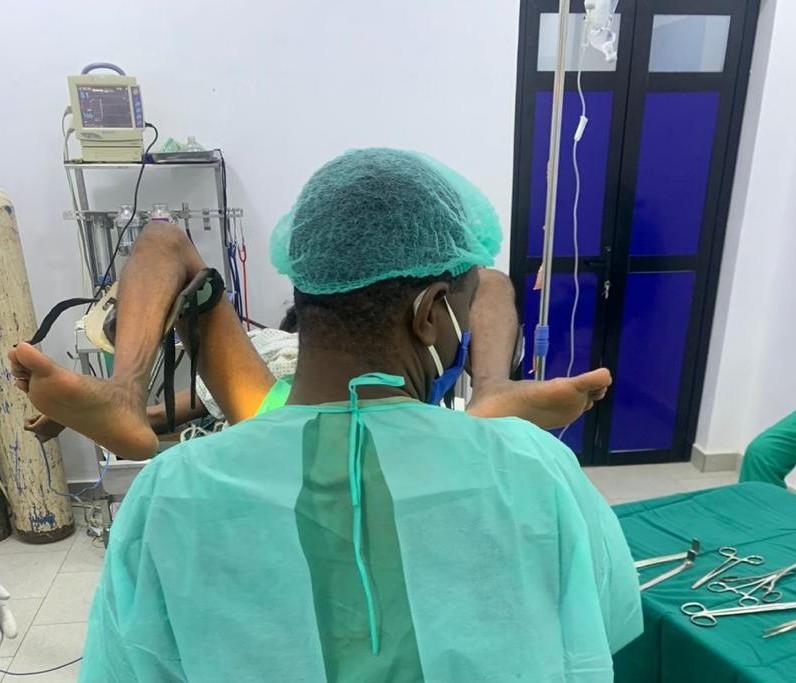
Ulrich MVATE : Within PHOENIX, this network-based approach is built in. We have to recognize the limits of community organizations. What we do at the community level is assessment, consultation, support, and some basic procedures. But serious cases require a hospital setting — proper operating facilities, sterile environments, specialist practitioners.
No community organization can provide that. And we shouldn’t try to position ourselves as hospitals. If we became hospitals, we would no longer be community organizations, and we’d have to operate under an entirely different framework.
Our role is to build trust, identify needs, provide initial care, and refer when necessary. Post-operative follow-up can then be managed at the community level, in coordination with health facilities.
But this network also has to be a network of trust. For a long time, we’ve been doing sensitization work with certain health facilities. Patients need to be received as full human beings — not reduced to their sexual orientation, their appearance, or what people assume about them. That’s one of the criteria by which we choose which facilities to work with.
What are the main levers for improving care in a lasting way?
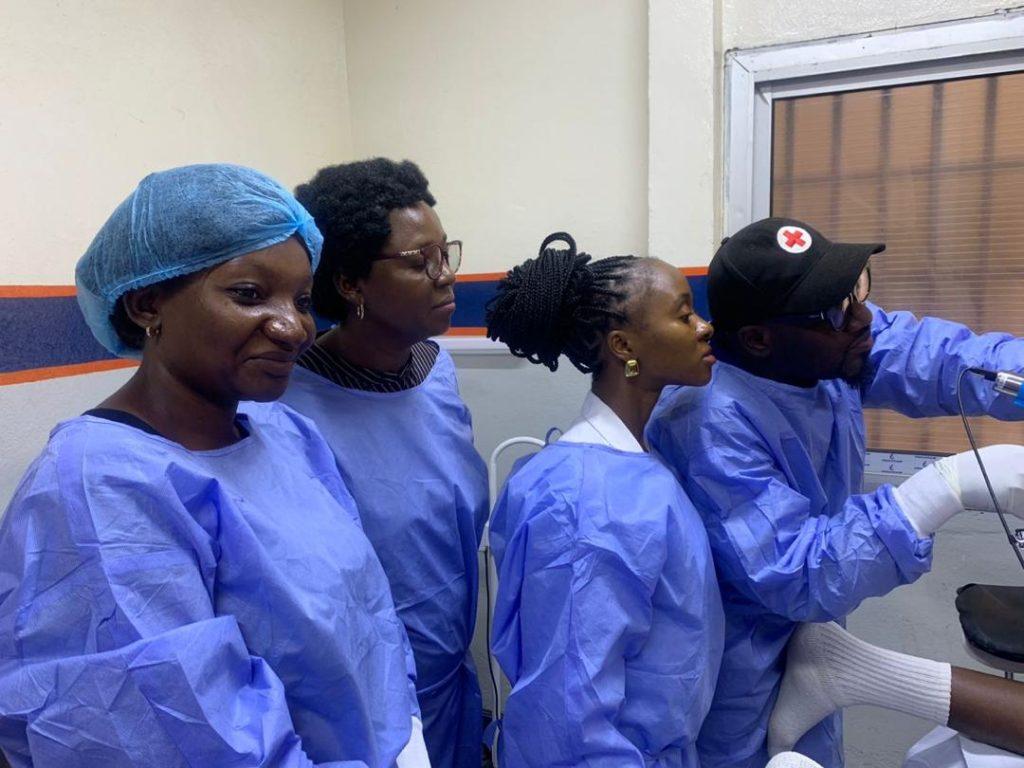
Ulrich MVATE : Training is the first. For me, it needs to address two dimensions. The first is practical: learning to recognize anal margin conditions, knowing when to intervene, knowing when to refer. But the second dimension is just as important: reception and building trust. Many practitioners are technically skilled. But making someone feel at ease — even when you don’t agree with how they live or the choices they make — is still very hard. That needs to be part of the training.
Then there’s advocacy. Even today in Cameroon, talking about anal margin conditions — especially when it comes from organizations like ours — can be interpreted as promoting homosexuality. That idea needs to be dismantled. The core prejudice is the automatic association between anal health and homosexuality.
Another area for advocacy is recognition of what community organizations can do. Regulations are strict: anything involving surgery must take place in a licensed health facility. We’re advocating for certain minor anal margin issues to continue to be managed at the community level, without organizations facing repercussions for doing so.
Finally, there’s the question of flexibility. When you design a project and then implement it, reality can look very different from what you anticipated. We’re now encountering many serious cases that we hadn’t foreseen. It’s very hard to make a diagnosis when you know the person won’t have the means to get proper treatment. Some people don’t even have enough to eat in a given day, but they need urgent medical attention.
For future projects, it would be worth building in some form of emergency fund for serious cases and people with no resources. We can’t cover everything — but if we have thirty people in need and can only treat seven, what happens to the other twenty-three? The point is that no one should be left alone with a disease they’re ashamed of, or one they can’t afford to treat. Because at that point, the illness becomes a psychological burden too.