HIV: safeguarding progress and preparing for the future of the response
The fight against HIV has profoundly changed the course of the epidemic. Yet despite scientific and public health advances, the world remains far from achieving the goal of ending AIDS by 2030. As international funding declines and inequalities persist, how can we safeguard the progress made and build a sustainable response?
Historic progress, but an epidemic far from under control
Over the past fifteen years, international efforts to combat HIV have led to considerable progress. The development of antiretroviral treatments, the expansion of testing and the diversification of prevention tools have changed the trajectory of the epidemic. According to UNAIDS estimates for 2025, AIDS-related deaths have fallen by 57% since 2010, while new HIV infections have declined by 42%.
These achievements demonstrate the effectiveness of responses developed through collective action, bringing together public authorities, healthcare professionals, the research community and community-based organisations. However, they must not overshadow the scale of the remaining needs.
In 2025, 41 million people were living with HIV worldwide, of whom 32.1 million had access to antiretroviral treatment. Despite this progress, 570,000 people died from AIDS-related causes, equivalent to nearly 1,600 deaths every day. In the same year, 1.2 million people acquired HIV, a figure that remains far above international targets.
Continuity of care also remains a challenge. In 2025, 88% of people living with HIV knew their HIV status, 78% had access to treatment and 74% had achieved viral suppression. These are significant achievements, but they remain insufficient to meet the testing, treatment and viral suppression targets set for 2030.
Above all, these global averages conceal widely differing situations. While several regions are making substantial progress, new infections have increased in some parts of the world, particularly in Eastern Europe, Central Asia and Latin America. UNAIDS has identified 21 countries experiencing an increase in new infections.
Inequalities continue to fuel the epidemic
Exposure to HIV and access to prevention and care remain profoundly affected by social, economic and gender inequalities, as well as by discrimination and legal barriers.
Globally, key populations and their partners accounted for 49% of new HIV infections in 2025, compared with 44% in 2010. The risk of acquiring HIV remains particularly high among people who use drugs, men who have sex with men and sex workers. Criminalisation, stigma and discrimination can hinder their access to services.
In sub-Saharan Africa, which accounts for nearly half of all new HIV infections worldwide, women and girls remain particularly vulnerable to HIV. In 2025, approximately 160,000 adolescent girls and young women aged 15–24 acquired HIV in the region, equivalent to nearly 3,000 every week. Gender inequalities, violence and barriers to accessing sexual and reproductive health services continue to undermine prevention efforts.
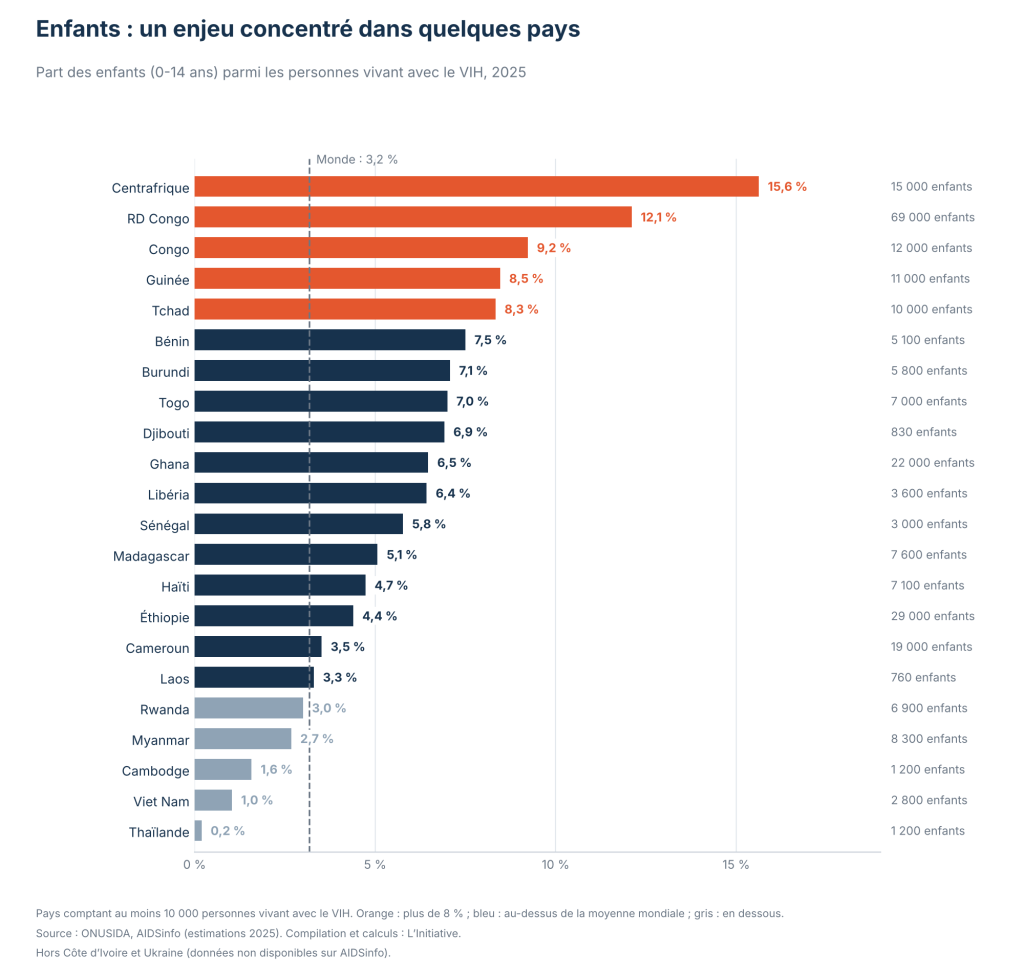
The situation of children also warrants particular attention. Although children account for only around 3% of people living with HIV, they accounted for 11% of AIDS-related deaths in 2025. In the same year, 93,000 children acquired HIV. Programmes to prevent mother-to-child transmission have nevertheless helped avert nearly 4.8 million paediatric HIV infections since 2000. Yet only 55% of children living with HIV were receiving treatment in 2025.
These disparities are a reminder that an effective response cannot rely on biomedical advances alone. It must also address the barriers preventing certain populations from accessing services and tailor interventions to the epidemiological and social realities of each setting.
Contrasting situations across countries eligible for L’Initiative’s support
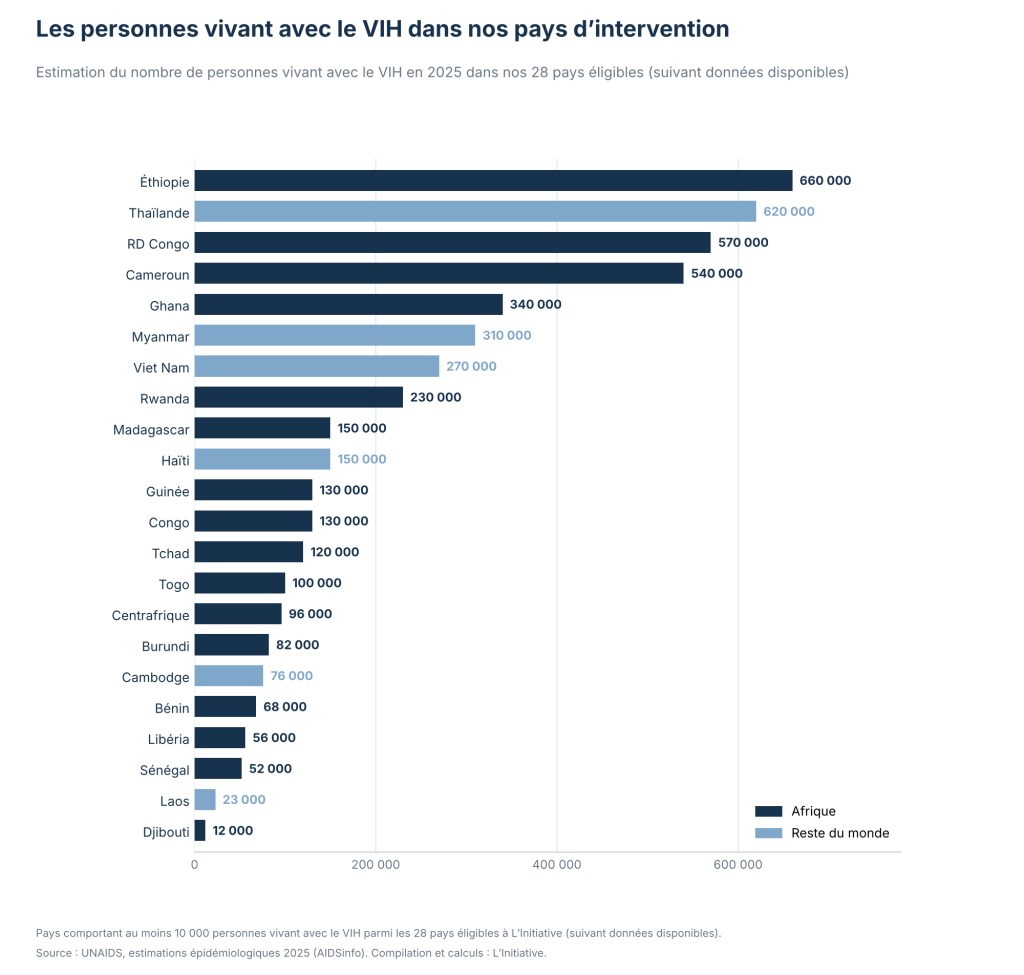
UNAIDS data compiled for countries eligible for L’Initiative’s support provide insights into the needs of the countries where the mechanism operates. In 2025, eligible countries for which estimates were available accounted for nearly 4.8 million people living with HIV, including 249,000 children. Together, they also recorded approximately 154,000 new HIV infections and 97,000 AIDS-related deaths.
Since 2010, new HIV infections have fallen by approximately 42% and AIDS-related deaths by 63% across these countries. These trends reflect significant progress, although national situations continue to differ considerably.
In 2025, Ethiopia had 660,000 people living with HIV, the Democratic Republic of the Congo 570,000 and Cameroon 540,000. Madagascar was among the countries recording the highest numbers of new infections, with approximately 26,000, ahead of the Democratic Republic of the Congo (23,000) and Cameroon (21,000).
Conversely, some countries have achieved particularly substantial reductions in new infections since 2010, notably Benin (78%), the Central African Republic (75%) and Togo (70%).
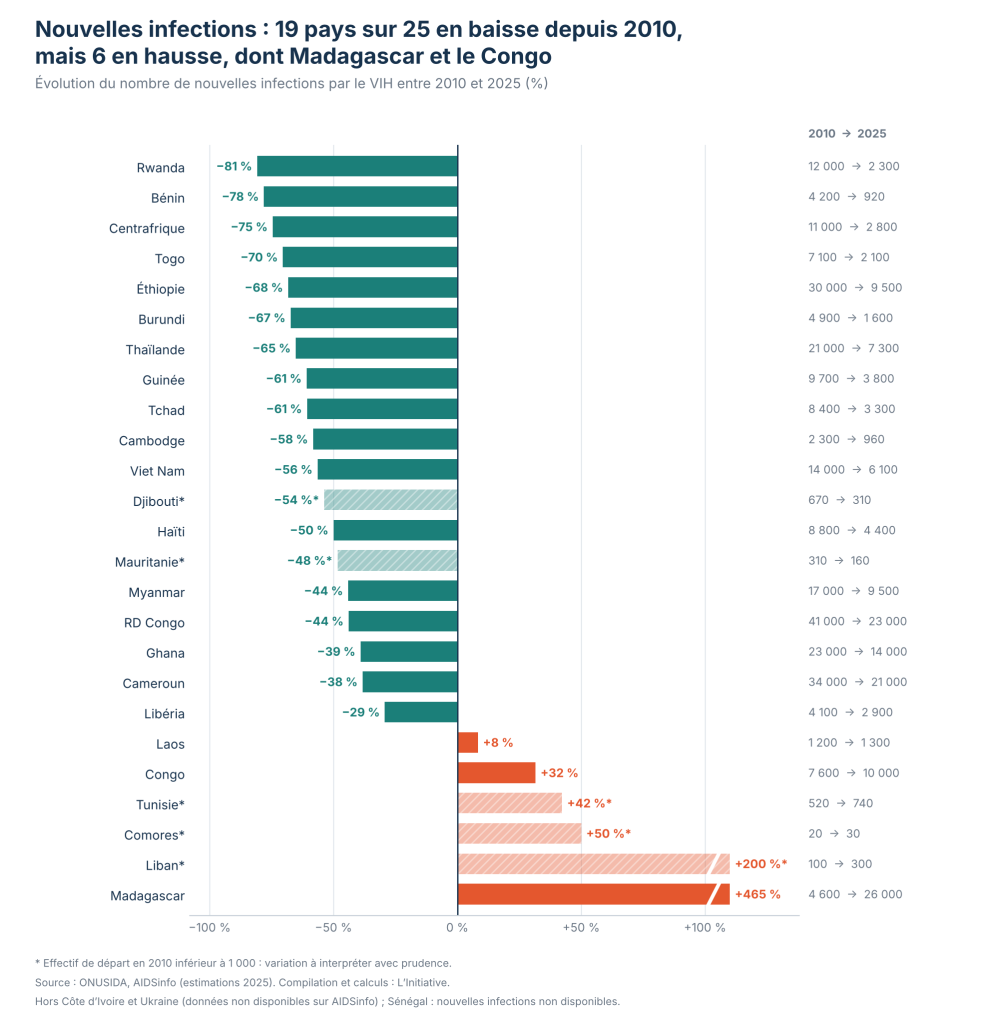
These disparities highlight the importance of a detailed understanding of epidemiological trends to adapt priorities and direct resources towards areas of greatest need.
International commitment amid declining funding
In June 2026, United Nations Member States adopted a new Political Declaration on HIV and AIDS, reaffirming their ambition to end the epidemic by 2030. Its adoption nevertheless revealed political differences over human rights, gender issues and the direction of international cooperation.
This comes at a time when resources for the response are declining sharply. According to UNAIDS, US$21.9 billion a year would be needed by 2030 to achieve global targets in low- and middle-income countries. Yet only US$17.6 billion was available in 2025, leaving a US$4.3 billion shortfall against the funding target.
This decline is part of a broader trend. According to the OECD, official development assistance fell by 23.1% in 2025, its largest annual decline on record. A further decrease is expected in 2026, with particularly significant consequences for the health sector.
The effects on the HIV response are already apparent. Funding cuts are undermining prevention, testing and community-based services. In several countries, they are forcing stakeholders to review their activities and focus their resources on maintaining essential interventions, potentially jeopardising the progress made.
Nevertheless, international cooperation mechanisms continue to deliver results. With support from the Global Fund, 12.1 million HIV tests were carried out among key and priority populations, 10 million people received HIV prevention services in 2025, and 1.1 million received pre-exposure prophylaxis (PrEP). These results demonstrate the ability of national stakeholders and their partners to mobilise resources and adapt their efforts.
The challenge, therefore, is no longer simply to make further progress, but also to ensure that the conditions are in place to sustain it.
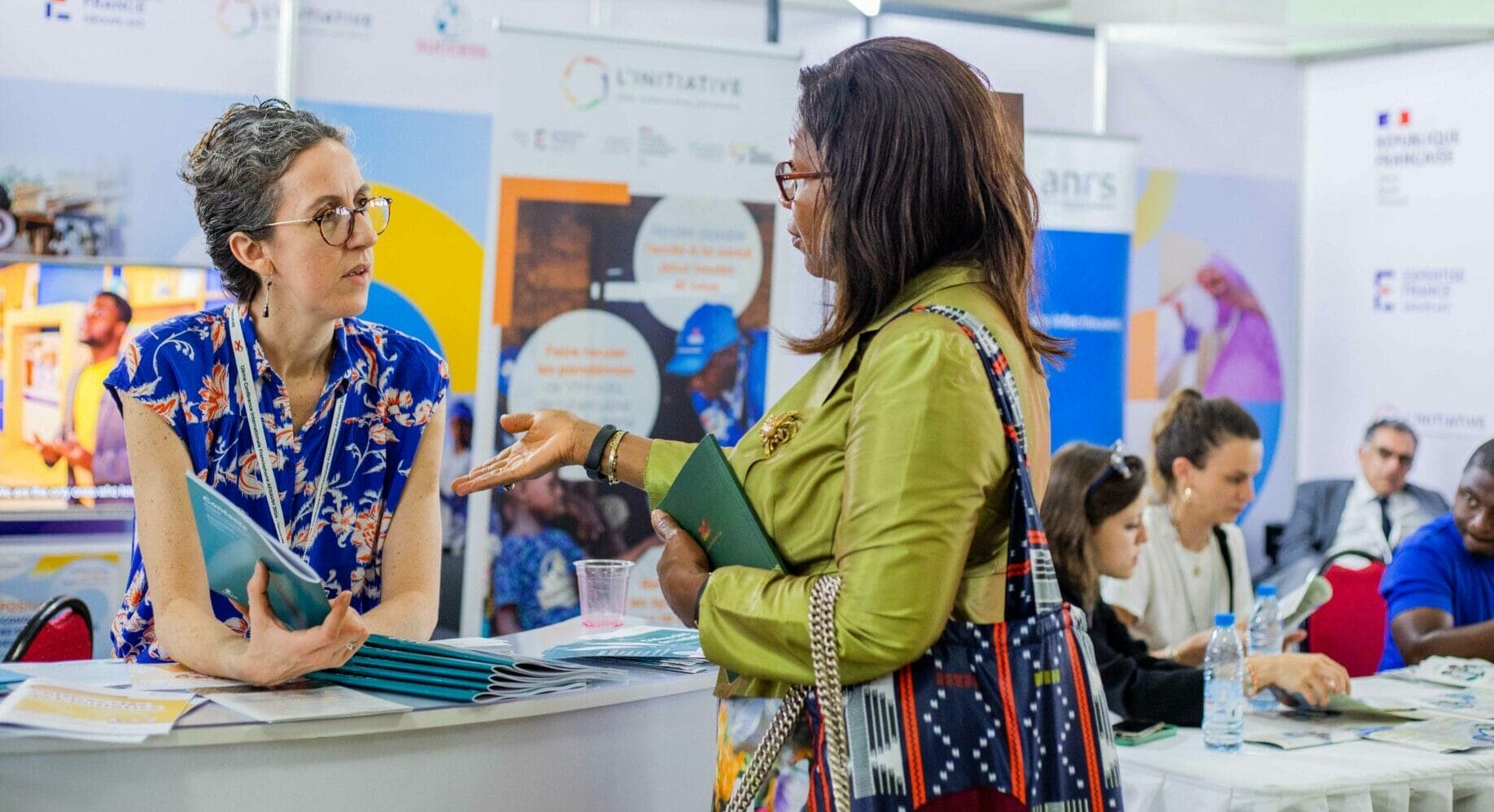
“In Rio, the international political context even influenced the words we used”
Reflecting on AIDS 2026, Isabel Hottelart and José Boff, from L’Initiative – Expertise France, discuss the debates at the conference and the influence of the international political context on the direction of the HIV response.

Strengthening national ownership to sustain the response
As international aid declines, strengthening national capacities and diversifying funding sources are becoming increasingly important.
In 2025, domestic resources accounted for approximately 60% of HIV funding in low- and middle-income countries. Domestic resource mobilisation has increased since 2010 but continues to face significant budgetary constraints, including debt, inflation and economic difficulties.
In this context, preparing for funding transitions cannot simply involve transferring responsibilities. National institutions must have the expertise, human resources and governance mechanisms needed to ensure the long-term management, implementation and monitoring of programmes.
This is one of the key areas of intervention for L’Initiative – Expertise France. Complementing the work of the Global Fund, L’Initiative supports countries in strengthening their capacity to oversee and manage programmes addressing the pandemics.
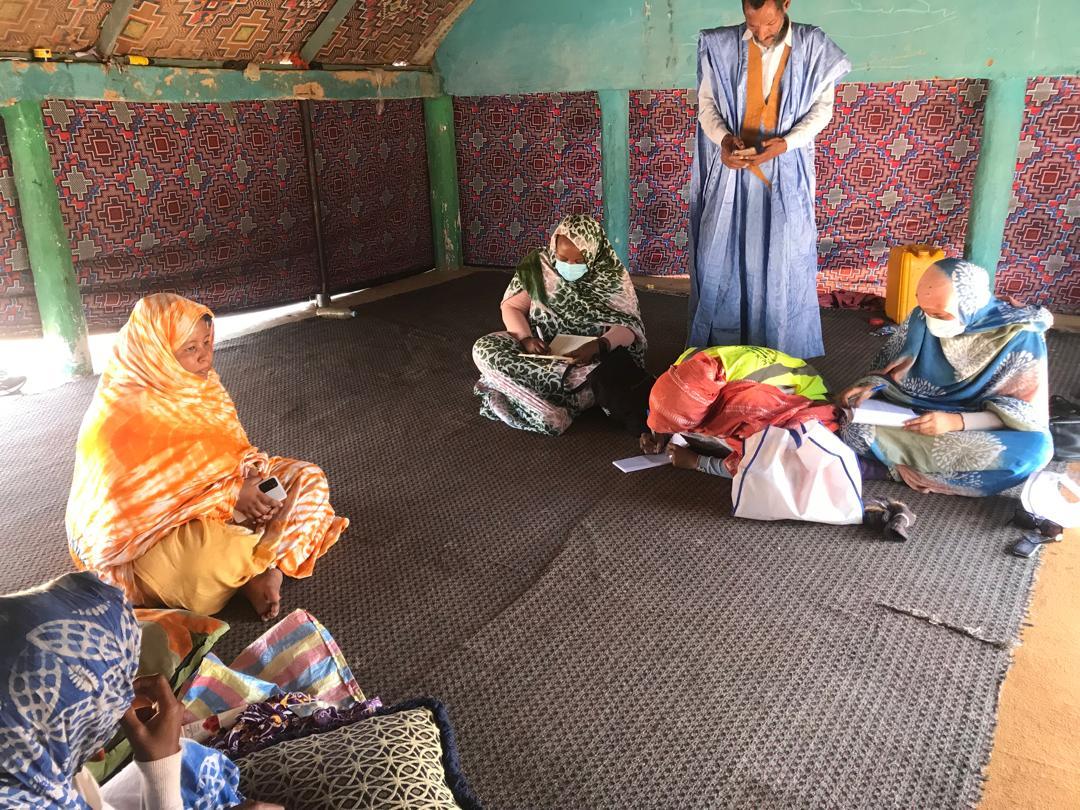
In Chad and Mauritania, for example, the Sahel technical assistance mechanism supports ministries of health in strengthening national management of Global Fund grants. This support combines governance, financial management, monitoring and evaluation, and capacity building. In Chad, it has notably helped the Ministry of Health regain responsibility for most aspects of grant management, which had previously been entrusted to external stakeholders.
Strengthening the health workforce is also essential. Training professionals, building institutional capacity and improving the organisation of services all contribute to strengthening health systems beyond the duration of external funding.
Preserving the role of communities in the HIV response
The sustainability of the response also depends on community-based organisations, whose commitment has profoundly transformed the fight against HIV.
Their close ties with the people affected enable them to reach populations with limited access to health facilities, facilitate testing and access to treatment, and prevent interruptions in care. Their work is particularly important where stigma, discrimination or legal barriers restrict access to services.
Yet these organisations are among the first to be affected by funding cuts. According to the 2026 UNAIDS special report, prevention programmes in sub-Saharan Africa remain heavily dependent on international aid, which accounted for 83% of their funding.
The challenge is therefore to safeguard their ability to act while strengthening recognition of their role and their participation in programme governance. Lasting national ownership cannot be achieved without civil society organisations and the people directly affected.
Through its SOFIA mechanism, L’Initiative supports the organisational development and autonomy of local organisations working to combat the three pandemics. Launched in 2023, the mechanism combines funding, technical support and organisational capacity building to strengthen their ability to act over the long term.
In Vietnam, the Saving the Future 2.0 project also illustrates the role of community-based approaches. Implemented between 2020 and 2025, it provided tailored services to 9,305 young people who use drugs and strengthened the capacities of 17 community-based organisations.
More broadly, in 2025, projects supported by L’Initiative enabled nearly 586,000 people to access health and social services across its areas of intervention. More than 100,000 people from key populations were reached through HIV prevention activities, and more than 11,000 healthcare professionals and frontline workers received training.
These results demonstrate the value of cooperation that combines national capacity building, targeted interventions and community engagement.
Integrating services and making innovations accessible
Preparing for the future of the response also means adapting programmes to people’s needs and scientific advances.
Service integration is a priority. According to 2024 data, tuberculosis remains the leading cause of death among people living with HIV. Yet only two-thirds of new tuberculosis cases among people living with HIV were detected. Strengthening integrated approaches to prevention, diagnosis and treatment therefore remains essential to improving continuity of care.
In Cambodia, L’Initiative notably supported OPTICAM, an operational research project led by the Institut Pasteur du Cambodge. The project investigated barriers to accessing tuberculosis preventive treatment among people living with HIV, with the aim of better understanding the obstacles to its implementation and identifying ways to improve their care.
At the same time, innovations are opening up significant new opportunities. New long-acting prevention options, such as injectable lenacapavir administered every six months, could broaden the range of choices available to people at risk of acquiring HIV.
However, their potential cannot be realised without equitable access. Product pricing, availability, integration into health systems and countries’ ability to finance their rollout are all critical factors. As Philippe Duneton, Executive Director of Unitaid, emphasises in an interview published by L’Initiative, ensuring access to innovations requires planning for their rollout in advance, involving communities and strengthening the capacities of national stakeholders.
Scientific advances, however significant, must therefore be accompanied by sustained investment, strong health systems and a rights-based approach.
Safeguarding progress while maintaining the ambition to end AIDS
The global HIV response is at a pivotal moment. The progress made over the past fifteen years demonstrates that substantial reductions in new infections and deaths are possible. Yet declining funding, persistent inequalities and barriers to accessing services threaten to slow this progress.
Against this backdrop, safeguarding progress means more than simply maintaining existing programmes. It also involves strengthening countries’ capacity to manage their response, ensuring community participation and enabling equitable access to innovations.
Through its technical and financial support, L’Initiative contributes to this ambition by supporting national and community stakeholders in developing sustainable responses tailored to their needs.
The future of the fight against HIV will depend as much on our ability to preserve the solidarity and cooperation built over several decades as on our ability to translate scientific advances into progress that is accessible to everyone.