
Closing the gap project aims to create an integrated healthcare program that improves access to comprehensive TB, HIV, and malaria care across prisons and their surrounding communities in Haiti.
Context
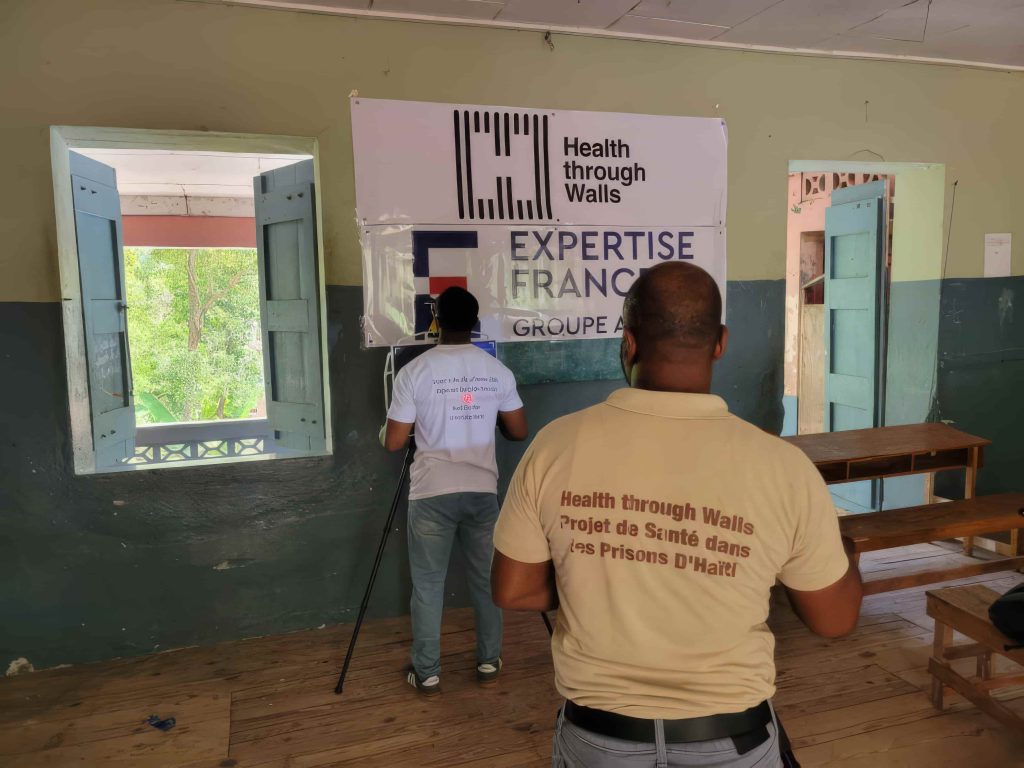
The Haiti’s National Penitentiary system (HNP) is ranked as the world’s second most overcrowded in the world with an occupancy rate of 300 % in 2024. The government’s lack of investment in healthcare has led to thousands of prisoners enduring harsh living conditions marked by terrible sanitation, inadequate healthcare, compromised well-being, and a pervasive lack of safety. It has become a breeding ground for diseases such as tuberculosis (TB), HIV and cholera – all a consequence of overcrowding, high-risk sexual behavior, suboptimal diets, and poor hygiene. The implications of this dire situation extend far beyond the prison walls, affecting not only the health of detainees and staff but also their families and the communities to which they belong. Over the past 15 years, Health through Walls, an Haitian NGO, has been at the forefront to provide care to individuals living with HIV and TB across prisons in Haiti and their surrounding communities.
Description
The project works in thirteen prisons, aiming to strengthen Haiti’s prison health system by ensuring equitable access to quality care, prevention and education, and by reducing the burden of these diseases among inmates and the wider community. It uses an integrated approach that addresses the underlying social, economic, and structural determinants of health. The objectives are:
- Deliver comprehensive, patient-centered, gender-responsive TB, HIV and malaria services;
- Strengthen community health services to ensure continuity of TB and HIV care for released prisoners;
- Empower inmates and community members to improve health outcomes and access to HIV/TB/malaria services.
Impact
It aims to screen approximately 11,000 people for HIV, tuberculosis and malaria; to initiate or maintain antiretroviral therapy for 700 people living with HIV; to detect and treat an additional 500 tuberculosis cases in addition to strengthening care for the 461 active cases already notified; to screen and treat around 4,000 malaria episodes; and to distribute 5,000 mosquito net.