VITA CCU: building a care pathway against cervical cancer
In Madagascar, cervical cancer kills around 3,000 women every year. Yet it is preventable if caught early. But out of 2,500 health centres, only 140 offered screening, and fewer than one in ten women aged 30 to 49 had been screened in the previous five years. Launched in June 2025 by Médecins du Monde with Douleurs Sans Frontières and the Association des Femmes Samaritaines, and supported by L’Initiative – Expertise France, the VITA CCU programme devoted its first year to making HPV testing available. A year on, the test is in place — and the programme is now working to embed this screening for the long term, to secure treatment for the precancerous lesions it detects, and to refer confirmed cancer cases to dedicated hospitals.
A chain that was missing some of its links
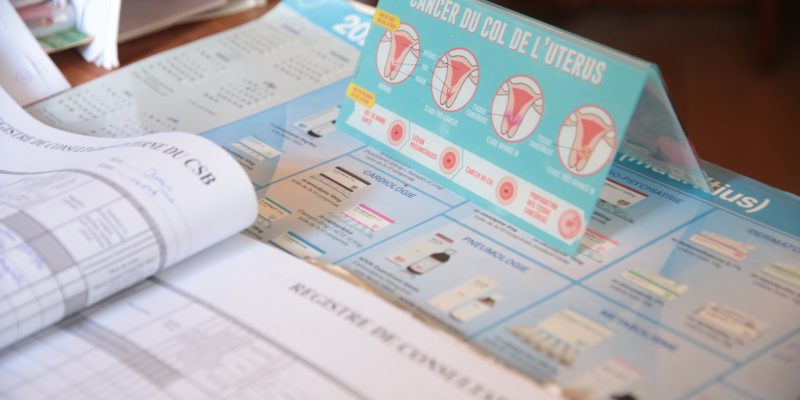
Cervical cancer can be prevented at several key points. Vaccination protects against human papillomavirus (HPV) before exposure; screening makes it possible to detect the infection or spot precancerous lesions; and, where needed, treating those lesions prevents them from progressing into cancer.
On the first of these links, Madagascar has taken a decisive step forward. In December 2025, a national campaign vaccinated more than 1.7 million girls aged 9 to 14, achieving 77.5% coverage, which led the Ministry of Public Health to make the vaccine free and add it to routine immunisation. VITA CCU contributed to this through community mobilisation and communication.
The links that followed, however, still had to be built. Screening was hard to access and was not based on molecular HPV testing. Thermocoagulation, a technique recommended by the World Health Organization for treating precancerous lesions — less invasive and deliverable on an outpatient basis — was not yet performed routinely in the country.
Sylvano Frédéric Tsialazo, consortium coordinator for Médecins du Monde Madagascar, sets out the programme’s three pillars:
A year to make screening possible
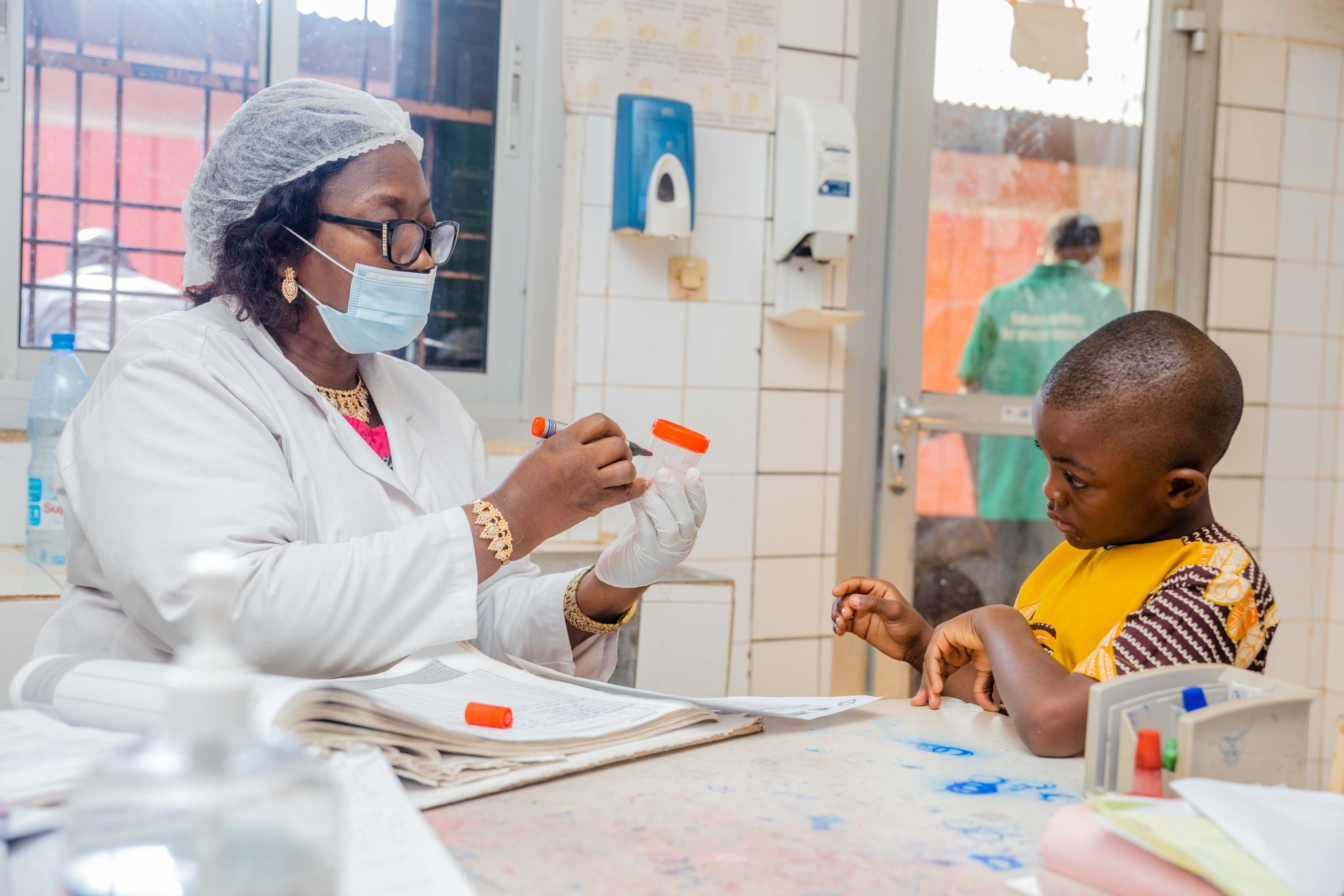
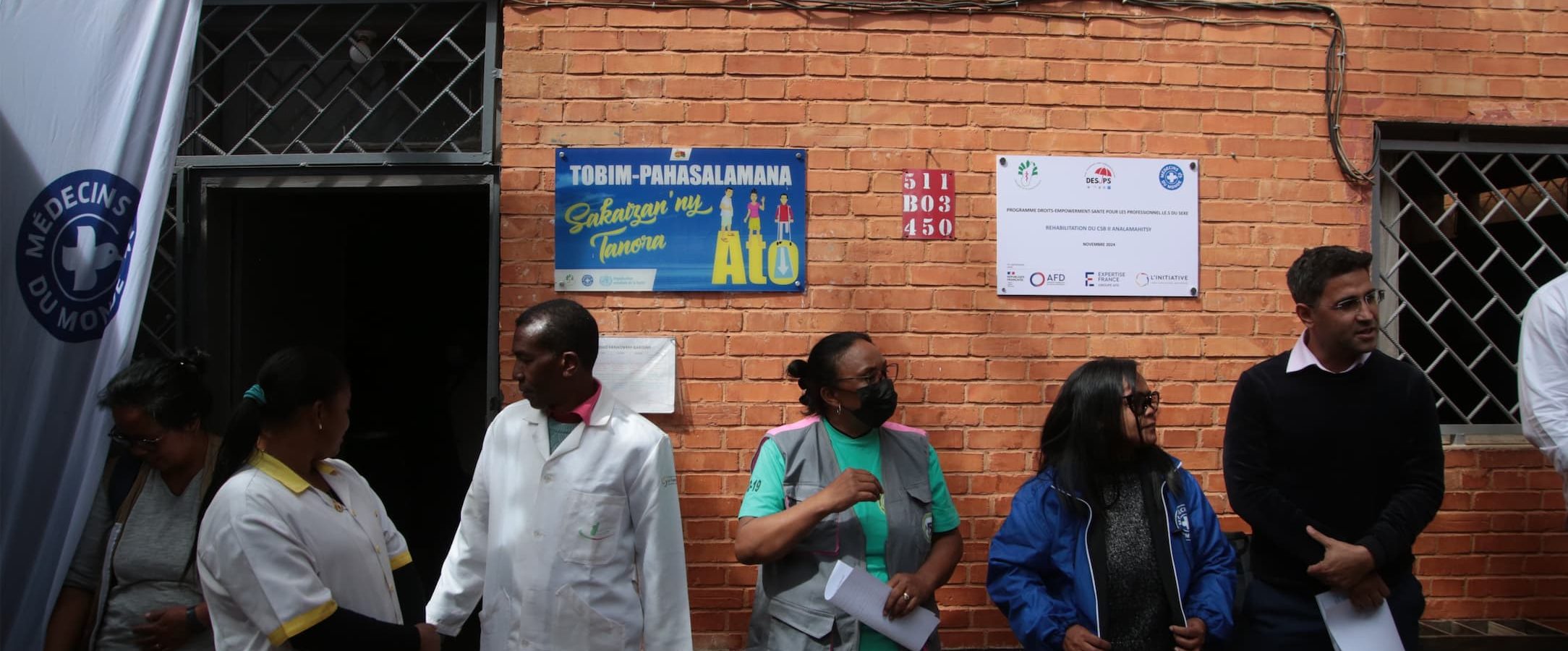
The programme contributed to drafting Madagascar’s first training module on thermocoagulation, and supported the training of 34 master trainers, who then cascaded these skills onward. Between December 2025 and May 2026, 132 health professionals were trained — more than a third of the project’s target — and 42 providers at health centres in Antananarivo and Mahajanga are now certified in HPV sample collection, visual inspection, and thermocoagulation. Sixteen primary health centres were equipped with supplies (thermocoagulation devices, HPV sample-collection kits, and sample-storage material), and a university hospital in Antananarivo was provided with a colposcope. Two laboratories were trained on the GeneXpert platform, and a sample transport circuit was set up with the Ministry.
As a result, 181 HPV tests were carried out in the project’s second half, as part of practical exercises linked to the training sessions and preparatory campaigns.
Support, a precondition for the pathway to work
These first rounds of screening delivered a lesson the programme immediately took on board. A positive result only has an effect if the patient comes back for the follow-up examination, and then for treatment. Yet exercises carried out under real conditions showed that this return cannot be taken for granted: it depends on receiving the result and understanding it, being able to travel again, and being supported in the meantime.
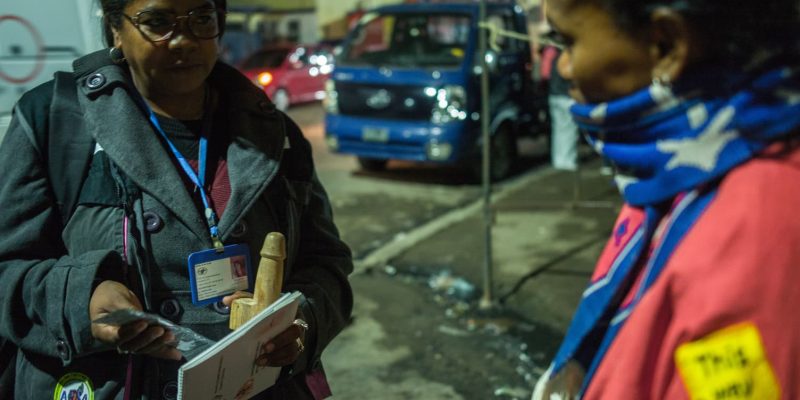
The consortium has therefore made this support a priority. Since January 2026, peer educators from the Association des Femmes Samaritaines have been meeting six sex workers per outreach round instead of twenty, so as to spend more time with each one and ensure individual follow-up. The number of facilities supported has been narrowed to allow for closer support. The programme is first consolidating the quality of sample collection carried out at health centres, before extending the practice to community-based self-sampling.
A system with encouraging data
At this stage, the programme has enabled 4,114 women to be screened and 171 human resources to be trained, including health professionals in particular. Over the year, 10 peer educators carried out 240 outreach rounds, by day and by night, reaching 1,800 women sex workers.
At the other end of the chain, Douleurs Sans Frontières has set up an integrated home-based care service for patients with confirmed cancer, with a psychosocial protocol developed together with the National Order of Psychologists. In May 2026, 20 hospital professionals were trained in colposcopy (a specific examination of the cervix), biopsy (sample collection and analysis), and lesion removal, working with experts from La Réunion University Hospital.
VITA means “eliminate” in Malagasy. That is the ultimate goal: eliminating cervical cancer. By 2028, the programme aims to reach 17,000 people and establish a complete care pathway, accessible at every stage.