The Abidjan Call: seven countries sign ten recommendations against cervical cancer
Cervical cancer can be prevented, screened for, and treated. Yet in 2025 it affected 120,000 women across the African continent and caused an estimated 89,000 deaths. In many French-speaking African countries, solutions still struggle to reach every woman and to take root over the long term. Since 2025, the Community of Practice and Knowledge (CoSav) of the SUCCESS programme, supported by L’Initiative – Expertise France and Unitaid, has been bringing together the relevant stakeholders to compare experiences and work out, together, responses suited to national realities. In Abidjan, this momentum reached a historic milestone with the signing of the Abidjan Call by seven countries.
No longer working in isolation
In the fight against cervical cancer, the solutions are largely well known. HPV vaccination, and the screening and treatment of precancerous lesions, make it possible to act before the disease can progress. Yet their roll-out remains uneven, and sustaining them over time remains a challenge in many settings. More than 90% of deaths linked to this cancer occur in resource-limited countries.
It is this gap between the solutions that exist and how they are implemented that CoSav was built to address. Supported by L’Initiative – Expertise France and Unitaid as part of the SUCCESS programme, this regional platform brings together around fifty stakeholders from seven French-speaking African countries. National programme leads, health professionals, implementation teams, and community actors compare their experiences and practices there.
SUCCESS: preventing human papillomavirus to fight cervical cancer
L’Initiative, in partnership with Unitaid since 2019, supports the Scale Up Cervical Cancer Elimination with Secondary prevention Strategy programme, known as SUCCESS, which operates in around ten countries. Led by Médecins du Monde in San-Pédro, Côte d’Ivoire, this programme fights cervical cancer through awareness-raising, screening, and the management of human papillomavirus, thanks to the work of community health workers. Field report.

The approach championed by CoSav rests on a simple idea. Rather than seeking a single answer, it starts from what already exists in each country, identifies what is working, understands the difficulties encountered, and thinks through, together, the adaptations needed.
Three hybrid-format workshops and field missions to Togo, Benin, Guinea, Côte d’Ivoire, and Burundi made it possible to meet with people working on the ground and to hold working sessions on operational challenges. Despite how different the national contexts are, the same concerns came up again and again from one country to the next — sustainable long-term financing, the availability of supplies, training for health professionals, and the integration of services into health systems.
A year spent turning experience into shared resources
The diversity of the countries involved is precisely one of the strengths of this approach. A practice developed in one context cannot necessarily be reproduced identically elsewhere. It can, however, inform other actors’ thinking, provided the circumstances in which it was implemented — and how it was adapted — are understood.
CoSav’s work has made it possible to map existing tools and methods, surface promising practices, and progressively build a resource kit for institutional actors, health professionals, and community actors alike. It brings together operational tools along with a practical guide on communication between caregivers and patients, often a decisive factor in women accepting screening.
This stock-taking addresses a central challenge in the fight against cervical cancer. Improving screening is not simply a matter of having a test available. Professionals also need to be trained, supply chains secured, women supported along their care pathway, and services kept running well beyond the lifetime of any one project.
The role of communities is equally essential. Their closeness to local populations can make it easier to inform, refer, and support women, particularly where access to health services remains difficult.
In Abidjan, shared priorities take shape
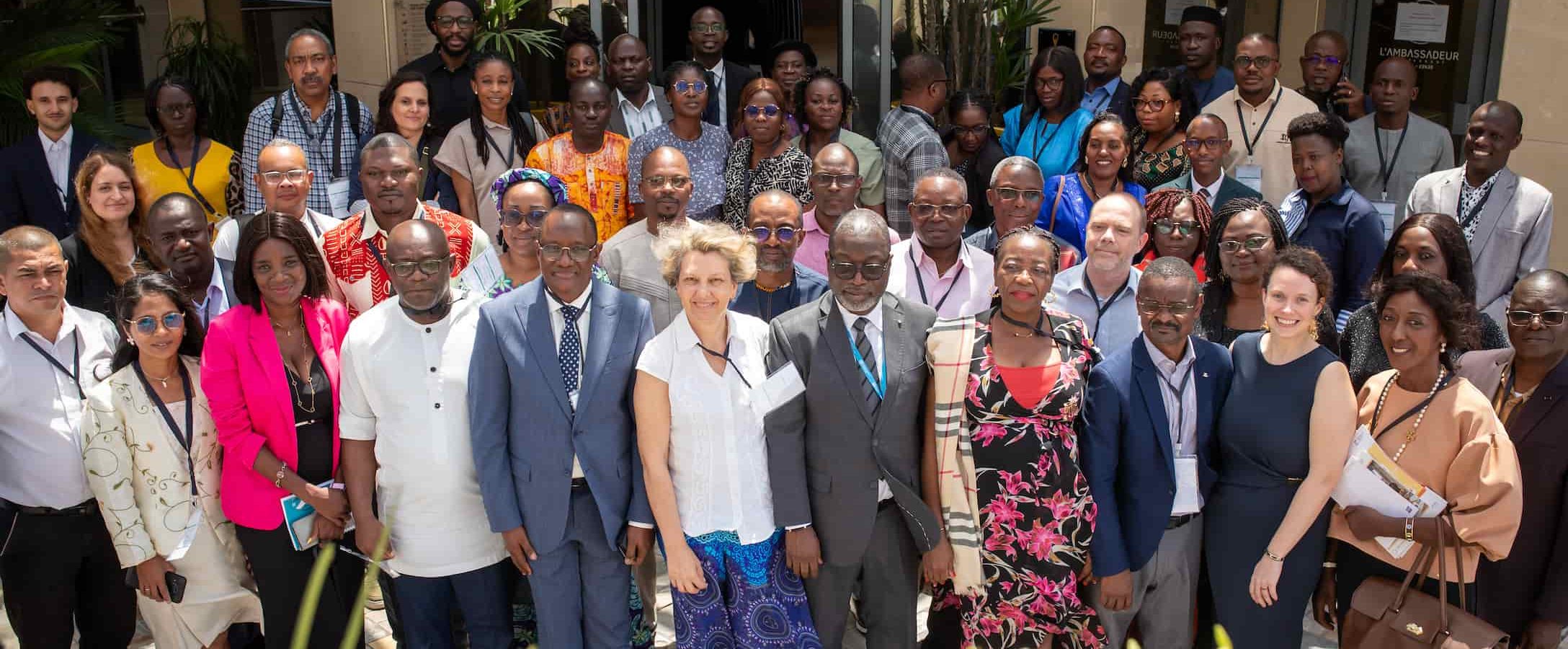
The regional meeting held from 14 to 16 April 2026 in Abidjan built further on this work. After a year devoted to sharing and consolidating lessons learned, CoSav members came together to finalise the tools developed, gather feedback from participants, and consider what would be needed to sustain them.
The presence of health authorities and technical and financial partners broadened the discussions. These focused on what it would take to durably embed these interventions within public policy and health systems.
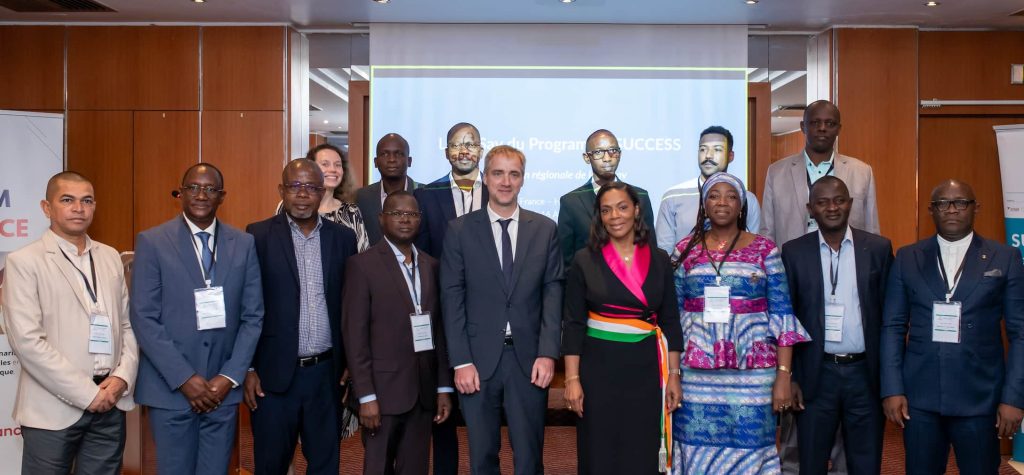
It was in this spirit that delegations from Benin, Burundi, Cameroon, Côte d’Ivoire, Guinea, Madagascar, and Togo signed the Abidjan Call. The signatories are the heads of national cancer control programmes, the heads of national STI and HIV control programmes, as well as the permanent secretaries of national councils for the fight against AIDS and non-communicable diseases. This joint signature is itself a signal, given that women living with HIV are among those most exposed to this cancer.
The text opens with a reminder its authors were determined to set out: “These figures are not abstract. Behind every figure is a woman — a mother, a sister, a worker, a pillar of our communities — whose death leaves children without support, households impoverished, and local economies weakened.“
What makes this situation “all the more unacceptable” in the signatories’ eyes is that cervical cancer is among the few cancers that are both preventable and eliminable. Its main cause is identified, vaccination can prevent it from childhood, a test detects the virus — sometimes carried out by the woman herself, with no gynaecological exam needed — and a lesion that is caught can be treated in a few minutes by thermal ablation at a health centre.
Cervical cancer: what still stands between the tools and the women
Prevention, screening, financing: four experts gathered at the SUCCESS programme’s CoSav examine what it takes to sustain the fight against cervical cancer.
Ten recommendations to sustain the fight
The ten recommendations drawn up in Abidjan are organised around five areas.
Training health professionals comes first. The signatories call for the prevention, screening, and treatment of precancerous lesions to be integrated into the initial training curricula of all health professions, according to national contexts. They also call for continuing education to be structured around mentoring, formative supervision, and on-site coaching.
Mobilising the community sector is the subject of two recommendations. The first aims to embed awareness-raising on vaccination and screening within the minimum package of activities carried out by community actors, with particular attention to key populations and women living with HIV. The second concerns the conditions needed for this involvement to continue beyond the lifetime of individual projects.
The supply chain is the focus of one specific request: to list the supplies needed for screening and for treating precancerous lesions on national lists of essential medicines and health products, and to secure their exemption from customs duties.
Domestic financing brings together two complementary recommendations. The signatories call for strengthening national health financing mechanisms as well as partnerships with the private sector, and for encouraging the progressive integration of screening and care into national health coverage schemes.
The institutional framework, finally, groups together three: strengthening coordination between programmes, between directorates, and across sectors, within an integrated approach; strengthening the availability of tools for collecting quality data to inform decision-making; and consolidating the regional cooperation built up within CoSav, to foster the sharing of knowledge between resource-limited countries.
Keeping these commitments alive within health systems
The Abidjan Call is not a new cervical cancer strategy. It formalises the lessons drawn from a year of exchange and translates, in line with the World Health Organization’s strategy, the priorities that stakeholders from the seven countries now wish to carry forward together.
This momentum rests on long-standing, committed support dating back to 2019. Funding and support from L’Initiative – Expertise France and Unitaid have made it possible to create the conditions for this dialogue and this stock-taking, and to offer national actors a space in which to compare their realities and jointly define the challenges their health systems need to address.
The next step will be to give these recommendations concrete form, according to each country’s own context and priorities. The momentum built by CoSav can then continue to play its part, allowing experience and knowledge to circulate among stakeholders and to feed, over the long term, cervical cancer strategies across French-speaking Africa.
SUCCESS-FAP: bringing screening closer to women in the Philippines
In the Asia-Pacific region, the SUCCESS programme continues through SUCCESS-FAP (For Asia Pacific), which aims to extend access to cervical cancer screening in communities furthest from health services. In the Philippines, this third phase targets more than 17,000 women aged 30 to 49 across three municipalities in Iloilo province, using self-sampling kits that allow an HPV test to be carried out.
Women who test positive for human papillomavirus are referred to accredited health facilities for further examination and, if necessary, treatment. Supported by Unitaid and implemented by Expertise France in partnership with the civil society organisation Cancer Warriors Foundation, the project relies on community mobilisation and coordination with health authorities to embed these services durably within the health system. SUCCESS-FAP is thereby helping to adapt secondary prevention strategies to local realities and to bring care closer to the women who are furthest from it.