In Cameroon, OPTI-TRI seeks the best pathways against cervical cancer
In Cameroon, where cervical cancer incidence reaches 33.7 cases per 100,000 women, women living with HIV are six times more likely to develop the disease. Screening for this cancer does exist, and it is effective at reducing mortality. The difficulty lies elsewhere: it takes place over several steps, sometimes in locations far apart from one another, and many women fall through the cracks along the way. Carried out in the West Region by the Institut de Recherche pour le Développement (IRD) with RSD Institute, and supported by L’Initiative – Expertise France, the OPTI-TRI project compares four ways of organising this pathway to identify which ones best retain patients in care.
Why a positive test doesn’t automatically mean treatment
Screening today relies on the human papillomavirus (HPV) test, the most sensitive method for identifying women at risk of precancerous or cancerous lesions. The vast majority of HPV infections clear up on their own, without ever causing lesions. Treating every woman who tests positive would therefore mean treating a great many unnecessarily. That is why WHO recommends, among the possible strategies, carrying out a second examination known as triage, which can in particular rely on a visual inspection of the cervix. This triage step is especially recommended for women living with HIV, among whom HPV infections are more frequent and more persistent, and who are therefore more likely to test positive.
The challenge is being able to carry through test – triage (and treatment) as a single sequence. Platforms capable of performing an HPV test are rare — the Mifi health district, for instance, has only three for around 22,000 women aged 30 to 49. Without everything being done in the same place on the same day, the screening pathway stretches out over several visits, and each visit is a point where a patient can be lost. It is worth remembering that screening that doesn’t run its full course is screening that serves no purpose.
A trial carried out in Kenya showed what is at stake. A community-based approach there had raised screening participation from 40% to 60%. But among women who screened positive, only 30% were ultimately treated: the effort had dissipated along the cascade.
Dr Joëlle Sobngwi, a public health physician-researcher and Executive Director of RSD Institute, presents the strategies the project is comparing:
Two settings, four strategies
This is the gap OPTI-TRI is tackling, through two studies run in parallel, each suited to a different type of facility.
The first takes place at Foumban Regional Hospital, whose technical facilities allow everything to be done on site. It compares a standardised screening pathway with a differentiated one, in which the woman chooses her own pathway after receiving counselling — either going through all the steps in a single visit, or coming back a second time. A decision-support tool, designed and then refined together with the service’s midwives, supports this choice. The second study plays out in smaller facilities, which lack the equipment needed to carry out every step of screening themselves. It compares a centralised strategy, in which the sample is collected on site and women testing positive are referred to a better-equipped centre, against a decentralised strategy run by a mobile team able to screen, triage, and treat on the spot. All six sites began with the centralised strategy, before progressively switching to the “mobile team” strategy, in an order determined by random allocation.
By the end of March 2026, the two studies had enrolled 1,678 women living with HIV and trained 52 health professionals.
What the early results show
Midway through, the first lessons are starting to emerge. At Foumban (the differentiated-care study), around 98% of women complete every step, from the HPV test through to treatment where it is needed.
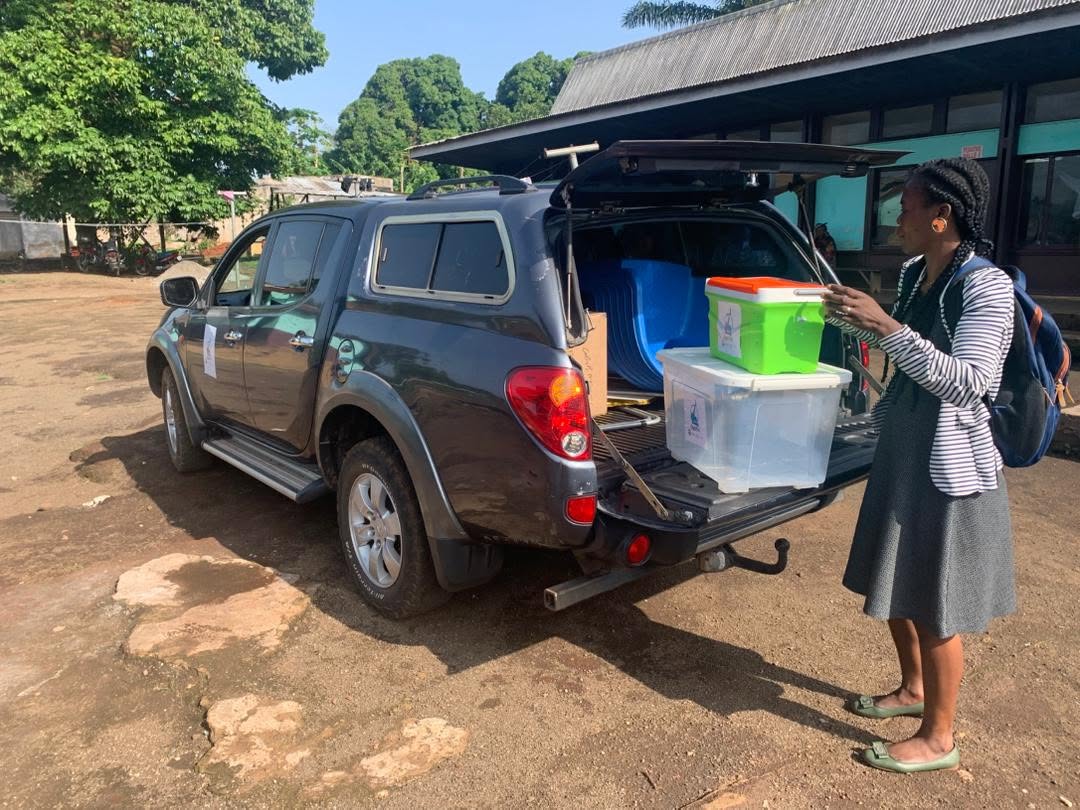
The mobile-team approach, for its part, has demonstrated its feasibility on the ground. A pick-up truck, a GeneXpert platform, and a battery are enough to offer complete screening within a small health facility. Of the 833 women tested under this setup, 310 tested positive for human papillomavirus and 133 were treated. This approach also cut loss to follow-up from 25% to 2%.
Triage is the focus of a third strand, which looks at the use of the simplified ABCD grid for interpreting visual inspection of the cervix, as well as an AI-assisted analysis developed by the École Polytechnique Fédérale de Lausanne (EPFL) from images collected in the field. Alongside this, the STRING sub-study is evaluating the performance of methylation markers as an alternative triage method. Lastly, the project also includes a substantial strand dedicated to post-treatment follow-up of women.
Results that need to travel
What remains is to translate all of this into everyday practice, and the project did not wait until its activities were finished to tackle this important strand. The care package currently offered to women living with HIV in Cameroon does not yet include cervical cancer screening. Knowledge transfer and the uptake of results by health actors have therefore been a dedicated line of work since the project’s launch.
This starts with a regional advisory committee, set up in July 2025, which brings health authorities, the National Cancer Control Programme, the health facilities involved, representatives of women living with HIV, and community leaders together around the same table. Its second session, in February 2026, focused on local actors taking ownership of the results achieved so far.
It also takes shape through training the next generation of researchers: two PhD students, one in medical anthropology, the other in implementation science, are building their theses on this ground — and their first findings are now circulating at international conferences dedicated to cervical cancer.
Improving cervical cancer screening
Lead organisation, partners, areas of intervention, budget, and detailed objectives… discover the project factsheet.